


 Shkruar nga Pamfleti
Communication problems and attacks on the elite have weakened decision-making; the Revolutionary Guard gains more influence
A report published by the New York Times highlights serious coordination problems at the highest levels of the Iranian leadership, while the Revolutionary Guard appears strengthened.
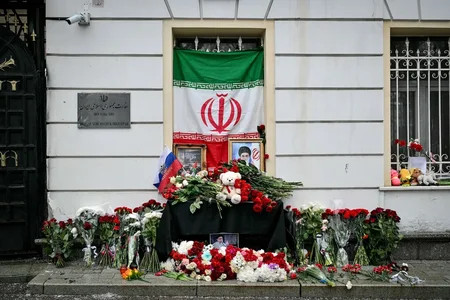
The initial attack on February 28th hit the top of Iran's power hard, killing Ayatollah Ali Khamenei. Within a month, targeted strikes had eliminated other figures who could take on leadership roles.
Tehran announced that his son, Mojtaba Khamenei, had taken over as successor. However, he has not appeared in public since the first day of the war and it remains unclear whether he is alive or dead.
The report published Monday evening by the New York Times, citing assessments by US and other Western intelligence agencies, shows that the Iranian leadership is fragmented and scattered, facing difficulties in making decisions and coordinating large-scale operations and responses.
According to the report, communication problems have created confusion and paranoia among the regime's remaining leaders, who suspect that their conversations and messages may be intercepted by Israeli intelligence services. As a result, they avoid both phone calls and meetings with each other.
According to US officials, the most hardline factions within the Revolutionary Guard have recently gained more influence and power than the religious leadership, which theoretically runs the system.
However, it remains unclear whether any side can reach an agreement and convince others to support it. Former US officials estimate that Iran will accept a deal only if it suffers significant economic damage from the war. Although the damage is already significant, they say, Iran may not yet feel it is losing.
It is also unclear to what extent Mojtaba Khamenei exercises control over the leadership. Some intelligence officials believe he may only have a representative role, with the real decisions being made by the remaining leadership of the Revolutionary Guard.
US officials say Iran's command and control system has suffered serious damage. However, even before the war, the country had built a decentralized structure that allowed commanders on the ground to make decisions without day-to-day guidance from above.
Iran has failed to launch large-scale missile strikes that could overwhelm adversaries' defense systems. Instead, regional commands are forced to respond uncoordinatedly.
US officials say the Iranian government has been unable to coordinate a response to US proposals, angering President Donald Trump.
On the other hand, Israeli officials point out that the communication problems in Iran resemble those observed during the negotiations for the release of the hostages in Gaza, where proposals were passed by Hamas leaders in Qatar and transmitted in writing to Gaza through a slow and complicated process.






Lini një Përgjigje