


 Shkruar nga Pamfleti
The United States, once a model of liberal democracy, is increasingly emerging as an example of the fragility of public trust in democratic institutions.
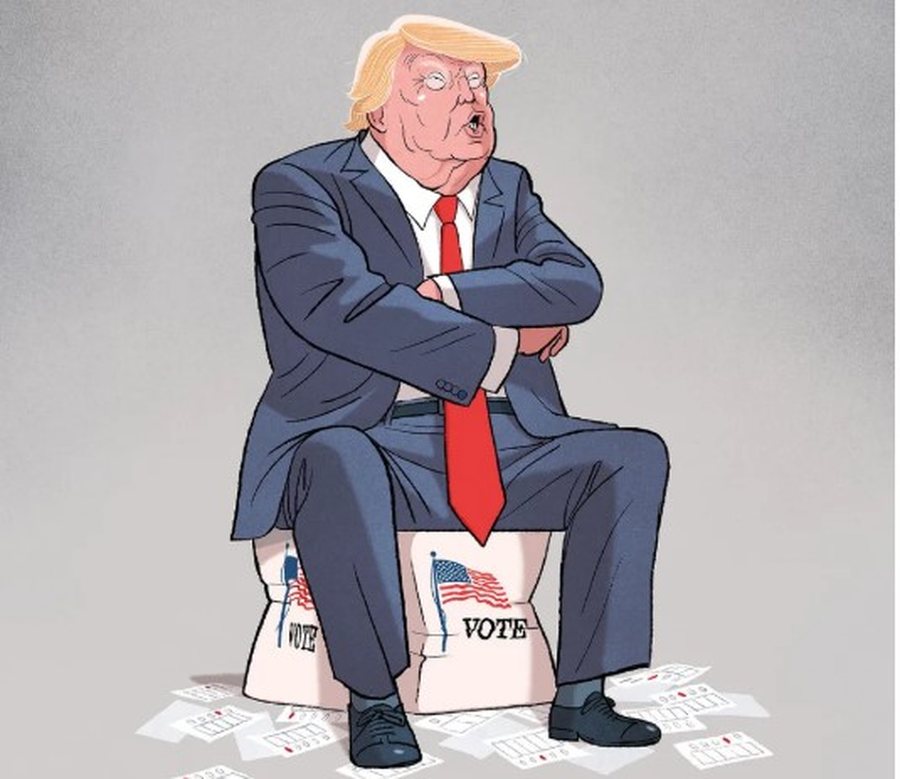
According to a forecast by The Economist magazine, Donald Trump's Republican Party is expected to suffer defeat in the November midterm elections.
Democrats are considered almost certain to retake the House of Representatives and could even win the Senate, despite an electoral map that traditionally favors Republicans.
However, the analysis emphasizes that, although the political outlook for Democrats appears positive, the situation for American democracy is worrying.
Both parties have come to view each other as manipulators of the electoral process. Repeated interference in election administration and unfounded claims that the 2020 result was rigged have damaged voter confidence. Aggressive gerrymandering practices have also reinforced the perception that politicians are out to control the outcome, not compete.
Some Democrats are concerned that Trump may try to influence the upcoming election. The Economist considers direct manipulation of the result unlikely, but warns of a deeper trend: a decline in trust in the legitimacy of elections.
Elections, according to the analysis, serve not only to determine the winner, but also to convince the loser to accept the result. If this credibility is lost, the system risks facing crisis.
There are also political motives for the tension. The potential loss of both houses of Congress would be a blow to Trump, while the tight race for the Senate creates room for political and legal intervention. Analysis suggests that the midterm elections could serve as a test for a larger challenge in the 2028 presidential election.
The president’s behavior reinforces these concerns. He has taken initiatives to transfer some election administration powers from the states to the federal level, with the argument of increasing credibility. According to The Economist, this approach follows a familiar pattern: identify a real problem and propose solutions that increase political control over the process.
Even if these efforts fail to materialize, the possibility of indirect interference remains. The analysis cites concerns about the presence of individuals with conspiracy convictions in local election administration and proposals by Trump supporters to use federal agencies at polling places—an action that would be illegal.
After the vote is over, another wave of legal suits is expected, as in 2020. Although the courts dismissed those claims, there is a risk that the protracted legal processes will further fuel public distrust.
However, the analysis highlights that the American electoral system continues to function. The Constitution gives states responsibility for organizing elections, limiting direct intervention by the federal government. Administration is decentralized and relies on local officials and volunteers, who are generally trusted.
The main risk, according to The Economist, is not outright manipulation, but the gradual erosion of trust. Only 25% of voters say they are confident that the election will not be influenced by interference. A majority in both political camps consider the other party to be extreme, while only 10% believe that both parties are honest.
This climate of distrust reflects a deep societal polarization. More than half of Americans consider their fellow citizens morally wrong, a level much higher than in other Western countries.
In this context, the United States, once a model of liberal democracy, is increasingly emerging as an example of the fragility of public trust in democratic institutions.






Aman mo ku i gjeni keto gazeta prestizhulce. Keni gjetur piçkerisht gazeten pronaret e te ciles po humbasin miliarda nga politika e drejte dhe nacionaliste e Trump. Koha tregoi dhe po tregon akoma qe "liberalizmi, globalizmi" i ketij modeli te felliqur po e fundos njerezimin. Per komunistet do te ishte nje lajm i mire, por prisni Nentorin qe te hidherohen te gjithe komunistet.
Po fiton bill kliton deri ne nentor 2026 ne viti 2027 zgjedhje asamblene ne viti 2028 zgjdhje per nato neviti 2029 zgjedhje parakonshme ne viti 2030 zgjedhje barazia gjinore ne viti 2031 zgjedhje primare ne viti 2032 zgjedhje testi ne viti 2033 zgjedhje komisjon zgjedhore ne viti 2034 zgjedhje kunvendi ne viti 2035 zgjedhje per te drejta zezakeve ne viti 2036 zgjedhje hetimore ne viti 2037 per emigrate ne viti 2038 zgjedhje popullore ne viti 2039 zgjedhje kombe bashkuar ne viti 240 zgjedhje kunder droges ne viti 2041 zgjedhje per depudete ne viti 2042 zgjedhje kunder largimi nga puna ne viti 2043 federativ ne viti 2044 zgjedhje kunder korupsjoni ne viti 2045 ne viti 2046 per zgjedhur kryemister ne viti 2046 kunder martese gay ne viti 2047 zgjedhje bordi paqes ne viti 2048 zgjedhje halle e populli ne viti 2049 zgjedhje pwr vote