


 Shkruar nga Pamfleti
In today's era, the global economic environment is characterized by an unprecedented level of uncertainty...
The oft-quoted proverb, “If you want to go fast, go alone; if you want to go far, go together,” gained new significance when former US Vice President Al Gore mentioned it during his Nobel Peace Prize acceptance speech in 2007. Beyond its rhetorical appeal, the aphorism captures the enduring normative value of cooperation and interdependence. It highlights the reality of global governance: while individuals or nation-states acting alone can achieve quick, short-term objectives in isolation, only through sustained collective cooperation can long-term global sustainability be ensured, effectively addressing structural challenges.
In today's era, the global economic environment is characterized by an unprecedented level of uncertainty. Over the past decade, a confluence of interconnected shocks has not only accumulated but also intensified. This has created an environment in which uncertainty manifests itself in five main categories.
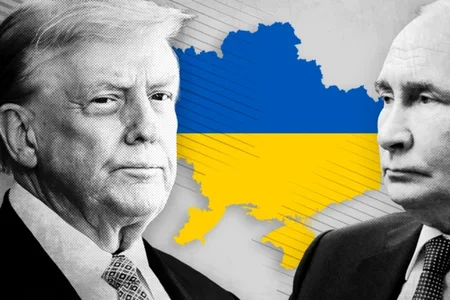
First , deepening geopolitical conflicts have emerged as a major destabilizing factor for the global economy. We are witnessing both the protracted Russia-Ukraine war and the strengthening of the US-China strategic rivalry, which have exacerbated global security risks and directly disrupted trade and investment flows. These tensions have increased volatility in global energy and commodity markets, while at the same time reducing the predictability on which long-term economic planning is based.
Second , the fragility of global supply chains has been increasingly exposed. Although the acute disruptions of the COVID-19 pandemic have partially abated, global supply chains have not recovered to their pre-pandemic stability. Additional exogenous pressures, climate disasters, geopolitical tensions, and resource weaponization, have further eroded their resilience. Strategic sectors such as semiconductors, advanced batteries, and critical minerals remain particularly vulnerable to supply uncertainty, thereby amplifying systemic risk.
Third , continued instability in inflation and monetary policy has further complicated the global landscape. High inflationary pressures and prolonged periods of high interest rates in major economies have fueled concerns about an economic slowdown. Moreover, the difficulty of accurately predicting the direction and timing of central bank interventions has increased volatility in global financial markets, creating conditions of heightened uncertainty for both policymakers and private investors.
Fourth , climate change and the energy transition represent unprecedented structural challenges that we face. The intensification of the climate crisis has increased both the frequency and severity of natural disasters, imposing systemic risks on all production networks, transport systems, insurance mechanisms and the real economy at large. At the same time, volatile price dynamics between fossil fuels and renewable energy sources have added another layer of unpredictability, complicating the global transition towards sustainable energy systems.
Fifth , the intensification of technological competition, often described as “technological hegemony,” has brought a further dimension of uncertainty. Great powers, particularly the United States and China, are engaged in escalating rivalries over artificial intelligence, semiconductors, and digital trade. These rivalries have increased uncertainty about technological standards and regulatory frameworks, often delaying corporate investment decisions. Other macroeconomic stressors, such as the rising external debt burden in emerging economies, the increasing risks of sovereign defaults amid rising global interest rates, and fiscal constraints in advanced economies stemming from rising public spending and escalating sovereign debt, have further exacerbated the challenges facing the international economic system.
Taken together, the vicious cycle of these sources of uncertainty underscores the inadequacy of unilateral national responses. Thus, the imperative for international cooperation becomes apparent. Cooperation serves as a mechanism to diversify risks and enhance stability, reducing dependence on any single market or political regime. It also strengthens supply chain resilience, as cooperative arrangements between economies can provide complementary networks of resources, technologies, and logistics. Moreover, cooperation enhances our collective ability to respond, as crises on a global scale, ranging from financial shocks and commodity price spikes to exchange rate volatility, require institutionalized cooperation mechanisms, including central bank currency swaps, mutual reserves, and multilateral trade agreements.
Beyond immediate crisis management, cooperation also fosters market confidence and stability by signaling a credible commitment to collective action. Such signaling eases investor anxiety and reduces volatility in global financial markets. In addition, cooperation functions not only as a defensive strategy but also as a generator of new growth opportunities. Paradoxically, increased uncertainty expands opportunities for innovation, green transitions, and digital trade, all of which can transform volatility into a source of long-term advantage if pursued collaboratively.
As global economic uncertainty deepens, the structural limitations of unilateral action become increasingly apparent. Cooperation, by contrast, emerges as an essential strategy for ensuring stability, resilience, trust and sustainable growth. In this context, the Asia-Pacific Economic Cooperation (APEC) assumes particular importance. With its 21 member economies accounting for more than 60 percent of global GDP, over 50 percent of world trade and approximately 38 percent of the global population, APEC represents one of the most important frameworks for regional cooperation in the global economy. Its scale, composition and inclusiveness uniquely position it to play a leading role in advancing international cooperation at a time when it is most urgently needed.
The current historic moment calls for collective action, not solitary action. More than ever, it is not about “going fast alone,” but about “going far together.” Only through sustained multilateral dialogue and cooperative problem-solving can the international community navigate the turbulence of global uncertainty and advance toward sustainable and inclusive prosperity./ Adapted from “Pamphlet” by “ForeignAffairs”






Lini një Përgjigje