


 Shkruar nga Elisabeth Braw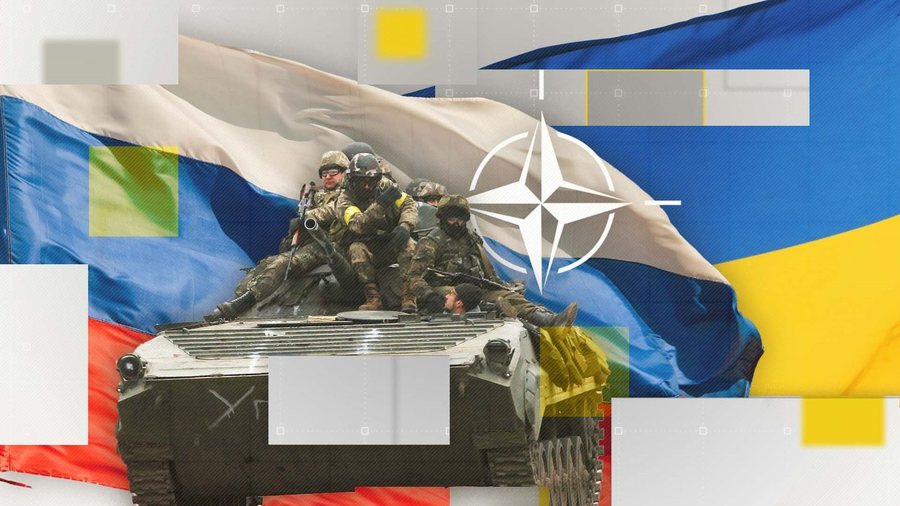
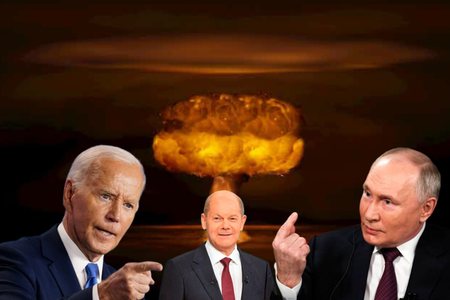
Will we have World War III this time?
Russia's full invasion of Ukraine is showing that World War III is entirely possible. Ukraine's ambassador to Great Britain, also a former top commander of his country's army, has recently stated that other countries can prepare by learning from what is happening in Ukraine.
And it is certain that they can do it. Moreover, by quickly preparing their societies for a war like the one currently taking place in Ukraine, Western countries can help prevent a new world war.
If Ukrainian institutions, companies and citizens were not so resourceful, Ukraine would be facing not only a brutal Russian invader, but also a society in complete collapse. Is humanity ready to calmly accept the coming war, in terms of the degree of suffering?
Will we have World War III this time?
" Free and democratic countries and their governments need to wake up from their slumber and a complacent attitude, and start thinking seriously about how to protect their citizens and their countries. We as Ukrainians are ready to share with you all our knowledge ," said Valery Zaluzhny at the War Conference, held by the Royal United Services Institute (RUSI) gray-tank expert group, earlier this week in London.
Of course, Zaluzhny is not only Ukraine's ambassador to Great Britain, but also its former commander-in-chief. He is the general who led Ukraine's efforts to repel Russian invaders until he was ousted after a bitter power struggle earlier this year with President Volodymyr Zelensky.
When Russia launched its full-scale invasion of Ukraine, Western militaries trained their Ukrainian counterparts to help Ukraine better repel Russia. When the invasion began, Zaluzhny and his troops put this knowledge to good use.
So much so that Russia's "special military operation" planned to last only a few days is still ongoing. Based on normal logic, launching a war of aggression with disastrous consequences for the invader himself should have convinced President Vladimir Putin that invading other sovereign countries is a bad idea.
But Putin does not act on what we would consider logic. In fact, he may think that invading another country serves his and Russia's interests. World War III is no longer the impossible scenario it seemed to be a few years ago.
Great Britain must be ready for a war that could start within 3 years, General Roly Walker, the new Chief of the General Staff of the United Kingdom Army, declared at the conference.
" It doesn't matter how the war in Ukraine ends. I think Russia will come out of it probably weaker. But it will still remain very, very dangerous, and it will require some form of punishment for what we have done to help Ukraine ," he stressed.
The brutal Russian invasion has given Ukrainian soldiers unparalleled battlefield expertise, not to mention experience in military logistics, the art of getting soldiers and equipment to the right place at the right time. As Zaluzhny emphasized in his speech, today's Western armed forces can learn important lessons and knowledge from the very soldiers they themselves once trained.
Equally important, Ukraine has built up a remarkable expertise regarding the resilience of a society under extreme conditions. While countries such as Sweden, Norway and Finland have their own well-functioning civil emergency agencies with extensive powers to plan emergency actions, two and a half years ago Ukraine fell victim to an unplanned invasion. how society had to be kept afloat.
As Russia bombarded cities and marched on them, Ukrainians—institutions, companies, ordinary citizens—had to devise methods to ensure that daily life continued. Since the start of the large-scale occupation in 2022, Ukrainian Railways has performed a miracle, keeping trains on the tracks (and even guaranteeing their on-time arrival at their destination), thereby ensuring that people and goods continue to be transported across the country.
Schools have continued to teach children, including through the Internet and in makeshift locations such as subway stations. In Kharkiv alone, local authorities have set up schools at 5 metro stations.
Ordinary citizens have come together to care for vulnerable neighbors, to care for animals left behind by departing compatriots, and for many other things. Even in shelters, they organize folk dances, theater performances and ballet.
For its part, Ukraine's private sector has been tested in unimaginable ways even during Covid-19: "As the conflict escalated, two fundamental challenges of the war became clear: how to run production facilities or offices to ensure security physical of people and equipment (machines, computers and networks); and at the same time how to assure stakeholders, and especially suppliers, distributors and international buyers, that the companies still exist and are working as usual" - explained the experts in a report published last September.
They discovered that Ukrainian companies can adapt very quickly to the extreme conditions that a war brings. They also held regular meetings where they briefed management on the new conditions, moved production to safer locations, and allowed remote work whenever possible.
As a result, Ukraine's economy has continued to function. If institutions, companies and citizens were not so resourceful, Ukraine would be facing not only a brutal Russian invader, but also a collapsing society, and that would make the Russians' task much easier.
General Zaluzhny is right: Ukraine has invaluable lessons in the field of defense that it can share with the rest of us. Having a strong military and civilian defense will not just be essential if World War III breaks out: it can also deter our adversaries./ Adapted "Pamphlet" from "The Spectator"
*Note: Elisabeth Braw, member of the "Atlantic Council" think-tank, and author of the book "Goodbye Globalization".


Lini një Përgjigje