


 Shkruar nga Pamfleti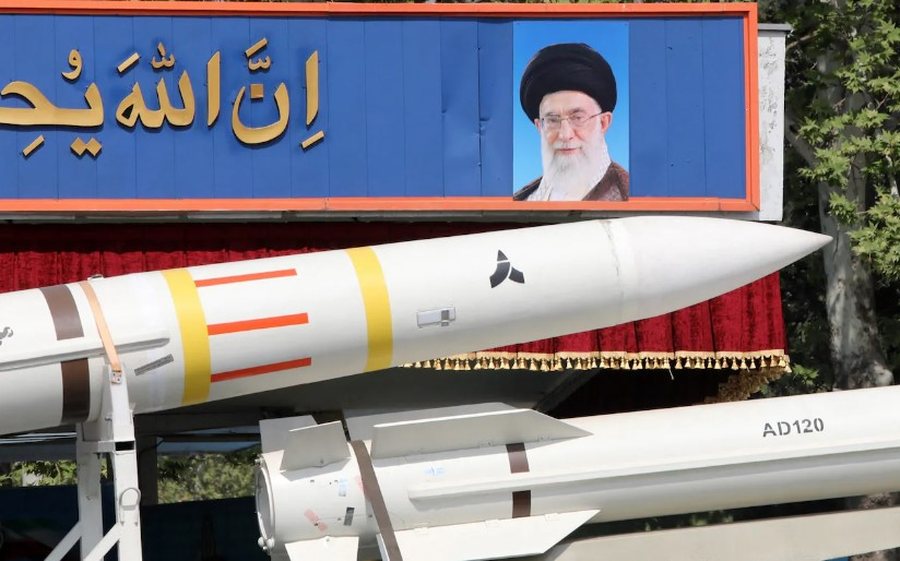
Israel struck Iran on Friday morning, in an attack that dramatically raises the risk of an armed conflict in the Middle East.
Benjamin Netanyahu appears to have defied Western calls for restraint, sparking fears of another major escalation.
As Israel and Iran launch attacks and counterattacks, concern is growing that a regional war could break out.
But how likely is it that a third world war will break out?
Key details about today's explosions in Iran have not yet been revealed, but US officials said Israel launched a retaliatory airstrike on Iran after it was bombed with missiles and drones last week.
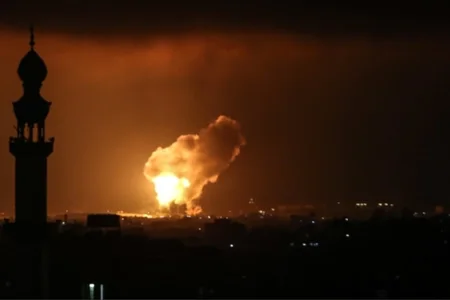
Sources told local media that explosions were heard near an airbase that lies north-east of the Iranian city of Isfahan, in what would be a major escalation.
Iran's Islamic Revolutionary Guard Corps has claimed to have shot down several drones around the airbase, local media reported.
Unconfirmed reports suggested that Natanz, a nuclear facility deep underground, was also targeted. However, an Iranian news agency said the claim was incorrect.
White House and Pentagon officials are closely monitoring the situation.
Why are Iran and Israel enemies?
Israel's strike comes after it was targeted by hundreds of Iranian drones and missiles in an unprecedented attack on April 13.
An Israeli official downplayed that barrage, labeling it a "strategic failure" as roughly 99 percent of the shells were intercepted by the Iron Dome defense system and allies including Britain and the US.
However, it was significant in at least one respect – it was the first time Israel had been directly targeted from Iranian soil.
If the reports are correct and Israel has targeted the Isfahan airbase, this parallels Iran's April 13 target selection.
The Nevatim air base, in the south of the country, suffered minor damage during the bombing.
Israeli officials have been clear that an attack on Iran would happen, but have not said when or if it would be directed at its proxies in the Middle East. These questions have now been answered.
What happens next?
After Iran's attack on April 13, which followed an Israeli attack on its consulate in Damascus, its leadership said it considered the matter closed.
However, he added that if Israel retaliates, then it will respond with a "much larger" attack.
World leaders urged Benjamin Netanyahu to avoid attacking Iran and destabilizing the region, stressing the lack of damage caused by Tehran's attack.
Iran has not yet said how it will respond to Israel's attack.
Its bombing on April 13 was widely telegraphed in advance and officials said it was calibrated to avoid the outbreak of a larger conflict.
However, Tehran may feel the need to "save face" and exchanges between the countries may turn them from a cold war to a hot war.
Jonathan Panikoff, director of the Scoucroft Middle East Security Initiative, noted that Isfahan was home to a nuclear facility and an international airport, and that what happened next would depend on what was attacked.
Risks: Does Iran have nuclear weapons?
If the attacks between Israel and Iran continue to intensify, then the implications are grave – for the Middle East and the world.
Iran has a number of representative groups in the region: in the Palestinian territories, Lebanon, Iraq and Yemen. They fired on Israel on April 13th and will likely do so again if a war breaks out.
Israel, meanwhile, has support among Western powers, as seen when they teamed up to shoot down Tehran's barrage of missiles and drones earlier this month.
Joe Biden, the US president, is said to fear that Israel's leadership could drag it further into a conflict in the Middle East.
Iran has support further afield, which could set the stage for a wider conflict.
He is backed by Russia – which has used its Shahed drones to great effect to prosecute its war in Ukraine – while maintaining close ties to China.
Will World War III begin?
Some experts disagree that the world today is more unstable than it was 10 years ago. But there is disagreement about whether a world war could happen.
Hugh Lovatt, a policy fellow at the European Council on Foreign Relations think tank, argued that conflicts around the world are independent rather than interconnected.
"The reassuring news is that we are not heading for a third world war," he says.
However, others believe that the mistakes in a potential conflict have already been drawn, with tensions rising between Western democratic powers and autocratic regimes such as Iran, Russia and China.
Along with the Middle East, many commentators see the fate of Ukraine as key at this point. Russia could be encouraged to attack a NATO country, or China to invade Taiwan – which the US has pledged to defend.
NATO officials have said that there could be a war between the alliance and Russia within a few years. /Adapted Pamphlet, taken from The Telegraph





Lini një Përgjigje