


 Shkruar nga Emile Hokayem
The current crisis is of a completely different scale, and American diplomacy seems powerless in the face of it.
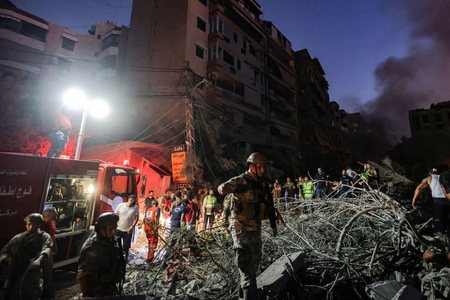
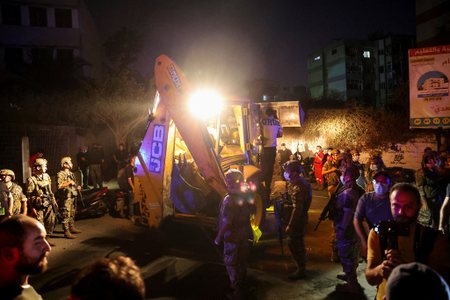
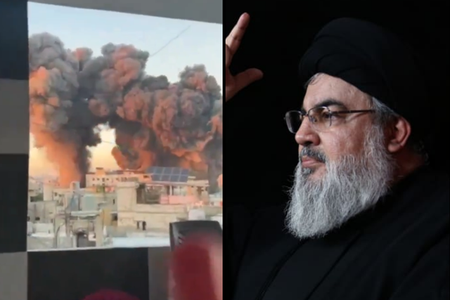
The new phase of the Israeli campaign against Hizbollah, the Iranian-backed Lebanese militant group, has been intense. Israeli officials have yet to decide whether to launch a ground operation, but some are already arguing for a maximalist approach against an organization that appears weakened and disoriented, but not yet broken. Tonight's massive attack in Beirut, aimed at killing Hezbollah leader Hassan Nasrallah, shows the level of Israel's ambition.
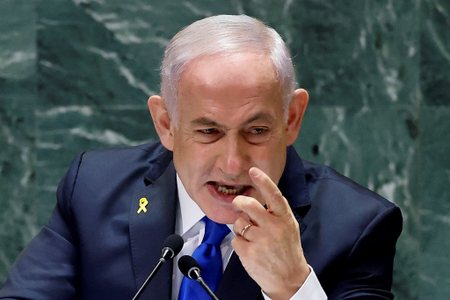
Despite some diplomatic activity, there is a sense of futility and resignation among Middle Eastern states whose efforts to end the war in Gaza have been fruitless. For Arab leaders, containing that war and now the conflict in Lebanon is a Western responsibility. Let Washington make a decision and figure out what's next, they say. Having once again signaled their willingness to make peace with Israel in exchange for a Palestinian state, they do not want to take the initiative again only to be blindsided by Israeli Prime Minister Benjamin Netanyahu.
They are also pleased to see a chastened Iran reluctant to escalate and reassured by the conciliatory tone struck by its new president, Masoud Pezeshkian, at the UN General Assembly in New York this week. Whether he will be able to withstand pressure from his hard-line rivals in Tehran is another matter.
While Iran's influence campaign and the credibility of its deterrence have suffered real setbacks in the past year, Tehran has managed to maintain cordial relations with countries that were its main antagonists not so long ago. Arab officials are watching as Iran tries to revive nuclear diplomacy, wondering if Tehran will offer aid to Gaza and Lebanon in exchange for sanctions relief and other benefits.
These officials also revile Hezbollah as much as Hamas. The Saudis publicly criticized the militant group for starting the 2006 war with Israel and then, along with the United Arab Emirates and others, tried to isolate and punish it, albeit with little success. A more patient and capable Iran outlasted them.
Arab states have not suddenly become naive about Iran. But given the inconsistency of Western policy, they have decided that accommodating Tehran is a price worth paying if it keeps them out of a regional conflict. There is no point in confronting Iran when there is no consensus, strategy or collective resolve, when the potential costs are so high, and when Israel is seen as the regional bad guy. In Riyadh and Abu Dhabi, the priority is the respective economic and connectivity agendas of the countries.
Arab leaders regard Israel as strategically indifferent and politically insensitive and ungrateful, struggling to translate its operational successes into tangible results and unable to accept compromise. Saudi Crown Prince Mohammed bin Salman, who came close to normalizing relations with Israel last year, has now stressed that "the kingdom will not establish diplomatic relations with Israel without . . . the creation of an independent Palestinian state with East Jerusalem as its capital." ".
Its domestic legitimacy and international standing matter more than a dangerous entanglement, at least for now. There is another reason for the sense of regional resignation: Lebanon's fall from grace. The battered country is finding out the hard way that it doesn't have many friends left. This is the legacy of decades of taking partners for granted, accommodating Hezbollah, and failing to enact decisive political and economic reforms.
What a difference from the war of 2006. Then, Lebanon was the darling of the West and the Arab world. It had just emerged from three decades of Syrian occupation and Israel's occupation six years earlier. Western countries embraced Lebanon. And Arab states saw Lebanon as a crucial arena for Arab-Iranian competition. After the war, money and attention flowed, but Lebanon's dysfunction only worsened.
Now it is the problem child of the region. Hezbollah's regional interventions from Syria to Yemen, the ineptitude of the Lebanese political class and the economic collapse since 2019 have driven away Gulf states, foreign aid and tourists. Regional indifference towards Lebanon is evident. With no outside condescension or direction, the country's politicians are confused and have spent the past two years debating the identity of the next president.
Regional apathy has forced Washington, Paris and others to step into the breach, linking a cease-fire between Israel and Hezbollah to financial aid, presidential elections and regional integration for Lebanon. Paris cares about the fate of many French-Lebanese dual citizens and the deep ties between the two countries. Washington managed to force Lebanon and Israel to define their maritime border in 2022, quite an achievement considering they are enemies. However, the current crisis is of a completely different scale and American diplomacy seems powerless in the face of it./ Adapted "Pamphlet" from "Financial Times"




Lini një Përgjigje