


 Shkruar nga Mari Eccles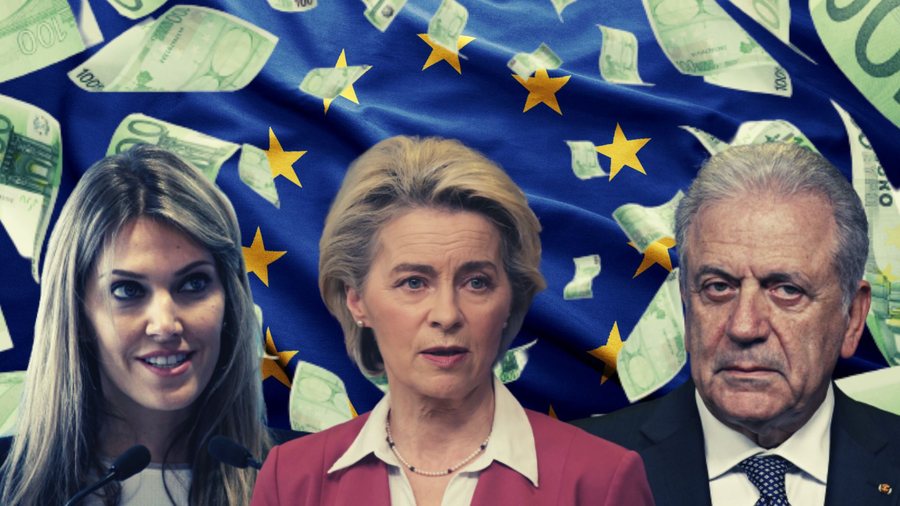
From fraud to nepotism to revolving doors between the public sector and industry, the smell of impunity is pervasive throughout the EU!
Henrik Hololei, an outgoing Estonian who had reached the level of director-general in the EU civil service, was caught accepting gifts from the Qatari government while his department was negotiating a lucrative aviation deal, coincidentally, with Qatar.
It was fine, the European Commission said when the matter came to light in 2023: All his free flights had been approved by someone high up in the department. The problem was, the person high up in the department was Hololei.
This caused a bit of a backlash in Brussels at the time, but it's likely that in Europe in general, few people have ever heard of it.
And this, along with the Commission's silent response, the extraordinary conclusion that no EU rules were broken, the fact that after resigning, Hololei simply made a lateral move to a comfortable role as a senior advisor, and the widespread attitude of Brussels' talkers that they see nothing here, is the perfect illustration of the growing sense of impunity that infects the system.
-Open fraud
To compile a list of the bloc's problems with corruption is to detail a horrific display of bad practices: revolving doors between industry and the EU, nepotism in the bloc's most powerful institutions, workplace harassment, outright fraud.
The thing is, the EU has many oversight bodies that are supposed to sort out these kinds of things - the ombudsman, the public prosecutor, parliamentary committees, even an entire judicial system. But when they denounce bad or even illegal behavior (which they do), it often seems to make no noticeable difference at all.
While national governments live and die at the ballot box, meaning corruption and lack of accountability often come back to bite them, the world of the EU is darker and darker.
In the past week alone, the bloc has been rocked by two scandals, either of which could easily have brought down a government if it had occurred in domestic politics.
The first concerned the woman at the top, the person tasked with upholding the EU treaties: European Commission President Ursula von der Leyen. The EU General Court ruled that the Commission had been wrong to fail to make public text messages exchanged between von der Leyen and the CEO of drug giant Pfizer, Albert Bourla, at the height of the Covid-19 pandemic – and just before the company secured the biggest EU procurement contract of all time.
The full details of the vaccine contract remain secret, despite protests from MEPs who (successfully) took the Commission to court in a separate transparency case — which the executive is challenging. But will we ever see the texts? Almost certainly not.
"In this case I'm not saying that the fish rots from the head, but it's a widespread culture in that there is an attempt to block transparency," says Herwig Hofmann, professor of European public law at the University of Luxembourg, speaking about the EU institutions.
The text message ruling, dubbed “Pfizergate” in EU circles, came at about the same time that anti-fraud watchdog OLAF revealed that the European asylum agency had restructured entire departments so that senior staff could move friends into management positions. Were there any repercussions? You must be kidding. The case was closed, with no disciplinary action taken.
-"Coup d'état"
While Hofmann says he doesn’t believe culture is determined from the top, you could be forgiven for coming to that conclusion. One of the biggest scandals the Commission has faced recently involved the rushed appointment in 2018 to the position of secretary-general of Martin Selmayr, chief of staff to then-Commission President Jean-Claude Juncker, a man known unlovingly as the Berlaymont Monster for his intimidating, hierarchical approach.
Selmayr was one of Juncker's closest aides and the architect of his campaign to become president. His appointment to the top job was added to the agenda of a meeting of commissioners at the last minute to prevent them from staging a revolt.
At the time, critics, who were numerous, described it as a “coup d’état.” Emily O’Reilly, the then European Ombudsman, found four instances of maladministration, including a startling ruse in which the Commission organised a selection procedure for a new deputy secretary-general just to make Selmayr suitable for the position of chief.
-Turkish head
If all of this sounds like a lot of people are getting away with a lot of bad things, there might be something to that.
Perhaps it is a consequence of the way the EU is structured. First, there is the sheer complexity of the set-up (what exactly is comitology?). “The EU is particularly unaccountable,” said one Parliament official interviewed for this article. In part, the labyrinthine system is what makes it “very opaque,” they said.
Then there is the fact that power still lies with national governments. For them, having a scapegoat in Brussels is useful. Also, it simply takes a lot of effort to intervene. Therefore, there is a strong impulse to maintain the status quo.
While EU judges have the power to annul or impose huge fines on companies, countries and even the EU itself for violating the bloc's treaties, they have been much more lenient when it comes to individuals.
So, for example, when it comes to the Pfizergate text message scandal, despite the court ruling against the Commission that the text messages should be treated like any other document. And so it goes.
-'Throw out the villains'
For decades, capitals and the Brussels center have been engaged in a fierce debate over where power lies and how much the EU should be democratically accountable at the central level, rather than its national governments. While there are arguments for both, the lack of accountability at the European level does not help officials feel responsible to a troubled electorate.
If a smaller second chamber of Parliament were created, made up of national lawmakers similar to the Ständerat in Switzerland, it might be in a better position to oversee full accountability. But before things get better, they could get worse. / Adapted from “Pamphlet” by “Politico”





Lini një Përgjigje