


 Shkruar nga Pamfleti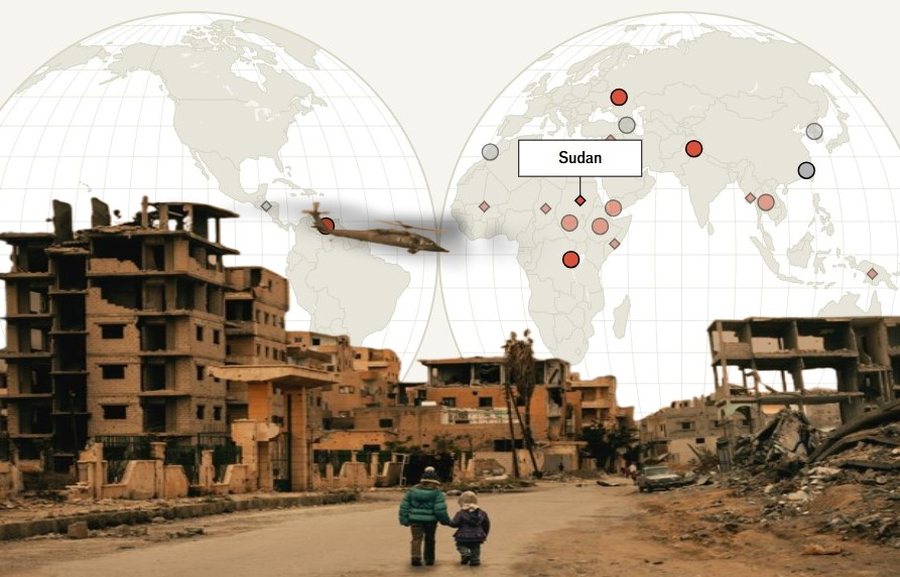
The number of active armed conflicts has increased significantly over the past decade. Most of them have been extremely deadly; others have yet to fully erupt, but if they do, they could shake up their respective regions and global balances. Here are the most dangerous fronts for 2026:
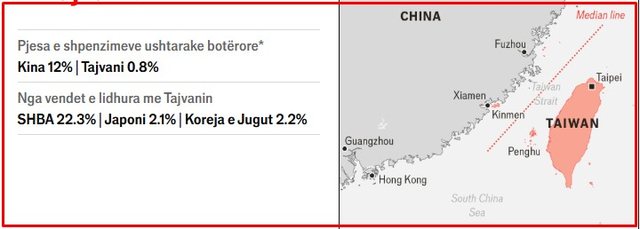
China vs. Taiwan
Beijing has carefully studied Russia’s war in Ukraine, understanding the challenges and costs of modern invasions. However, the vast military disparity between China and Taiwan could tempt China to act, especially if it appears that American support is weakening or the economic cost of an operation is decreasing.

For now, analysts see a naval blockade as the most likely scenario, not an outright invasion. But even a blockade would carry colossal risks: potential clashes with the US, severe sanctions, and destabilization of global markets.
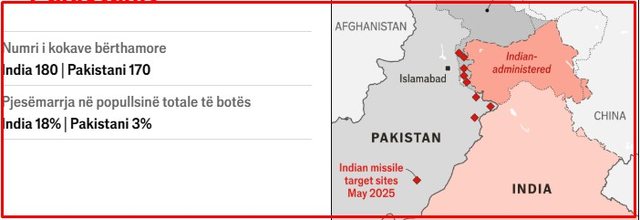
India vs Pakistan
The two nuclear rivals only pulled back from the brink after a bloody clash. In April 2025, an attack in India that killed 26 tourists sparked the most serious crisis in years: mutual attacks along the Line of Control in Kashmir, killing more than 50 people, until a ceasefire was reached.

In Pakistan, Field Marshal Asim Munir has consolidated power; while India, thanks to rapid economic growth, is expanding its lead in conventional military capacity. Two factors aggravate the situation:
The US has clashed with India over trade tariffs, weakening Washington's role as a mediator.
Both countries are showing less restraint than in past crises. With over a fifth of the world's population between them, maintaining peace in 2026 is vital.
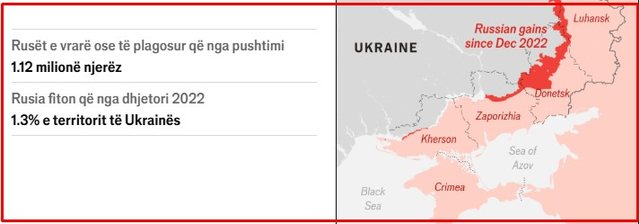
Russia vs. Ukraine: Towards a stalemate or a new explosion?
Russia's losses are now estimated to be higher than those of the United States in World War II. As of December 2022, Moscow has only gained 1.3% additional territory. This arithmetic of attrition suggests three scenarios:
Russia's slow progress;
Conflict frozen by fatigue;
Agreement imposed by reality on the ground.

But there are also two much more dangerous scenarios:
-Ukrainian collapse, military or political, aided by Russian subversion;
-Russian economic collapse, if airstrikes hit the oil industry.
Either option would have massive consequences for Europe and global security.
Israel vs. Hamas: a fragile ceasefire on the ruins
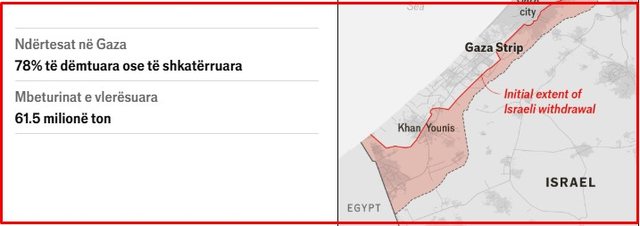
Gaza is devastated, with tens of thousands killed. Israel controls half the territory and Hamas has not disarmed. A return to war, however tragic, is not ruled out. Since October, the sides have accused each other of violating the ceasefire.

If the Trump administration continues to push for a deal and an international peacekeeping force is established, reconstruction could begin and displaced Palestinians could return. But the most likely scenario remains the usual one: divided territory, suffering Palestinians, and a lull that lasts – until it erupts again.
Congo vs. Rwanda
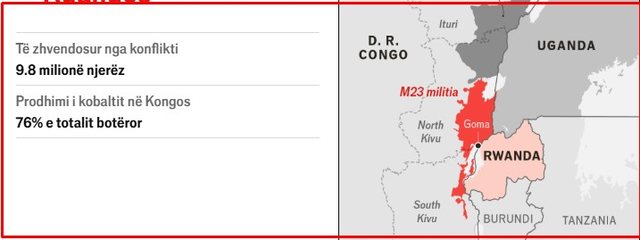
Long-standing tensions over ethnic minorities and eastern Congo's mineral resources risk erupting into open war. In 2025, Paul Kagame's regime in Rwanda armed and led the M23 rebels during their capture of the city of Goma, even sending in its own troops.

The areas controlled by M23 double Rwanda's territorial influence, while the weak agreement signed in Washington with President Tshisekedi did not include these territories. Uganda has also increased its military presence, worried about M23 and interested in gold, while cobalt, gas and oil are also at stake.
Sudan: the war that has generated the largest humanitarian crisis in Africa
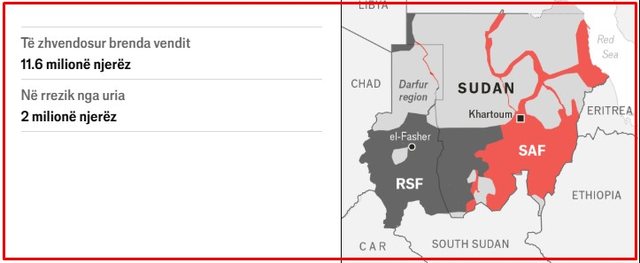
The Sudanese Armed Forces (SAF) and the RSF militia continue their brutal war. The RSF controls Darfur and the west; the SAF controls the capital and the east. Millions of civilians are on the run and many are starving.

The war is fueled by regional actors: Egypt supports the SAF, the Emirates (which denies it) are accused of supporting the RSF. If the sponsors of both sides agree, a deal would be possible and profitable. Sudan is attractive: gold, oil, strategic coastline. For an ambitious mediator like Donald Trump, Sudan presents a challenge – and a chance – to resolve the world’s deadliest active conflict.
Venezuela: US moves towards possible confrontation
The Trump administration has significantly increased its military presence around Venezuela, expanded exercises and struck naval vessels it considers drug traffickers. The goal may be to hasten the fall of the Maduro regime, but it is not yet clear how far Washington is willing to go.

The most likely scenario is air strikes, not a ground invasion. Trump could even order special operations if he sees an opportunity to capture or eliminate Maduro.
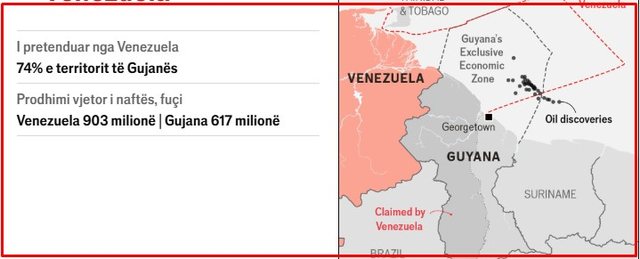
Adding to this crisis is territorial escalation: Venezuela has stepped up its historic claims to oil-rich Wssekibo in Guyana, holding illegal elections in a territory it does not control. Any action by Venezuela towards Guyana would now bring about a direct confrontation with the US. /Adapted from “Pamphlet” by “The Economist”




Asnjë konflikt i ri. Në Ukrahinë do ketë :"Marrëveshje e imponuar nga realiteti në terren".