


 Shkruar nga Pamfleti
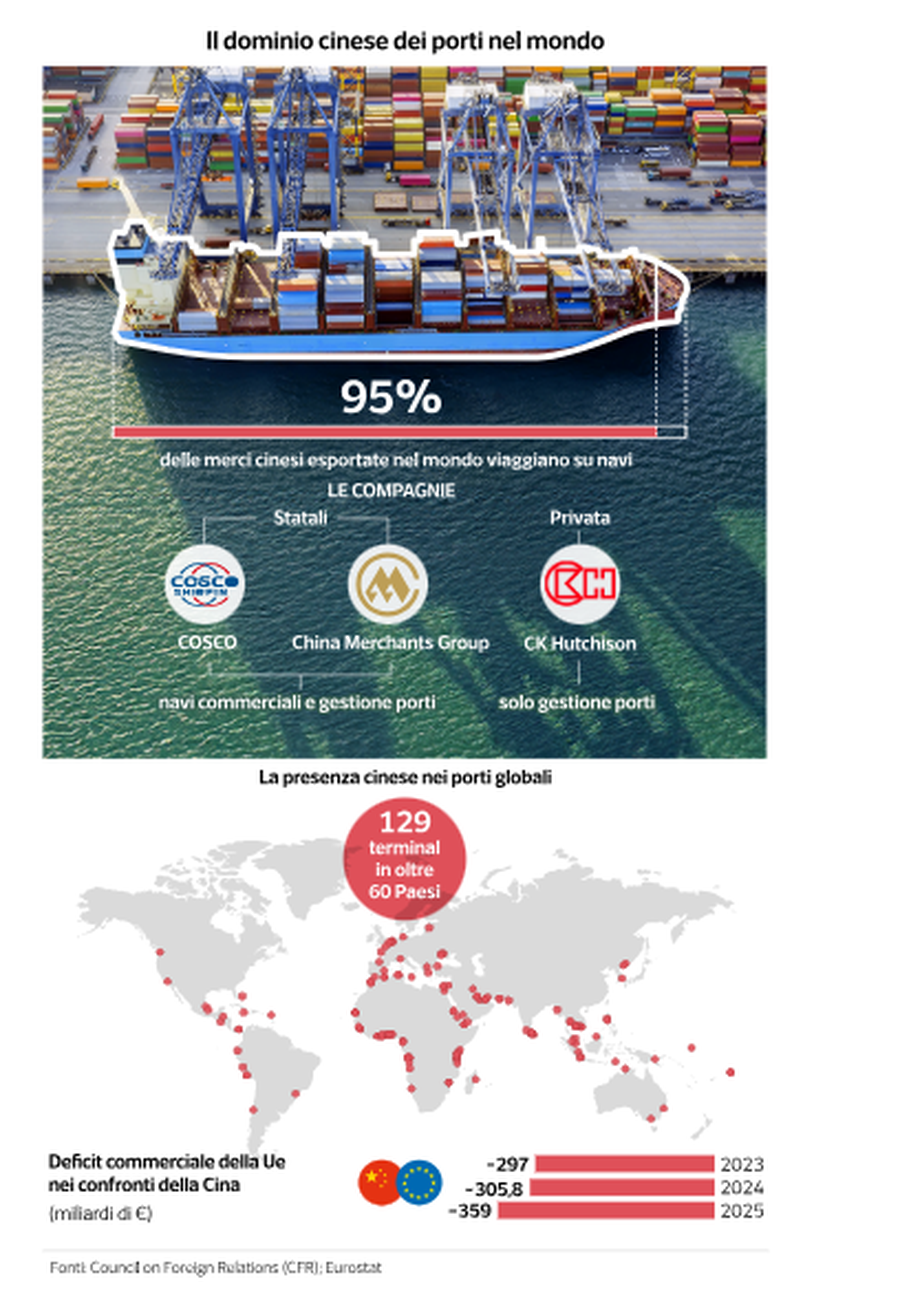
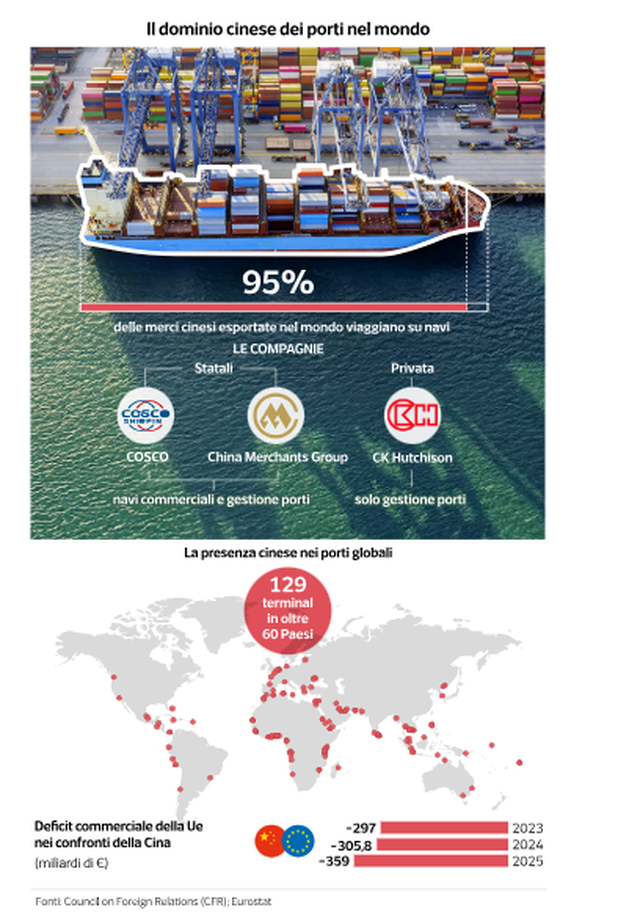
China, through state-owned companies COSCO and China Merchants Group, owns the largest merchant fleet in the world: around 1,900 ships that depart from the giant ports of Shanghai or Shenzhen and arrive anywhere, following the "Maritime Silk Road"...
Everything at competitive prices: phones, tablets, personal computers, electrical appliances, components for electric cars, electric cars themselves, solar panels, wind turbines, chemical products, furniture, toys, clothes, shoes, bags. All "made in China".
In 2025, European Union imports from China marked a further increase, contributing to a new record of the European trade deficit with Beijing, estimated at around 360 billion euros, +18% compared to 2024. Also thanks to the tariffs imposed by Trump on the US, Europe has become the main market for the surplus of Chinese exports.
Almost all of this cargo is transported by container ships. China, through state-owned companies COSCO and China Merchants Group, owns the world's largest merchant fleet: some 1,900 ships that depart from the giant ports of Shanghai or Shenzhen and arrive anywhere, following the "Maritime Silk Road."
This is a global system of infrastructure and connections that ensures the coordination of trade flows and also includes the control of 129 terminals distributed in ports of arrival in 60 countries. In Europe, Beijing has a presence in all the most important ports. However, investing in a terminal is not always a very profitable activity. So what is the benefit?
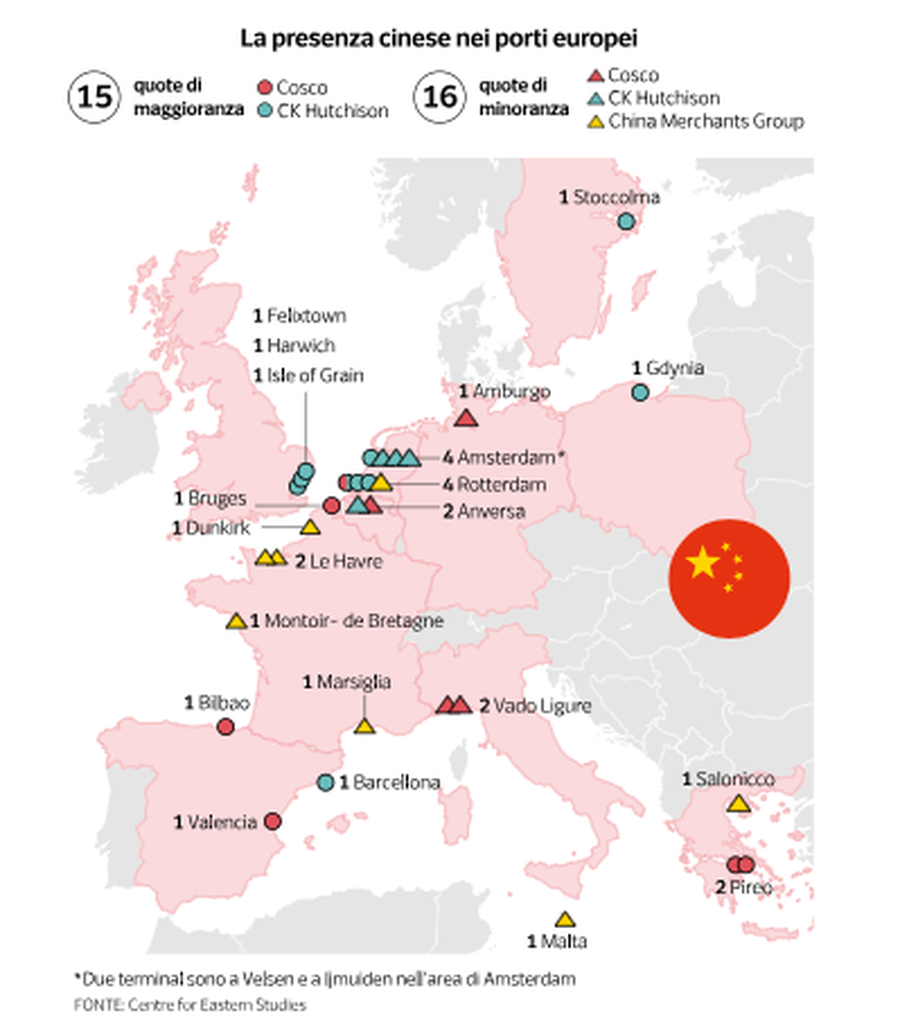
Presence in European ports
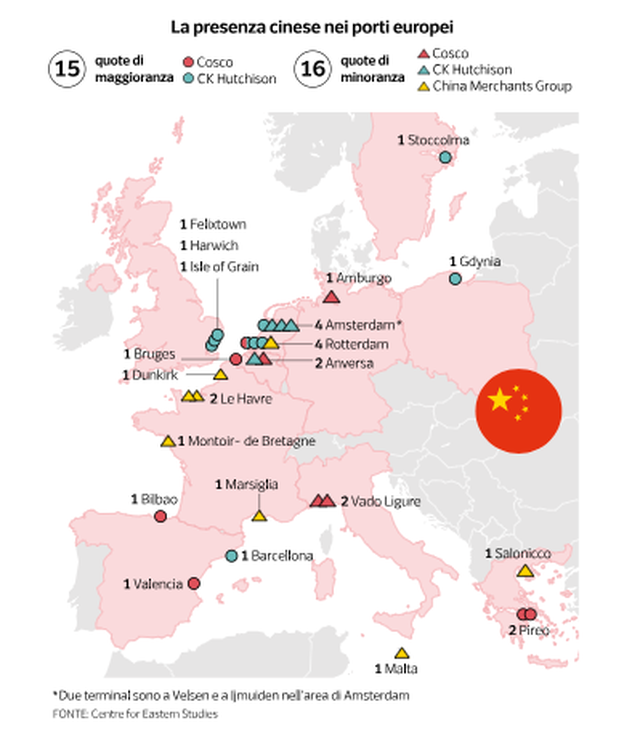
Port management involves a clear separation between the authority that administers the port, usually public, and private operators that manage the terminals through long-term concessions. It is rare for these two functions to overlap. One such case is the port of Piraeus in Athens, where COSCO controls both the Piraeus Port Authority and the two main container terminals.
In Rotterdam, CK Hutchison, a Hong Kong multinational with ties to Beijing's political control, operates three terminals, one in partnership with COSCO. Chinese companies also operate a terminal in Bruges–Zeebrugge, one in Amsterdam, one in Valencia, one in Bilbao, one in Barcelona, one in Stockholm and one in Gdynia. In the UK, they operate terminals in Harwich, Felixstowe and the industrial estate of the Isle of Grain.
These companies also own participations in the terminals of Marseille, Dunkirk, Montoir-de-Bretagne, Le Havre, Amsterdam, Antwerp, Hamburg, Rotterdam, Vado Ligure, Malta and Thessaloniki.
Growing business
Në thelb, këto kompani janë sot investitorët më të mëdhenj të huaj në portet europiane: rreth 9 miliardë euro është vlera e investimeve të kryera nga dy kompanitë shtetërore kineze COSCO dhe China Merchants Group (burimi: Centre for Eastern Studies). Ky kontribut ka ndihmuar në rigjallërimin e porteve në vështirësi, duke nxitur ardhjen e flukseve të reja të mallrave nga Azia.
Për shembull, në Zeebrugge, pjesë e portit Antwerp-Bruges, shkarkimi i kontejnerëve është rritur në 6 vite nga 316.000 në mbi 1,2 milionë në vitin 2023. Ky rezultat vjen nga bashkimi i dy porteve, por edhe nga roli i COSCO-s, që nga viti 2017 kontrollon terminalin CSP.
Edhe më i dukshëm është rritja në portin e Pireut: para blerjes nga kinezët ishte porti i 16-të në Europë, ndërsa në vitin 2023 u rendit i katërti. Blerja e terminaleve ka kosto të larta operative dhe nuk garanton domosdoshmërisht fitime të mëdha, por shërben për të forcuar ndikimin ekonomik dhe gjeopolitik. Ky është objektivi i Kinës. Por jo vetëm.
Mashtrimet doganore dhe hetimi “Calypso”
Kontrolli i terminaleve forcon zinxhirin logjistik, ul kostot dhe kohët, si dhe lehtëson hyrjen e mallrave, shpesh me çmime nën kosto dhe të subvencionuara nga Pekini.
Në portin e Roterdamit, më i madhi në Europë, në vitin 2025 vlera e mallrave “Made in China” arriti në 118 miliardë euro, +8% krahasuar me 2024. Çdo vit, në Roterdam dhe Antwerp-Bruges mbërrijnë rreth 4 milionë kontejnerë nga Kina.
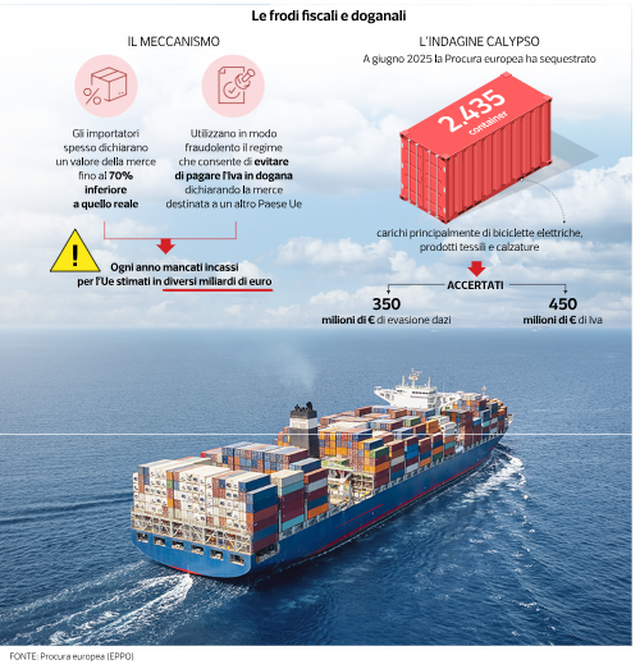
Në këto volume të mëdha shfaqet gjithnjë e më shumë fenomeni i mashtrimeve doganore: shpesh deklarohet një vlerë më e ulët e mallrave për të paguar më pak tarifa dhe TVSH. Nëse terminali menaxhohet nga eksportuesi, manipulimi bëhet më i lehtë. Kontrollet pas zhdoganimit janë të kufizuara dhe nuk kalojnë mesatarisht 2% të totalit.
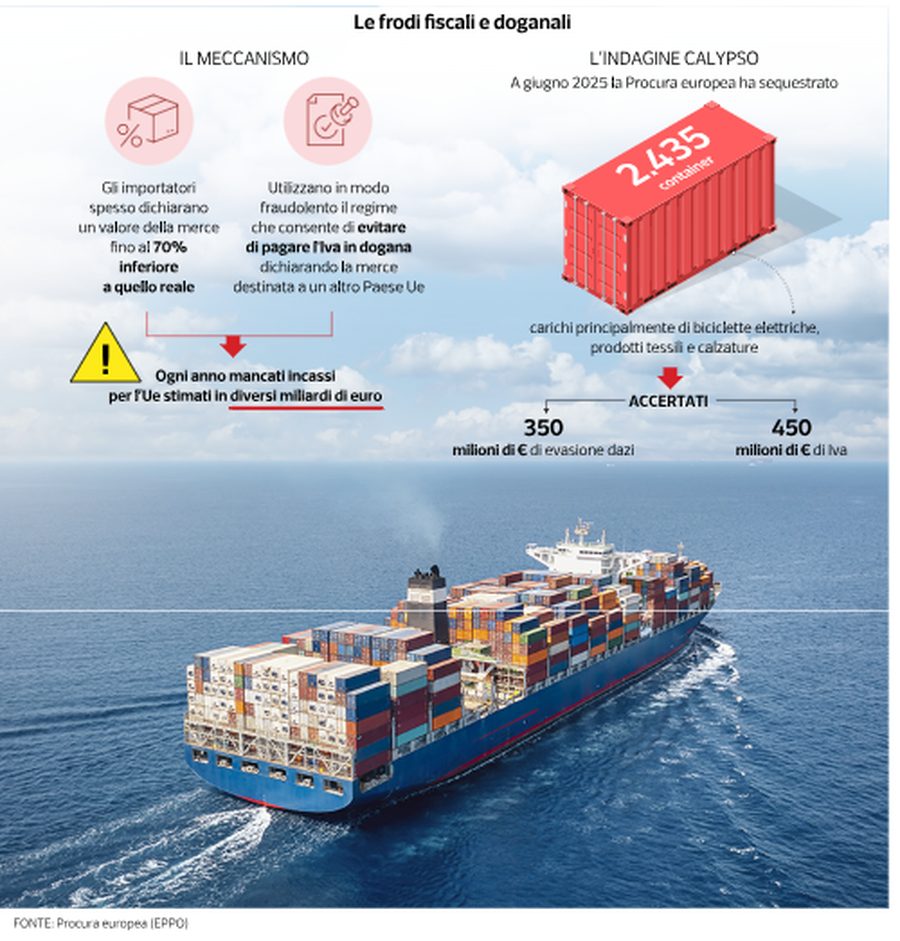
Prokuroria Europiane, me hetimin “Calypso”, në qershor të kaluar sekuestroi në Pire 2.435 kontejnerë me biçikleta elektrike, produkte tekstili dhe këpucë. Aktiviteti kriminal, që zgjati të paktën 8 vite, çoi në arrestimin e 10 personave, përfshirë dy zyrtarë doganorë, dhe përfshiu 14 vende të BE-së, përfshirë Italinë. Humbjet vlerësohen në të paktën 350 milionë euro në tarifa dhe 450 milionë euro në TVSH.
Sipas ekspertit të antifraudës Fabio Botto, importuesit deklarojnë vetëm një pjesë të mallrave dhe përdorin në mënyrë abuzive regjimet doganore për të shmangur TVSH-në, duke krijuar evazion të plotë fiskal. Në portin e Pireut, ku autoritetet kanë vështirësi të përballojnë flukset e mëdha, mashtrimet janë rritur ndjeshëm.
Çështjet e sigurisë
Një tjetër shqetësim lidhet me mbledhjen e të dhënave mbi trafikun. Disa terminale në Amsterdam, Gdynia, Le Havre dhe Roterdam ndodhen pranë porteve ushtarake të NATO-s. Ekziston mundësia që qeveria kineze të monitorojë lëvizjen e trupave ose furnizimeve, përfshirë ato drejt Ukrainës.
The LOGINK platform, managed by the Chinese Ministry of Transport, is used in seven European ports. This platform provides access to data on goods, containers, shipping routes and people involved, which can be used for strategic purposes.
According to the European Parliament, these infrastructures could have dual use, civilian and military, and could theoretically support the Chinese navy. Also, terminals controlled by Chinese companies are likely to favor other Chinese companies, such as ZPMC for port equipment or Huawei for technology, to the detriment of European suppliers.
The European Union's new approach
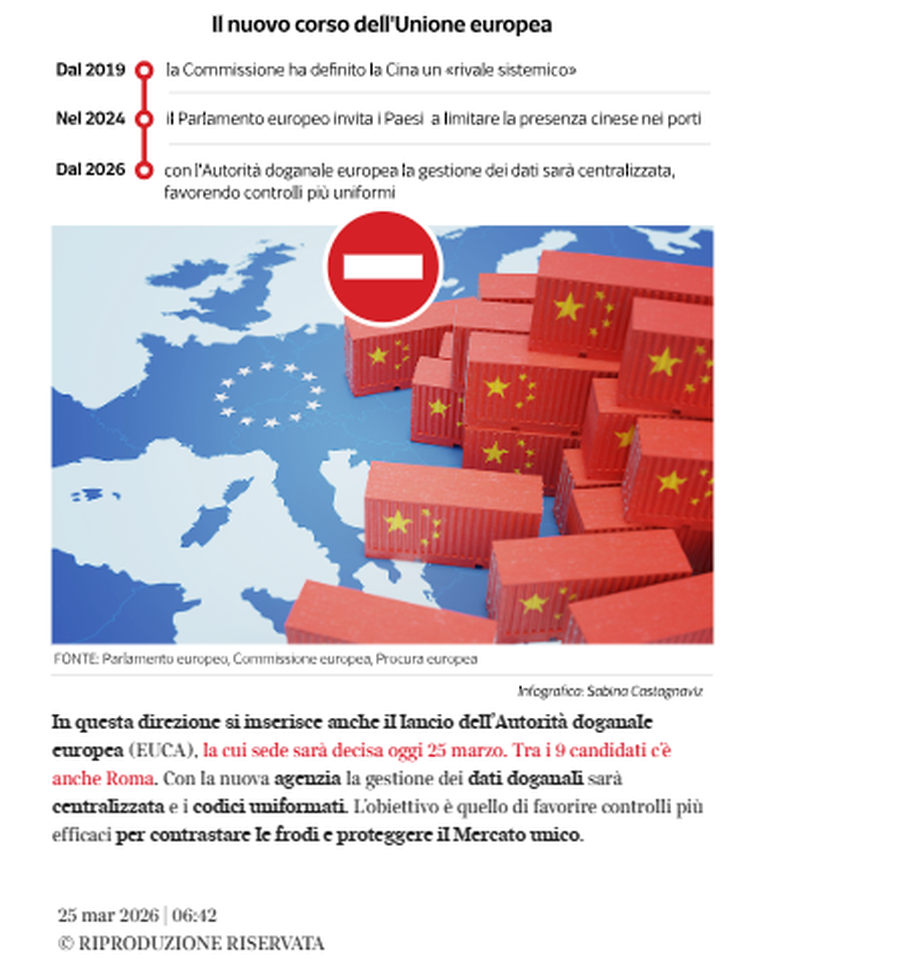
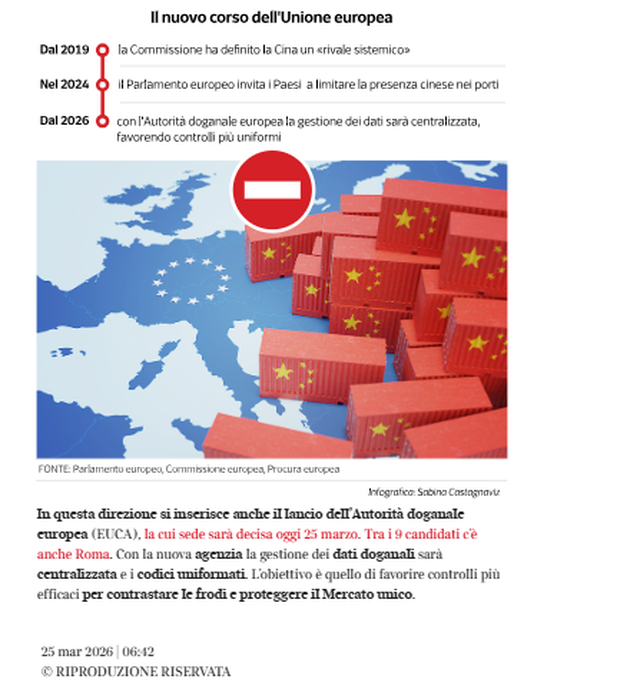
The European Union has changed its approach to China. In a 2019 report, the European Commission defined China not only as a cooperation partner, but also as an economic competitor and systemic rival. This stance is also reflected in policies on ports, which are now considered strategic infrastructure that must be protected.
In 2022, Germany reduced COSCO's stake in the Tollerort terminal in the port of Hamburg from 35% to 24.99%, to limit its influence on decision-making.
In 2024, the European Parliament adopted a resolution calling on member states to limit Chinese presence in strategic infrastructure such as ports.
The creation of the European Customs Authority (EUCA), whose headquarters are expected to be established on March 25, also goes in this direction. Rome is among the nine candidates. The agency aims to centralize customs data and unify codes, to increase the effectiveness of controls and combat fraud, while protecting the European single market. /Adapted from Corriere /


Lini një Përgjigje