


 Shkruar nga Pamfleti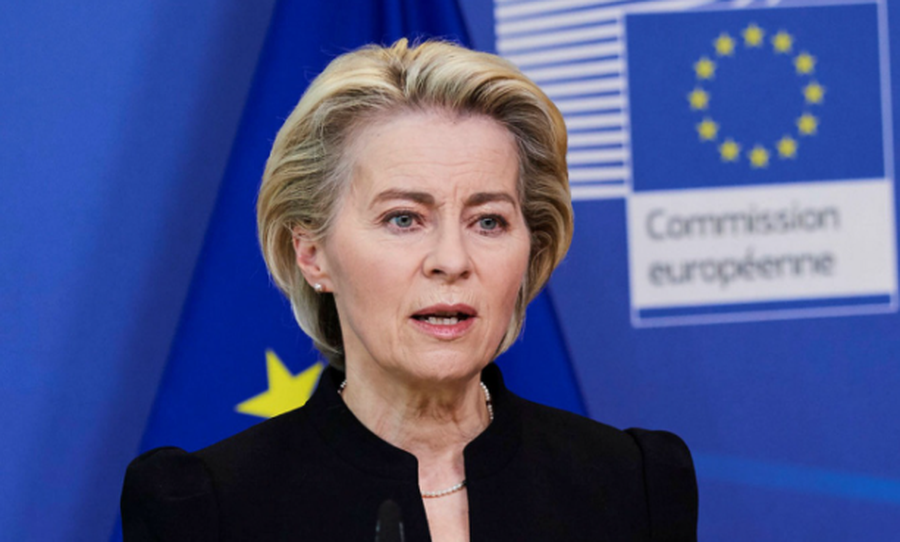
Von der Leyen will miss the gender balance target for top EU posts. The aim of having an equal number of men and women is at risk as member states ignore the demand for male and female candidates.
Ursula von der Leyen will miss her target for a gender-balanced senior team at the European Commission after EU governments rejected her request to nominate both male and female candidates.
The first female president of the EU's executive, who was re-elected for a historic second term last month, is putting together her team of commissioners. Like government ministers, these are senior EU officials who oversee the bloc's climate, technology and industrial policies, negotiate trade deals, scrutinize European law, award billions in grants and draw up the union's budget.
After her re-election, von der Leyen said she aimed for "an equal share of men and women" in the top table.
But her goal is in jeopardy after member states ignored the EC president's request to propose two candidates, one man and one woman.
Ahead of the August 30 deadline for submitting names in Brussels, 14 men and five women have been proposed as candidates, according to an analysis of government announcements and local media reports.
Of the seven countries that have yet to finalize the nomination, two (Lithuania and Romania) are expected to seal the nominations of male candidates soon, while two others (Belgium, Denmark) are widely expected to nominate a male candidate. The men have favorite status in two other countries yet to be nominated (Italy and Portugal), while the women are favorites in Bulgaria.
In worst-case scenarios, the next commission – expected to take office in December – could have only 22% or 26% women (including von der Leyen herself), a worse gender balance than the previous commission when it took office in 2019 with 44% female representation.
The head of the European Parliament's gender equality committee, Lina Gálvez, urged von der Leyen to insist that EU governments offer female candidates. "We never achieve anything without pushing the boundaries, without pushing," she told the Guardian.
Complicating von der Leyen's task is an exception to the provision of female candidates for governments re-appointing their incumbent commissioner. Most of the returnees are men, such as France's Thierry Breton, who recently teamed up with tech mogul Elon Musk, and Maroš Šefčovič, a commission vice-president with a wide-ranging portfolio including EU-UK relations.
Valdis Dombrovskis of Latvia, Wopke Hoekstra of the Netherlands and Oliver Várhelyi of Hungary have also been selected to return to Brussels. Dubravka Šuica, a former Croatian president in charge of demographic policy, is the only woman nominated to return.
This exception has caused resentment. Some EU leaders have said they have no intention of appointing a woman, as there is no legal requirement to do so.
"With respect and in accordance with the treaties we have taken the decision to send a name," Ireland's prime minister, Simon Harris, said in June as he confirmed his intention to nominate finance minister Michael McGrath.






Lini një Përgjigje