


 Shkruar nga Pamfleti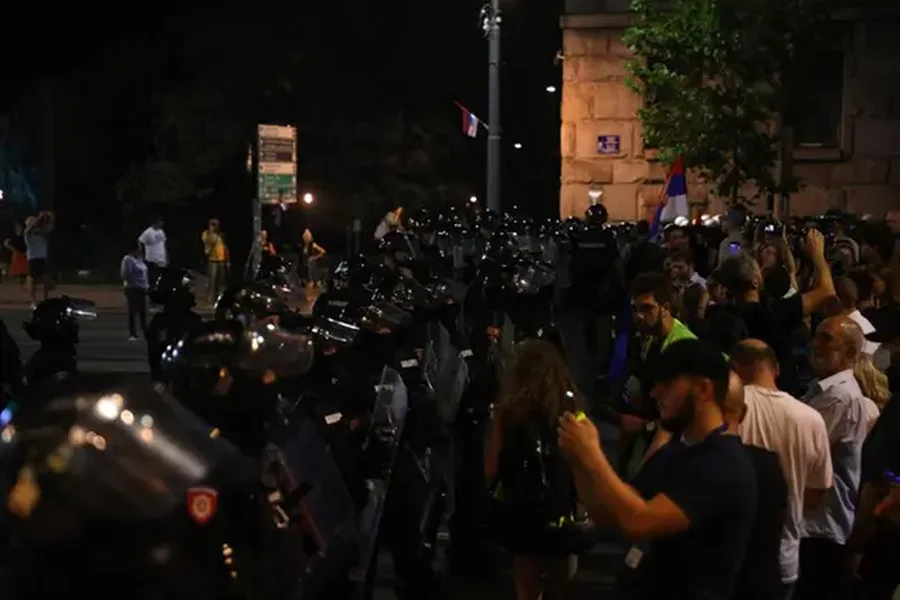
The student movement leading the protests in Serbia accuses the country's leadership of corruption and calls for early elections...
Demonstrations called by a student movement against corruption and the Serbian regime descended into chaos, resulting in incidents and clashes between demonstrators, police and government loyalists. About 90 civilians, 27 law enforcement officers and seven military personnel were injured, some seriously. This is the most serious escalation since the protests that have rocked the country for nine months began.
The fuse was lit by the collapse of a platform at the Novi Sad train station last November, which killed 16 people. The incident became a symbol of the systemic corruption of the regime of Aleksandar Vučić, who had been in power for 13 years. The student movement, leading the protests, is demanding an end to the "state capture" by the Serbian leadership and early elections.
On Wednesday, the movement launched a social media appeal, “Wake Up Serbia,” calling on citizens to gather in various cities across the country. Demonstrations took place in about 90 cities and towns, according to the Serbian Interior Ministry. The climate was already tense: clashes between activists and government supporters had occurred in the previous days, mainly in Vrbas and Bačka Palanka, but also in other Serbian cities. The protests called by the students on Wednesday were also a response to this wave of violence, which signals growing nervousness among the Serbian leadership, which is increasingly weakened by the challenge posed by the movement.
Pro-government front
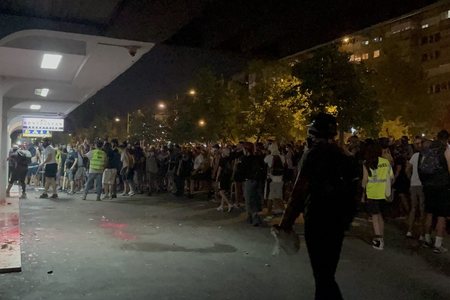
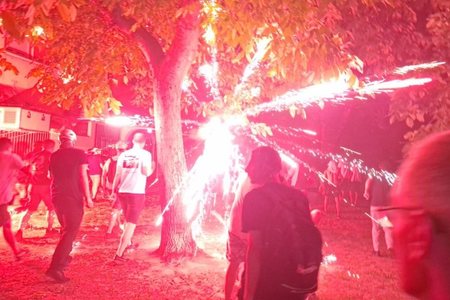
The situation escalated. Several demonstrations took place in front of the offices of Vučić’s Serbian Progressive Party (SNS). The most violent clashes occurred in Novi Sad, a city in Vojvodina, an autonomous province of Serbia inhabited by a Hungarian minority. At the epicenter of the protests, SNS supporters, some masked, threw fireworks, stones, bottles and even flares at the protesters, who responded with a culmination of violence that resulted in 64 injuries in Novi Sad alone, including 16 to police officers who intervened to disperse the crowd.
The latest move was opposed by activists who claimed that police left government supporters, some of whom were armed, unmolested while they attacked protesters. According to CNN partner network N1, two journalists, Nikola Bilic of the news portal 192 and Zarko Bogosavljevic of the news portal Razglas, were also injured during the clashes in Novi Sad. The former was beaten, the latter was hit in the head with a rubber baton.
Clashes have erupted in several Serbian cities, starting with Belgrade. Among the hottest spots is Pionirski Park, in front of the Serbian Parliament, where groups of students opposing the protest movement have set up camps. Students 2.0, as they call themselves, emerged just days after the March 15 protest in Serbia, the largest in the country’s history. An investigation by N1 later revealed that they were mostly extras. A video circulating on social media last night shows the Serbian president’s brother, Andrej Vučić, one of the most influential members of the SNS, leading a group of government supporters as police escort him to the camp.
Russia's role
"An attack on the state," Serbian Interior Minister Ivica Dacic called it, promising a crackdown on the protesters.
"We will work to identify everyone, and within the next 48 hours," he warned, "those who violated the law and caused harm to citizens and police officers will be punished." Vučić also attacked the activists, calling them "terrorists."
"I want to tell all Serbian citizens tonight that the state is strong enough and capable of preventing any attempt to ignite a civil war, endangering peace and security in the country." This accusation was refuted by the student movement, which in turn pointed the finger at the Serbian president, whom they say is guilty of wanting to ignite a civil war in the country. The Kremlin has been silent for the time being.
Last June, Russian Foreign Minister Sergei Lavrov, speaking about anti-government protests, warned the West not to interfere in Serbia with color revolutions, which Moscow said would overthrow governments in Ukraine and Georgia, under the leadership of Europe and the United States. This old expression has also been revived in recent months by regime propaganda in Serbia.
For its part, Europe has expressed "deep concern" about the news coming from Belgrade. "To progress on the European path, citizens must be able to express their opinions freely and journalists must be able to report without intimidation or attacks," commented European Commissioner for Enlargement, Marta Kos. The Slovenian's words have been repeated repeatedly in recent months, but have not been followed up with concrete measures, as has happened, for example, in Georgia.
In recent years, Serbia, a candidate for EU membership since 2012, has made little or no progress in the European integration process. Among the 27 countries, the prevailing view is that enlargement towards the Western Balkans without Belgrade, Moscow's (and Beijing's) focal point in the region, would be without real political weight. / Adapted from Il Domani /


Lini një Përgjigje