


 Shkruar nga Pamfleti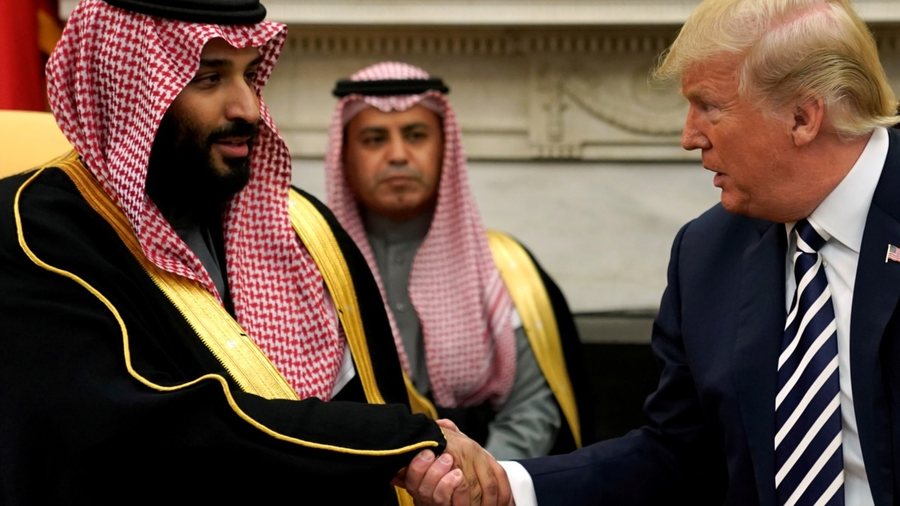
After facilitating the first high-level talks between American and Russian officials since the start of the war in Ukraine, Saudi Arabia is reportedly positioning itself as a mediator for other important talks – between the United States and Iran.
The American television network, CNN, which first reported on these developments, said it remained unclear whether the Saudis had officially offered to mediate.
However, analysts suggest that Riyadh has a strong chance of mediating the talks, and may be better positioned than traditional mediators to bring the US and Iran to the negotiating table.
"Riyadh is looking for a way to address concerns about Iran's nuclear program, as well as the country's regional activities and the support it enjoys from other groups," said Gregory Brew, senior analyst at the Eurasia Group, a US-based think tank.
"Given Riyadh's interest in avoiding escalation in the Gulf region, the Saudis certainly see diplomacy as a more effective means of addressing these issues, as opposed to any military action," he said.
Saudi Arabia severed relations with Iran in 2016 after its diplomatic missions were attacked by protesters angry over the execution of a prominent Shiite cleric by Saudi authorities.
Two years later, when US President Donald Trump withdrew from the 2015 nuclear deal between Iran and world powers, the Saudis were among Iran's enemies who celebrated the move.
In 2019, Yemen's Iran-backed Houthi rebels launched a major drone attack with missiles against Saudi oil refineries, severely damaging the oil production process.
However, much has changed since then, thanks to a China-brokered agreement in March 2023 that led to improved relations between Tehran and Riyadh.
Saudi Crown Prince Mohammed bin Salman has long sought to position his country as a global economic and diplomatic hub, and to this end, he has drafted the so-called "Vision 2030" plan, through which he aims to diversify the kingdom's economy and reduce its dependence on oil.
However, to achieve this, Saudi Arabia needs stability in the Middle East.
"Saudi Arabia's willingness to mediate between Tehran and Washington did not come out of a political vacuum," said Behnam Taleblu, an Iran analyst at the Washington-based Foundation for Defense of Democracies.
"By accommodating Tehran through diplomatic normalization, but remaining in the Western orbit, Riyadh is hoping not to be recognized as a place where a larger regional conflict involving Iran is judged."
Although the Islamic Republic insists it is not building nuclear weapons, concerns are growing about the nuclear program being weaponized - especially as Tehran's friendly groups in the region - which are considered the country's first line of defense against Israel and the United States - have faced significant losses.
Abdulaziz Sager, head of the Saudi-based Center for Gulf Studies, told Radio Free Europe that Riyadh is making a strong case that it is up to Iran to decide whether it wants to maintain its peaceful nuclear program.
However, according to him, the expansion of the Iranian nuclear program, following the US withdrawal from the nuclear deal, "offers no guarantee" that it will remain peaceful.
A month ago, Iran's supreme leader, Ayatollah Ali Khamenei, rejected the idea of direct talks with Trump on a new nuclear deal, insisting that the US president cannot be trusted.
Experts believe that this is where Saudi Arabia can play its role.
On paper, the Saudis can offer the Iranians what traditional mediators, like Oman and Qatar, cannot, Brew estimates.
Saudi Arabia is believed to have benefited more than Iran from the 2023 agreement to normalize relations, and many people in Iran complain that Tehran has benefited little economically from improving ties with the Saudis.
"Iran is analyzing options to ensure that there will be economic benefits from the agreement, and Saudi Arabia can offer that, considering that the Saudis can commit to investment, trade and other benefits," Brew said.
Another motive for the Iranians to engage in talks, mediated by the Saudis, is because even former US President Barack Obama could not guarantee that the Trump administration would continue to be part of the 2015 nuclear deal, and thus, neither can Trump assuage Iranian concerns about the incoming administration.
"On the other hand, [Muhammad bin Salman] will be involved in these issues for a while, and it is possible that the Saudi offer will sweeten the deal," Brew said.
In 2013, Iran and the US began secret talks, which were later made public, resulting in the signing of a nuclear deal in 2015.
"Iran has the opportunity to engage, especially if the talks are private, and may tolerate concessions just to stay at the negotiating table, or it will abandon some activities that it can easily activate whenever it feels like it," Tabeblu assessed./ REL





Lini një Përgjigje