


 Shkruar nga Pamfleti
In addition, Hezbollah has large stockpiles of shorter-range munitions, as well as armed drones. This means that any war between Israel and Hezbollah would have the potential to be far bloodier and more dangerous than the conflict between Israel and Hamas.
Concern is growing over the threat of the Iranian-backed Hezbollah militant group in Lebanon expected to declare full-scale war on Israel.
Such a conflict would be of a much larger and more lethal scale than Israel's war against Hamas in Gaza, given the size and capabilities of the Lebanese force.
A sudden escalation yesterday in Hezbollah attacks against targets across the border in northern Israel is an ominous sign.
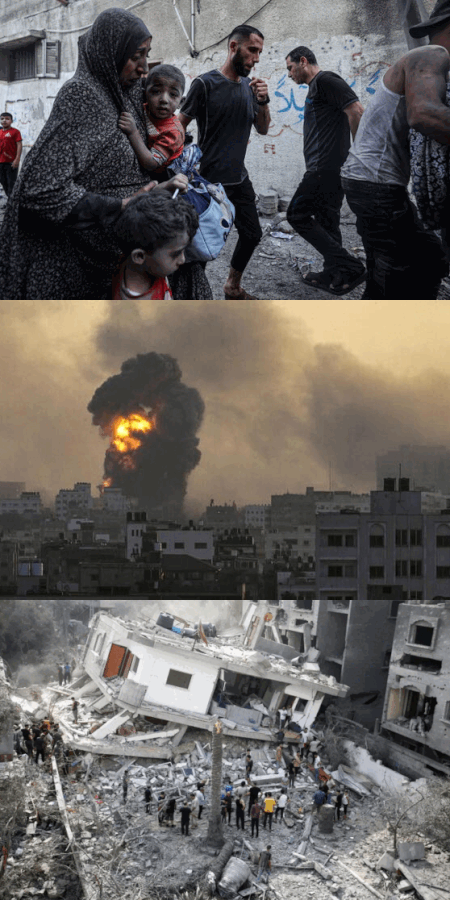
Shiite Islamist militants in Lebanon have stepped up deadly attacks in northern Israel since fighting broke out between Israeli forces and Hamas, another Iranian-backed militant group, in Gaza following its October 7 attacks.
While alarming, the violence had remained within a certain level of escalation that could be understood by the Israeli side as not signaling a precursor to a full-scale war.
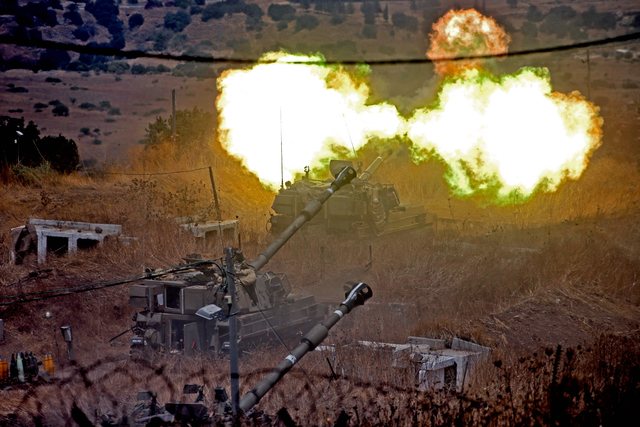
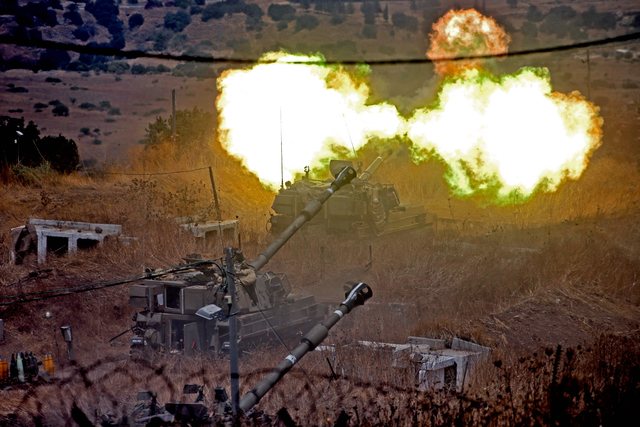
However, yesterday's sharp escalation of hostilities, including the first use of an explosive suicide drone, could change that calculus. The Israeli military responded to the attacks with airstrikes against Hezbollah targets in Lebanon, as well as tank and artillery fire.
Hezbollah's latest activity has raised tensions on Israel's northern border to their highest level in nearly four weeks of unrest - already marking the worst crisis between the two sides since the 2006 Lebanon war.
Attention is now focused on a speech later today by Hezbollah leader Hassan Nasrallah - his first public comments since the start of Israel's war with Hamas.
All too aware of the dangers of Iran-backed Hezbollah opening a new front against Israel, the United States has done everything in its power to prevent escalation.
Two heavily armed carrier strike groups have been moved to the region, with the ability to strike against any perceived threat to US assets or allies.
Significant diplomatic efforts are also underway, with messages being relayed to Tehran and Hezbollah to warn against igniting a regional war.
Iran, which funds, trains and equips Hezbollah, as well as the militant group itself, will undoubtedly balance the costly consequences of a regional war against the desire to strike Israel while its military is in conflict with the Sunni Islamist Hamas.
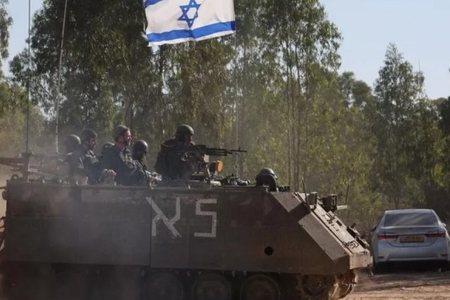
The Israel Defense Forces are taking no chances, ensuring that its troops are mobilizing on the border in the north, backed by significant air power, at the same time as fighting Hamas in the south.
Israel has by far the most powerful military force.
However, Hezbollah can field some 20,000 full-time fighters, with tens of thousands of reservists as well as a large arsenal of powerful weapons - far more powerful than anything Hamas has.
These include missiles with a range of up to 430 miles, as well as precision-guided missiles - far more accurate and deadly than rockets fired by Hamas.
In addition, Hezbollah has large stockpiles of shorter-range munitions, as well as armed drones.
This means that any war between Israel and Hezbollah would have the potential to be much bloodier and more dangerous than the conflict between Israel and Hamas.
Hoping to deter aggression, Benjamin Netanyahu, the Israeli prime minister, warned last week that Hezbollah would be making "the mistake of its life" if it decided to attack.
"We will hit him with a force he cannot even imagine, and the implications for him and the state of Lebanon will be devastating."
However, Hezbollah's escalation yesterday may indicate that the group is choosing not to listen. / Sky News



Lini një Përgjigje