


 Shkruar nga Pamfleti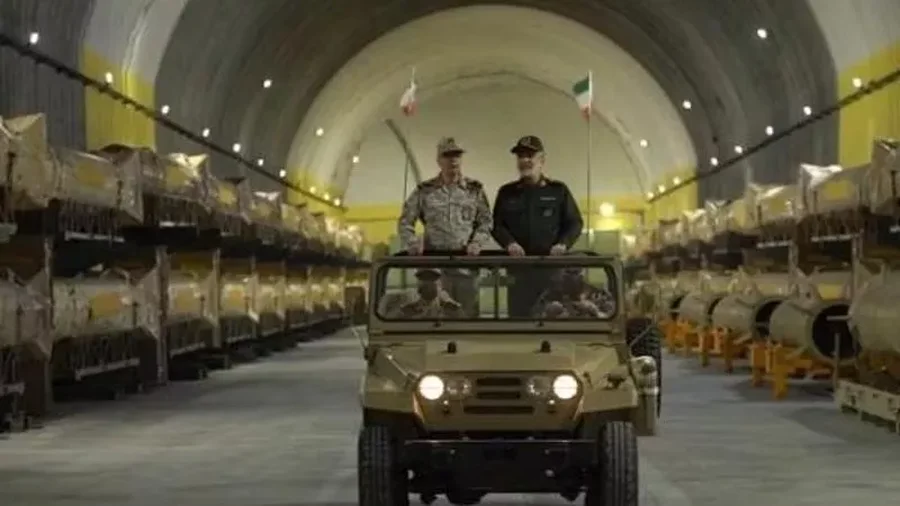
A month after the launch of the joint Israeli-American attack on Iran, developments on the ground show that the initial expectations of the Trump administration have not been realized. This assessment is also supported by the analysis of Italian intelligence, which had predicted a different course of the conflict.
From the very beginning, Italian intelligence services warned that the conflict would be prolonged and that it was unrealistic to expect a popular uprising or a regime change on the Venezuelan model. According to them, the Iranian response would rely on creating gradual pressure and using time as a strategic factor. They also informed the Italian government that Iran's stability was closely linked to its underground defense infrastructure.
Military analysts point out that Iran has been preparing for such a confrontation for about 25 years. The Iranian leadership has built its strategy taking for granted the possibility of an attack by the United States and Israel.
In this context, investment has not been focused on conventional forces, such as aviation or the navy, where Western superiority remains dominant. Instead, Iran has developed a vast capacity with drones and missiles, produced on a large scale.
These capabilities have been tested both in confrontations with Israel and through analysis of the war in Ukraine. The strategy used relies on rapid and scattered strikes, followed by immediate withdrawals.
Over the past month, Iran has followed a recurring pattern: launching waves of drones to overwhelm air defense systems, from the Gulf states to Israel and beyond, combined with more advanced missile strikes. However, the question remains as to how these capabilities continue to function despite intense airstrikes.
According to specialized sources, the answer lies in the network of so-called "underground missile cities", built deep in mountainous areas. It is estimated that there are 5 to 6 such structures in Iranian territory, including the regions of Yazd, Tabriz, Kermanshah, Semnan and Isfahan.
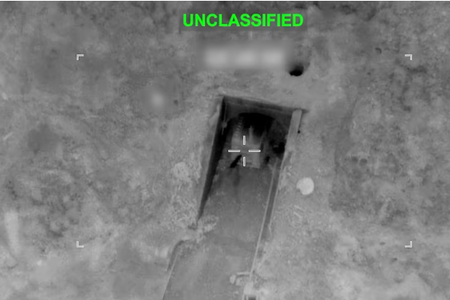
On March 22, the US Air Force used B-1B and B-52H strategic bombers for another attack on the Al-Qadir base in Yazd. According to analysis, this base includes an internal railway network that allows the transportation of ballistic missiles inside rock formations. The system connects assembly areas, warehouses and armored exits, which range from three to ten.
These outcrops are located 100 to 200 meters deep inside the mountain, making them very difficult to hit even by high-penetration munitions.
The operation is repetitive: a vehicle transports the missiles through the internal lines, exits one of the exits, performs the launch, and quickly returns. If an exit is damaged, the system is redirected to another exit, and its repair can be completed in about 48 hours.
This pattern resembles the tunnel networks used by Hamas in Gaza and Hezbollah in southern Lebanon, which is related to the involvement of the Iranian Revolutionary Guard in the development of these strategies.
Essentially, Iranian strategy is designed to withstand a long conflict. While the West relies on technological superiority and rapid strikes, Iran has decentralized command structures and planned in advance the targets and coordinates of the response.
Sources estimate that time is working in Iran's favor, while ideological and religious motivation contributes to maintaining stability.
In conclusion, the initial assessments of Italian intelligence are finding support in current developments. Meanwhile, according to experts, the United States and Israel do not have sufficient quantities of high-penetration munitions to continuously neutralize all the entrances and exits of these structures, which allows Iran to continue this strategy for an extended period. / Adapted from La Stampa




Lini një Përgjigje