


 Shkruar nga Pamfleti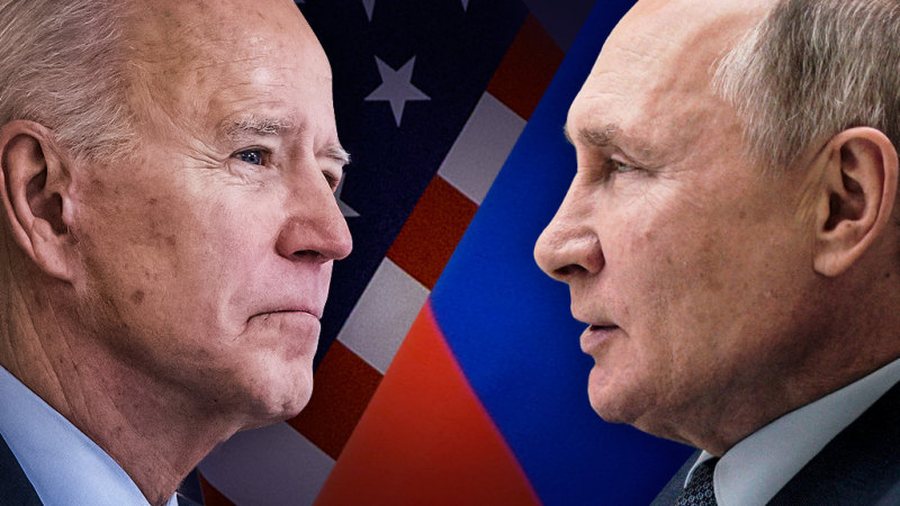
Why, then, is one country preparing for war while the other is strengthening ties with its supposed enemy?
In his first speech as British Defense Secretary, Grant Shapps said Britain must prepare for war with China, Russia, Iran and North Korea in the next five years.
Meanwhile, in Dublin, Chinese Premier Li Qiang met with Irish leader Leo Varadkar and spoke of the "huge potential" of deeper economic and trade cooperation between the two countries.
Ireland and Britain are both close allies of the United States and are linked in the same global security architecture.
Why, then, is one country preparing for war while the other is strengthening ties with its supposed enemy?
The only possible answer to this question is that the Irish government does not think that such a conflict will occur. So who thinks such a thing?
The answer appears to be NATO, which last week announced it would begin training for a third world war.
Yes, NATO wants to prepare for World War III, that is, a global conflict that will likely escalate into a nuclear war and destroy the world.
Consider the axis of evil that Shapps spoke of. Taken together, these countries have a total of 8.2 million troops, counting active military personnel and reserves.
However, immediately after his apocalyptic speech, the Defense Secretary said that the British army would not fall below 73,000. Meanwhile, the US military, currently in the midst of a dire recruitment crisis, has a total of 1.07 million troops.
Earlier this month it was announced that UK aircraft carriers could not be sent to the Red Sea due to a lack of sailors.
As in America, the British military is experiencing an extreme shortage of personnel due to a recruitment crisis.
Does this suggest that Britain should conscript all men of military age to fight the new axis of evil?
On Saturday, Slovakian Prime Minister Robert Fico claimed that Ukrainian concessions are necessary to end the conflict and reiterated his opposition to Kiev's NATO membership.
The alliance's backup plan appears to involve preparing the Western world for total global war.
In recent years, the attitude towards the conflict with Beijing has become popular. Politicians say we must rearm to meet the threat of a rising China, yet we are never told what this conflict would look like and how we would win.
Nor are we ever told when the militarization will happen, how much it will cost or how it will work. It is always signaled that this remilitarization will happen at some uncertain point in the future. Maybe it's time to fill in the blanks.
Meanwhile, countries such as Ireland are cutting trade deals and becoming richer and more powerful and influential. In a nuclear age, with many great powers, military power is far less important than economic power, because an all-out war would only lead to total annihilation.
Britain must decide.
Do you want to go the route of remobilization, appealing to the people and giving money from the growth of the economy and towards building a large army?
Or does the country want to build bridges in trade and commerce and try to become more prosperous and influential?/Unherd





Lini një Përgjigje