


 Shkruar nga Pamfleti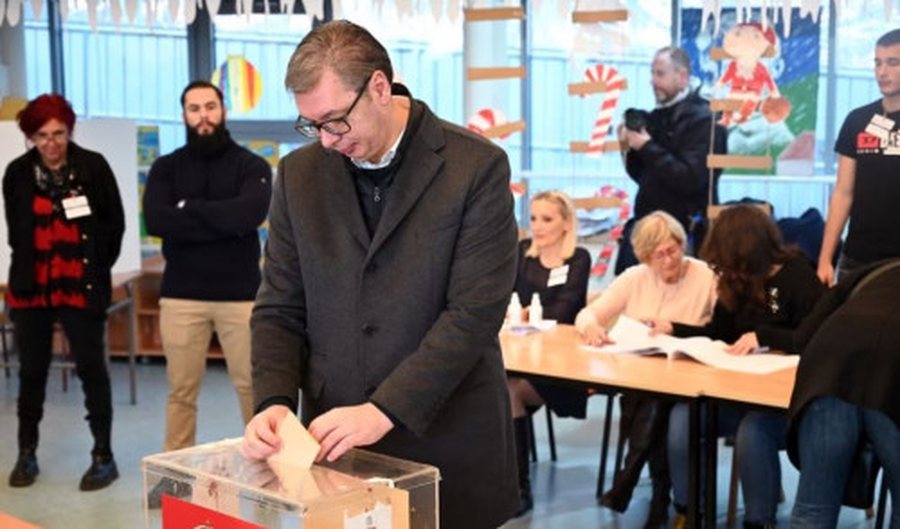
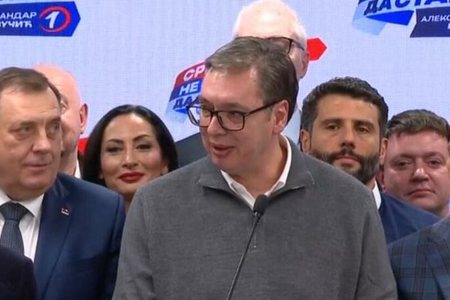
Filip Svarm, editor-in-chief of the Serbian magazine "Vreme" is frustrated with the preliminary results of the parliamentary elections in Serbia. Now comes a new round of "unlimited SNS power", he tells DW. Behind the acronym SNS stands the progressive party of Aleksandar Vučić, Srpska Napredna Stranka. The 53-year-old's party again became the biggest force in Serbia's parliamentary elections on Sunday (December 17, 2023) and could rule without the help of any other party.
The opposition in second place
Despite Vučić's overwhelming dominance, the pro-European opposition alliance, "Serbia Against Violence", made up of 15 parties from the left, the greens and the center-right, had a respectable success. The pro-European opposition managed to get at least 23 percent, says political scientist Dusan Milenkovic in an interview for DW. Civil democratic parties have always had a hard time in Serbia. This result should be seen as one of the best in the history of party pluralism, he thinks.
The alliance was formed in the wake of massive anti-government protests that began after two rampage school attacks this spring. The protests and the increasingly violent escalation in relations with Kosovo pushed Vucic to hold early elections.
Accusations of electoral manipulation
As expected, election observers and non-governmental organizations reported a number of suspected cases of electoral manipulation. Around 40,000 voters are thought to have been sent from abroad to Belgrade and other municipalities to vote for the SNS using fake passports. Most of them are said to have arrived in convoys from Republika Srpska, a republic of the Federation of Bosnia and Herzegovina, populated mainly by ethnic Serbs. The ethnic Serbs living here are Bosniaks - and they are not allowed to vote in elections in Serbia. The opposition has already filed a complaint and is now calling for protests on Monday evening (December 18, 2023).
"The Vucic System"
The success of SNS can be almost entirely about Vučić himself. The two-meter tall statesman, who rules Serbia like an autocrat, was not even a candidate. However, he alone set the tone in the election campaign. His list "Aleksandar Vucic - Serbia should not stay put" suggested to the voters that they were not voting for the parliament and municipalities, but for the president himself. It is not surprising, then, that according to the polls of the non-governmental organization CRTA, one in four citizens in Serbia believed that Vucic would run in the elections himself. About 60 percent even believed that Vucic was the leading candidate for his party.
Why does Vucic's SNS dominate the country? The cause is a combination of several reasons. One eye is the "Vucic System" because almost ten percent of adults are members of SNS. Vucic prefers to reward his party supporters and electoral votes with something in return - including jobs or money.
In terms of domestic politics, Vucic regularly serves parts of his electorate with nationalist tones on the issue of Kosovo. And so he conveys rhetorically what Serbian nationalists want to hear: "Kosovo must remain Serbian,", a point that is of concern to the EU.
Serbia between Russia and the EU
The progress report for Serbia's EU accession process is weak. The strongman from Belgrade likes to appear anti-Western and to serve pro-Russian preferences that are well received by a large part of the population. However, Vučić, who has been a minister since the time of Slobodan Milosevic, is seen as a guarantor of stability and is therefore treated with soft gloves, even by the EU: Vučić maintains the historic Serbian-Russian friendship, and the EU has eyesore, but this does not prevent the EU from being generous with Serbia. A dangerous game.
This is exactly what a former Serbian minister warns about. On election day, Germany's biggest tabloid Bild quoted Rade Basta, once head of the economics department, as saying: "Putin is targeting the Balkans to destabilize the EU," Basta said. "Putin is at the negotiating table every time Brussels negotiates with Vučić". His advice to Brussels and Berlin: "Admit the Balkan countries to the EU as soon as possible in order to stop Moscow's influence in the region"./DW



Lini një Përgjigje