


 Shkruar nga Gianluca Mercuri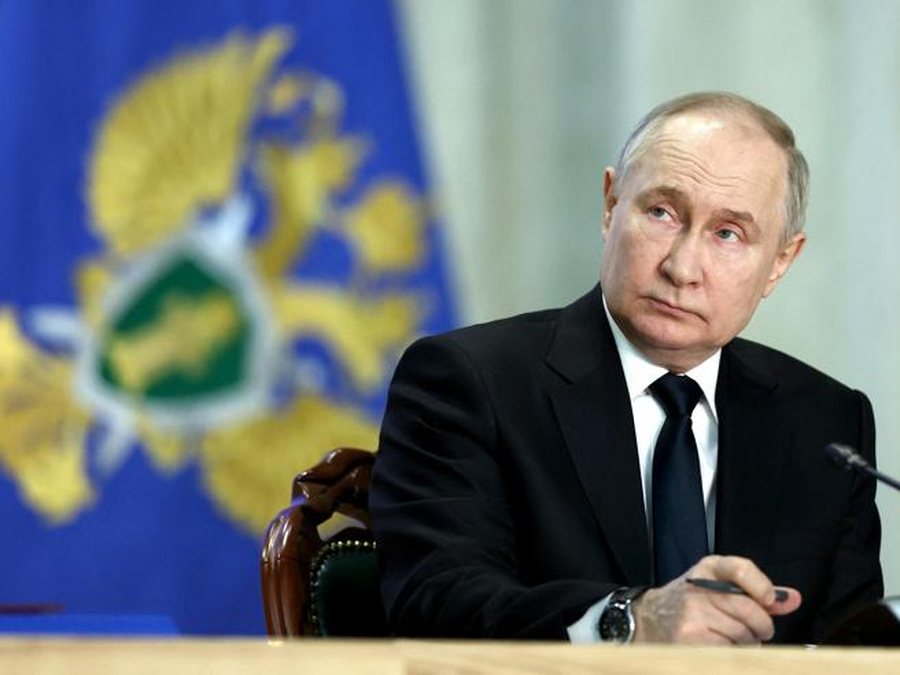
The fear is that this climate will lead to an escalation in the war with Kiev and the confrontation with the West....
Does Putin really believe the West is behind the horror of Friday night's attack in Moscow?
Doubt, when there is one, lasts a moment: although undoubtedly affected and driven by paranoia, the Russian autocrat has the minimum means - personal intelligence - and the maximum means - state intelligence - to rule out such an anomalous hypothesis. You know, Putin, that the truth is, that the Americans - equipped for twenty years with formidable antennas between the channels of terrorism - at the beginning of March had warned the Russian apparatus about the risk of an attack by ISIS.
The United States knows that cooperation between states is the first requirement of the war on terror. So they practice it anyway, with everyone.
So if he doesn't believe it, why does it? Here the answer is simpler: propaganda of the most typical kind, bad propaganda. But syncopated, not issued as in the case of the accusation against Ukraine. The accusation against the Americans and the British is thrown by his loyalists, the dirtiest workers: almost a helium balloon, to see the effect it has on East and West. But, at the moment, the Tsar maintains a personal distance from these dimensions, he relies on the "investigators".
The Ukrainians, for their part, respond: what if Putin himself had "done" the attack, to justify further mobilization? On the other hand, the suspicion that the massacres that bloodied Russia in 1999 - and that facilitated Putin's seizure of power and intervention in Chechnya - had an "internal" direction is old and hard to forget.
The fear is that this climate will lead to an escalation in the war with Kiev and confrontation with the West.
Moscow's thesis, Belarus' denial, Putin's caution. Point by point:
• Chief of espionage
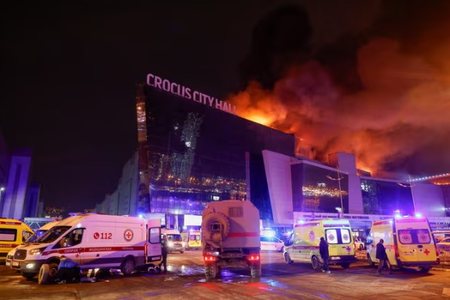
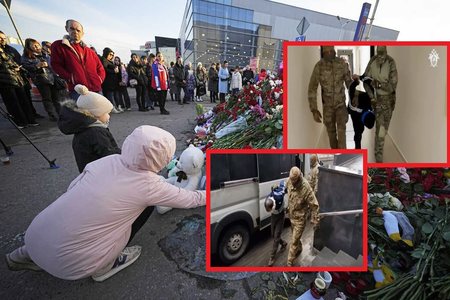
It was the director of Russia's internal security services (the FSB, the successor to the KGB in which Putin grew up), Alexander Bortnikov, who dropped the bombshell: he initially said that the Crocus attackers—whose victims numbered 139, a number constantly growing - were "trained by Kiev in the Middle East": he then added that Ukraine was preparing to welcome them "as heroes"; in the end he insinuated that the preliminary results of the investigation show "an involvement of the US and Great Britain". For his part, Security Council Secretary Nikolai Patrushev insisted: "Of course, it was Ukraine."
• Shades of Tsar
As Fabrizio Dragosei reports, "it seems that the Kremlin has decided to tread more carefully." In fact, after the first sentences on Saturday at the Ukrainian track, «Putin yesterday limited himself to recalling that "investigators are working", making it clear that we have to wait. And for Ukraine, "spokesman Peskov diplomatically said that he had "nothing to add to what was communicated." It seems that we are waiting to see if the initial thesis holds in the coming days.
• Lukashenko's denial
We are talking about Alexander Lukashenko, "the longest-lived dictator in Europe", as well as Putin's main ally, why not his puppet. Well, yesterday Lukashenko said the four killers first headed for his country, whose border with Russia is normally uncontrolled.
• The return of the ultranationalists
The accusation in Kiev revives the circles that even Putin had recently decided to silence. For example, the ideologue of all Russians, Aleksandr Dugin, much admired by supporters of the Northern League in Italy, is back in office: «Today's Russia is a battlefield. Ukraine is also Russia. The Kiev regime will finally lose its legitimacy in less than two months. Finally, we will recognize it as a terrorist criminal entity, not as a country."
• The easiest card
Marco Imarisio writes: “The Kremlin is used to testing public opinion before choosing which measures to take, presenting several different narratives to citizens. "The Russians are now almost all in agreement, declaring Zelensky the new Osama bin Laden."
•Staying in Kiev
Meanwhile, in Kiev, they drop the accusation. Andriy Chernyak, the spokesman for the Ukrainian military intelligence, said: "The thesis of the involvement of Putin's special services in this terrorist attack does not seem strange at all. Moscow will use it to justify the total mobilization of the Russian population and the escalation of the war against Ukraine." /Adapted "Pamphlet" from "Corriere Della Sera"


Lini një Përgjigje