


 Shkruar nga John Fiegener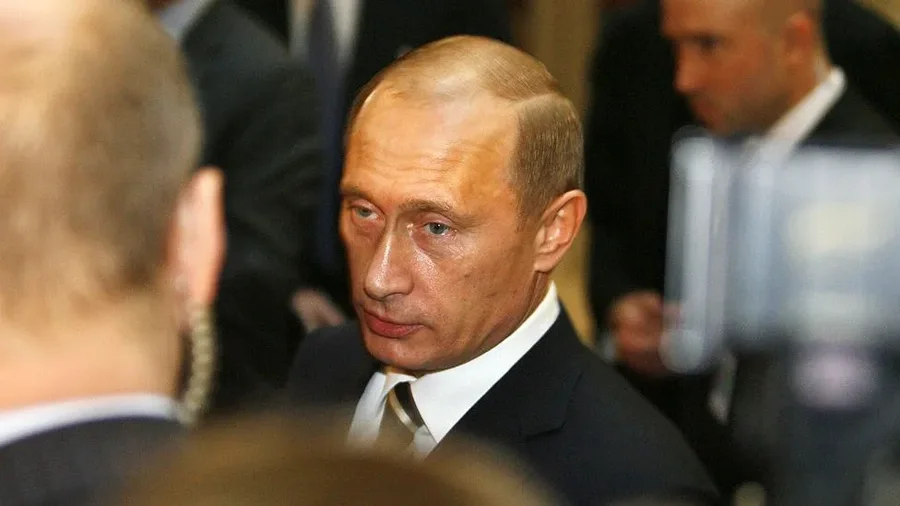
During the current presidency of Joe Biden, American intelligence agencies have made public information that in the past would normally be discussed only in highly classified cables or private meetings outside the ears and eyes of the public or even the media...
Disinformation as a tool of hybrid warfare against the adversary is strengthened and expanded where it is impossible to verify. When a fact is established, it is distributed as a document through official channels. A message is re-published by real social network accounts, and then it is impossible to say that this fact is disinformation.
This is what happened with the warning made on March 8 (that is, before the terrorist attack) by the United States about an imminent attack on a concert hall in Moscow. Now we can say that it was a true fact. Yet the US embassy's warning went largely unnoticed, hidden amid an intense news cycle.
Anyway, some news agencies reported it on March 8 and that's how I found out. Of course, I admit I was surprised by the specifics of the details the warning provided, including the location of the alleged attack: “The embassy is monitoring reports that extremists have imminent plans to target large public gatherings in Moscow, including concerts. American citizens are therefore advised to avoid gatherings in the next 48 hours."
The statement did not say that Americans were being targeted, but that they should avoid large gatherings, including concerts in Moscow. What to the untrained eye might look like any kind of early warning was actually reliable intelligence information.
It was exactly the kind of warning the United States makes only after it has incontrovertible evidence that "extremists" are on the move. According to America, the attack would happen within 48 hours. In reality it happened two weeks later.
Neither the Americans nor the Russians have explained in recent days who knew what. But a terrorist threat to the civilian population is generally the kind of information that is discussed in detail between US and Russian officials.
Russian President Vladimir Putin was aware of the warning, as he had commented on it just 3 days before the attack, calling it an attempt by the Americans to blackmail the Russians as well as a provocation. In fact, the warning is part of a very clear trend: for months, the United States has been releasing information gathered by its secret services on Russia and Putin.
During the current presidency of Joe Biden, American intelligence agencies have made public information that in the past would normally be discussed only in highly classified cables or private meetings outside the ears and eyes of the public or even the media.
The United States released most of the information it had on the preparation of Russian troops and on their plans to invade Ukraine. They also published their intelligence agencies' assessments of the threat posed to the Kremlin by Yevgeny Prigozhin, Wagner's founder, who a few months later died in a still-mysterious air crash.
But he also made public the data on what Prigozhin himself was preparing to do, and that all a few weeks before the latter's attempt at a coup d'état, which was abandoned in the middle. And he did so probably knowing that Putin would use the attack, when it happened, to blame Ukraine, as indeed it did.
And as it is happening again: Vladimir Putin and his supporters are trying in every way to include Ukraine in the narrative of the attack on Moscow, perhaps to somehow hide what will certainly be an unpopular decision, that is, to recruit more young men to send to fight in Ukraine for the spring offensive.
Perhaps the idea behind the US embassy in Moscow's public warning to avoid concert halls was that if the information was not made public, it would be easier for Putin to blame Ukraine, despite the fact that the war had nothing to do with the attack.
And so it happened: despite the warning, despite the fact that the warning was official and made public, the Russian disinformation machine moved quickly to downplay the US warning and point the finger of blame at Ukraine.
What consequences this will have, it is difficult to say from afar.
However, many Russians are aware that the attackers were part of a terrorist group that aimed to strike their country from within. So it wasn't a foreign country that hit Russia at the border./ Pamphlet adapted from "Huffington Post Italia"



Lini një Përgjigje