


 Shkruar nga Paolo Valentino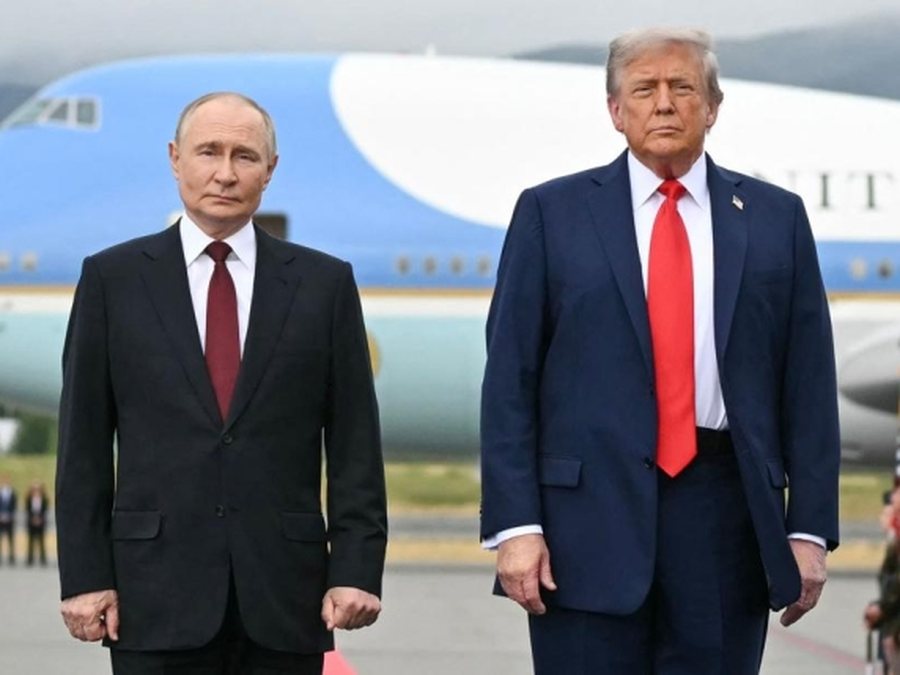
In this conflict, Trump has much less influence and ability to exert pressure...
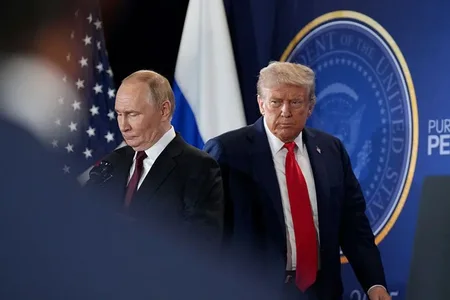
Like the death of Mark Twain, reports about the Trump-Putin summit in Budapest have been greatly exaggerated.
"I don't want a meaningless summit, I don't want to waste time until I see what happens," the US president said, marking another change that appears to be mending his relationship with the Russian leader.
Over the past nine months, Trump has tried everything and its opposite. He waved (but never followed through on) the threat of imposing new sanctions on Moscow, supplying new and more deadly weapons to Kiev, but then backed down after a "productive phone call" with Putin.
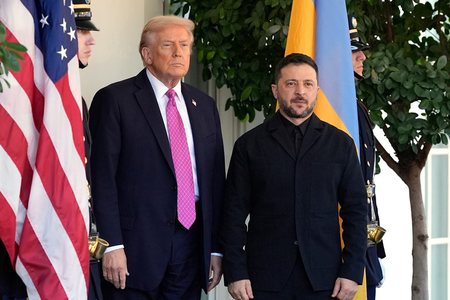
On the other front, he has publicly and privately humiliated poor Zelensky, effectively suspending supplies of military aid to Ukraine, which he then agreed to sell to the Europeans so they could transfer it to Kiev. But no matter how hard he tries, the conflict in Eastern Europe remains the only one he cannot end, after the 8 conflicts he claims or boasts to have resolved: Israel and Iran, Rwanda and Congo, Thailand and Cambodia, Armenia and Azerbaijan, Egypt and Ethiopia, Serbia and Kosovo, India and Pakistan.
As for the latest, most complex and tragic conflict, that between Israel and Hamas, there is no doubt that Trump achieved a near-miracle in Gaza, albeit a fragile one whose practical sustainability remains to be seen. Extraordinary and unprecedented circumstances allowed him to do so.
Israel's attack on Qatar, which angered its Gulf allies, gave Trump the leverage to force Netanyahu to accept the deal. But he had the unwavering support he has always provided the Israeli leader in every circumstance and for every decision: from recognizing Jerusalem as the capital, to the legality of settlements in the West Bank, and most recently the military campaign against Tehran.
His strong political and economic ties with Arab nations that weigh heavily on the Middle East scene have finally given him the diplomatic clout to impose the deal.
In Ukraine, as in Gaza, Trump sees the end of the war primarily as a trade opportunity, good deals for his family and friends, and a crucial step toward a Nobel Peace Prize, which has become a veritable obsession.
But in this case, unlike the Middle East, the American tycoon has much less influence.
For two different and almost opposite reasons. The first is that it is not true that Zelensky is powerless. Starting with the growing support of his European allies, the much-vaunted coalition of the willing, now finally close to a decision to use part of Russian funds frozen by sanctions to launch a €140 billion loan to Ukraine to finance the purchase of weapons. This would allow Kiev to sustain the war effort for a long time.
Zelensky's plans also include Kiev's growing ability to target refineries and weapons factories in Russia with drones, as well as Moscow's recruitment problems, which in 2025 alone lost 100,000 soldiers, according to The Economist, six times the total number of Soviet casualties in the ten years of the war in Afghanistan.
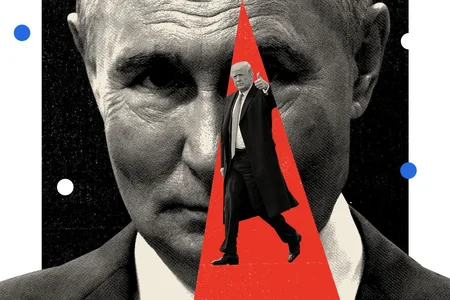
The second reason takes us into more complicated terrain: the mystery of Trump's murky relationship with Putin. What makes the American president so sure that the Russian autocrat is winning?
And why does Putin always find the right words to change his mind, even temporarily? An old theory, never proven, claims that the Kremlin man has enough sexual "compromises" to "blackmail" Donald.
Another suggests "follow the money," recalling that since the 2000s, Russian private funds have been involved in the Trump group's real estate and property deals.
Then there's the psychological explanation! Trump admires and perhaps envies strongmen, authoritarian leaders, predators without limits, as Giuliano da Empoli put it: in February 2022, when Putin invaded Ukraine, he called him a "genius."
But perhaps we should also add a literary explanation.
Putin knows how to wait, he is faithful to Kutuzov's maxim in War and Peace, which defined "time and patience" as his "best weapons of war."
Trump, on the other hand, has little to no patience; he is hyperactive, one shot after another, wants everything now.
But in doing so, he fails to understand that, among the few cards Putin has, he is one of them. /Adapted from Corriere/


Lini një Përgjigje