


 Shkruar nga Pamfleti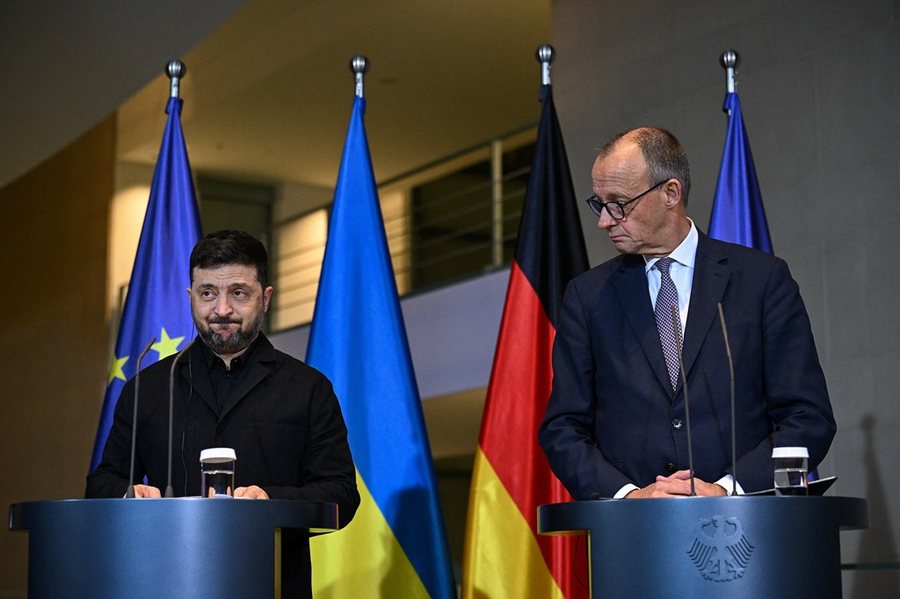
Since the Russian invasion in 2022, it has provided Ukraine with 39 billion euros in civilian aid and 55 billion euros in military support...
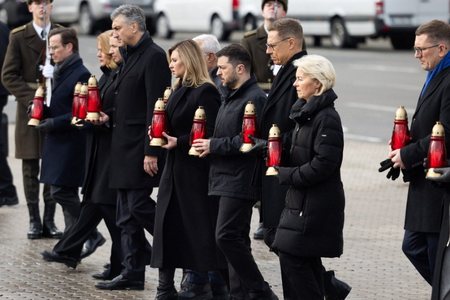
" Ukraine's fate is our fate ," the German chancellor declared on the fourth anniversary of the start of the war in Ukraine. While some EU countries are still a step away from the conflict unfolding in Europe, there is no doubt that Germany is committed. Berlin is Ukraine's biggest military supporter.
Since the Russian invasion in 2022, it has provided Ukraine with 39 billion euros in civilian aid and 55 billion euros in military support. Some 52% of Germans support increasing aid to Ukraine, according to an INSA poll for Bild.
While the war has radically changed the lives of Ukrainians, it has also forced Germany to change. A month before Putin's tanks rolled in, the Germans announced they would supply Kiev with only 5,000 helmets.
The offer was heavily criticized and ridiculed at a time when other allies were sending anti-tank weapons and ammunition. Fast forward to the present day, Berlin has not only supplied items, including air defense artillery, combat vehicles, and weapons, but has also trained more than 24,000 Ukrainian soldiers in Germany.
-History weighs heavily
Make no mistake, this transition has not been easy. Germans have had to come up with the money and struggle with their conscience. When the then defense minister announced the helmet offer, she cited an early policy of not supplying weapons to conflict zones.
Many Germans agreed, fearing that they would cause an escalation that would draw them into the war. The horrors of World War II, the shame of the atrocities committed by the Nazis, the division of Germany and its remilitarization during the Cold War have all left scars.
Many Germans are fundamentally opposed to war, and for those living in the former Soviet Union in particular, the idea of using German weapons against Russians was deeply alarming. But the war in Ukraine forced the government to act, and the reality that Russian troops were encircling Ukrainian cities meant they could no longer stand by.
-'Turn of the Century'
Shortly after the " helmet gate" , Olaf Scholz, the chancellor at the time, announced a radical change in policy, a so-called " historic turning point " or " Zeitenwende ", in which the country would use a special fund of 100 billion euros to significantly increase military spending, overturning Germany's previously cautious defense policy.
Efforts were underway to strengthen the military, which, neglected for years, was described as " aging and shrinking ." At the same time, a top-secret plan was updated to ensure the country could defend itself in the event of an attack, while war games were held to test civilian and military responses.
The change has continued under the current chancellor, Friedrich Merz, who came to power condemning both Moscow and overreliance on the US and has since pledged to create "the strongest conventional army in Europe."
-Germany feels like another country
Nothing is simple; while a January poll by Leipzig University found that most supported increased military and defense spending, few were willing to put their lives at risk. Only 16% of Germans said they would “definitely” take up arms to defend Germany, while 59% said they would “probably not” or “definitely not” fight, according to a poll conducted last summer by the Forsa Institute.
Meanwhile, the reintroduction of voluntary military service led to student protests by Generation Z. Nevertheless, Germany is moving forward.
The Chancellor said today: “This war will only end when Putin realizes that he cannot win.”
Until then, he has vowed to stand by Ukraine. Four years since Putin launched his attack, the world has changed and Germany feels like a different place. /Adapted from “Pamphlet” by “SkyNews”


Lini një Përgjigje