


 Shkruar nga Emanuel Pietrobon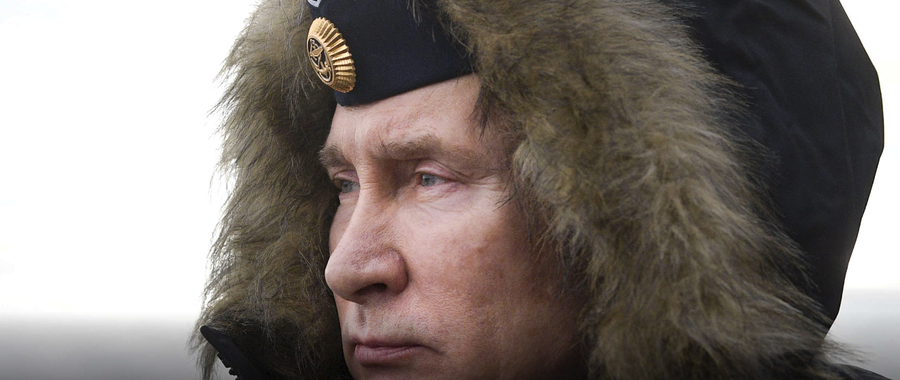
The Russians are preparing for a permanent crisis
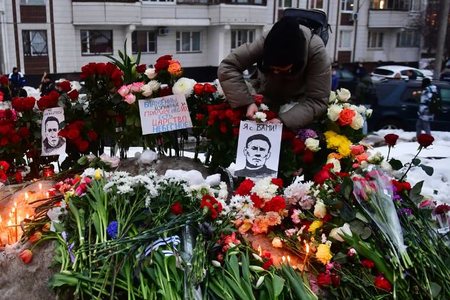
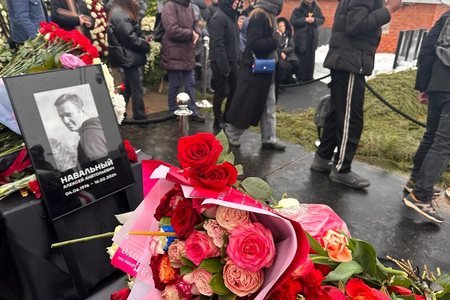
In Russia, everything is ready to hold the most politically important presidential elections in the history of recent decades. Their outcome is a foregone conclusion, and the untimely death of Alexei Navalny will produce more chaos on the streets than in the polling booths.
And the fact that Vladimir Putin will be de facto competing with himself does not diminish their importance at all. Because between March 15 and 17, the Russian electorate will continue to cement and perpetuate Putin's mandate at the head of the country. Aware that the alternative to the former KGB man was another Yelstin, a new Gorbachev, or a return to the dark years of civil war and violent separatism.
Knowing that the price to be paid for such security, emphasized several times by Putin in his last State of the Nation address, is and will be a great patriotic mobilization under the impetus of the memory of the Cold War.
Back to the Cold War
Vladimir Putin's 19th annual speech achieved the desired effect: alarm in the West, mobilization in Russia. In the West, his statements grabbed headlines, especially because of references to the prospect of nuclear war. In Russia it was broadcast live on television and even in some cinemas.
Putin thanked, called for mobilization and prepared them psychologically. He thanked the Russians who supported the war in Ukraine, the industries that resisted the pressure of sanctions, the billionaires who donated much of their money to the national economy and the families of the fallen.
And he warned his people: the security that Russia enjoys today, free of terrorist attacks and economically healthy, does not come for free. It has a price to pay: sacrifice in the name of the national interest. And there is an opponent to defeat: the West. So the Cold War is back, and if the Russians do not want to relive another chaos like that of 1989-1991, this time they must take an active part in the fighting: some in industry, others in the trenches.
Preparing the Russians for a permanent crisis
"The West is not only trying to prevent us from progressing, but also imagining turning Russia into a space that is in its last throes and that is coming to an end." Through these words, Putin also revealed his objective to encourage a rally around him of the majority of Russians on the eve of the upcoming presidential elections but also in view of the years of (permanent) crisis that will follow.
Western countries, Putin emphasized, "want to repeat in Russia what they have done in many other countries, including Ukraine: to incite discord and weaken us from the inside." But they have miscalculated, because the determination of the multi-ethnic people of Russia has passed the test of fire.
"Diverse battalions, with Christians, Islamists and Buddhists, have fought side by side in Ukraine for common values: traditional family, religious faith, national unity," added Putin. This is a very clear message to the peripheries of the Russian Federation, which are historically indifferent to the central government and more vulnerable to exploitation by third parties, on which Putin knows the country's territorial integrity depends.
Russia is poised to face the turbulent waters of great power competition. Putin made this very clear in his speech, highlighting the latest innovations in the Russian arsenal, such as the new Ch-47M2 Kinzhal and Zircon hypersonic missiles, and announcing that new systems are under development.
But unlike the past, where Putin is simultaneously a son, a product and a witness, Moscow will not fall into the mistake of getting involved in a "new arms race" that once brought the collapse of the Soviet Union. The money will be spent "judiciously", in such a way as to "maximize the economic benefit from every ruble invested".
Reading between the lines
Vladimir Putin's annual State of the Nation address monopolized the attention of the press and Western politicians for the wrong reasons: the reference to the prospect of nuclear war. A useful propaganda to lure the most radical segments of the patriotic electorate, and to disturb the peace of the Western rivals, as is actually happening.
Weapon of mass distraction.
The most important passages of Putin's long 'sermon' were other. Among other things, one of them is the one in which the Russian president hopes for the creation of "a new security network in Eurasia in the near future", showing his readiness to "discuss this topic with all countries and organizations that may be interested". In other words, a military alliance that will oppose NATO.
The head of the Kremlin also made it clear that the era of a Russia that seeks a partnership with the West at all costs is over. Today, and even more so tomorrow, Moscow will focus on strengthening cooperation with key players in South America, Africa, Arab countries and Asia. The objective: to become, as it once was, the balance stone in the battle between the West and the rest of the world./ Adapted Pamphlet from "Il Giornale"


Lini një Përgjigje