


 Shkruar nga Joseph Sarcina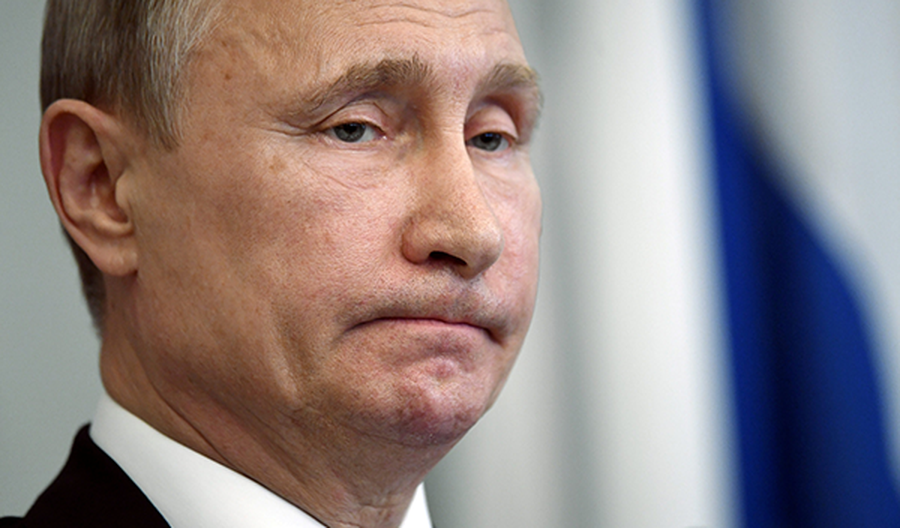
Moscow's move is proving, once again, counterproductive...
All analysis suggests that Vladimir Putin is making a second, glaring, mistake in his assessment of the West’s resistance and response. The first dates back to February 24, 2022, when he deployed over 100,000 troops on Ukrainian territory, with the goal of occupying Kiev within days, overthrowing Volodymyr Zelensky, replacing him with a Lukashenko-like figure, and transforming the occupied country into a vassal state like Belarus.
For weeks now, Putin has been launching a series of airstrikes inside NATO, aiming to deepen divisions within the European bloc, as well as between it and the United States. Always keeping his hand at a distance, as is his style. But, once again, the effects do not seem to be what the Kremlin had anticipated. In fact, exactly the opposite is happening, as was seen, for example, on Tuesday, September 23, in Brussels, at the North Atlantic Council, made up of ambassadors from NATO's 32 partners.
The meeting was urgently requested by the Estonian government, which had recorded the intrusion of three Russian MiGs with combat equipment on September 19, which lasted approximately ten minutes. In addition, in recent weeks, Finland, Latvia, Lithuania, Norway and Romania have also reported violations of their airspace. In addition, the investigation continues into 21 Russian drones that crossed into Poland between September 9 and 10. The drone swarm may have been intercepted by Ukrainian electronic defense systems, known as "jamming".
They say that, at the NATO summit, an overwhelming majority of countries supported the call for a "harsh response" against the Russians, presented by Estonia, Poland, the other Baltic states and Romania. Specifically: the next Russian plane that is intercepted in the skies of the Atlantic Alliance will be shot down. The next day, Donald Trump gave his explicit consent. Giorgia Meloni also agreed. And the President of the European Commission, Ursula von der Leyen, announced that the issue would be discussed within the European Union: another sign of the shift in focus of the Brussels institutions to defense.
Ultimately, Moscow’s move is proving, once again, counterproductive. Three years ago, Putin thought he could invade Ukraine with impunity, relying on the fact that Joe Biden’s United States would not risk a conflict with Russia, given that it had just ended the war in Afghanistan with a disastrous withdrawal.
As for the Europeans: who would commit to Kiev, given its heavy energy dependence on Russia? It quickly became clear that Putin’s calculations were wrong: Biden supplied the Ukrainians with weapons and within weeks, sent over 20,000 troops to NATO’s eastern flank. The Europeans cut off as much of the supply from Moscow as possible, reorganized, and, most importantly, agreed to rearm. NATO, in the end, did not break up, but was strengthened by the admission of Finland and Sweden. There continues to be legitimate debate about whether these were the right or wrong choices. But, in any case, it is undeniable that the Kremlin expected a different outcome.
Now a repeat is brewing. Putin seems convinced that Trump will abandon Ukraine sooner rather than later and ease America’s commitment to NATO. Three years later, it’s essentially the same calculation he made with Biden. The current US president, however, is an unpredictable variant who is proving he can outsmart everyone, friend and foe alike. Any analysis involving Trump’s behavior invariably turns into a risk, if not a danger. Yesterday, for example, Zelensky reported that he would be acquiring weapons from the United States that would allow him to strike Russia “deeply.” We’ll see if that turns out to be true.
But Putin's most obvious oversight concerns the Europeans, as it did in 2022. For months, a division had been brewing on the Old Continent over the nature of the Russian threat. For the Southwestern bloc (including Italy), the Tsar does not pose a real and immediate danger to the Atlantic Alliance. The Northeast (from Finland to Poland), on the other hand, is wondering not "if" but "when" Putin will attack. The Kremlin's provocations, with drones and fighter jets, are pushing the most cautious countries to reconsider their positions.
Of course, the Russian attacks, especially on Poland, have exposed the shortcomings and weaknesses of NATO’s defense apparatus. It has become clear that it is economically and strategically unsustainable to shoot down a €10,000 drone with a €500,000 missile. Since then, the issue of air defense has risen even more rapidly in the priority scale. Now the allies are planning to “build a drone wall” and strengthen air surveillance on the EU’s eastern border. Not only that, the United States and Europe are once again discussing possible tariffs on Russian gas and oil.
Finally, as Federico Fubini predicted yesterday in Corriere della Sera, the G7 countries are assessing, after at least two years of hesitation, how to use some 229 billion euros of Russian reserves, frozen in the European financial system. German Chancellor Friedrich Merz claims that, with a complex financial mechanism, a loan of 140 billion euros could be secured and passed on to Ukraine, "so that it remains in the game"./ Adapted from "Pamphlet" by "Corriere Della Sera"




Lini një Përgjigje