


 Shkruar nga Pamfleti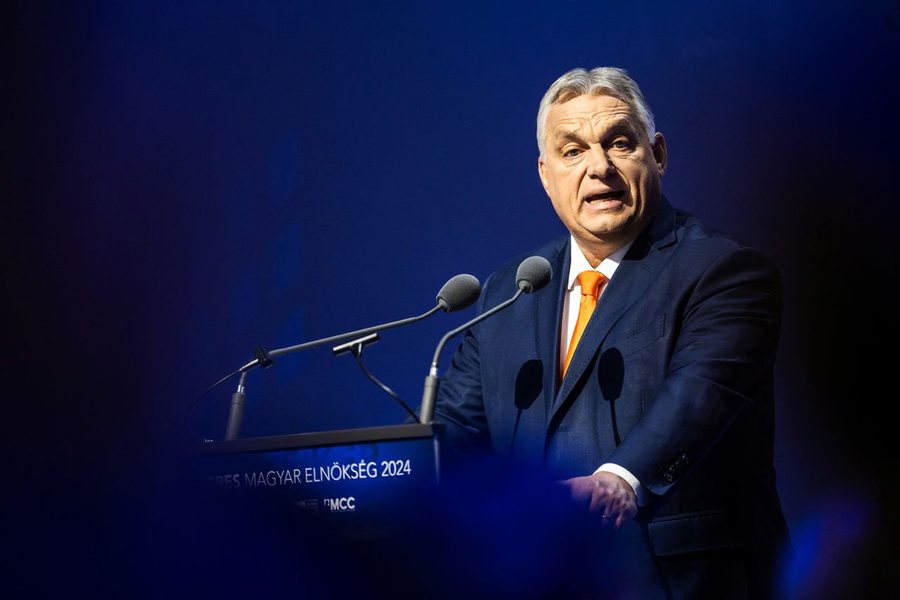
It is also becoming increasingly clear how corrupt Orban's system is and to what extent his family members, party friends, and political allies benefit from the prevailing nepotism.
Wehrmacht uniforms, Russian flags, SS symbols, the letter Z, swastikas – hundreds of neo-Nazis are marching in the center of Budapest, near the Buda Castle. The official residence of Hungarian Prime Minister Viktor Orban is not far away. This is what a neo-Nazi rally looked like in February 2025 and is held in Budapest every year at that time.
In Hungary, it is illegal to demonstrate in uniform and wear totalitarian symbols, but Orban's government allows neo-Nazis and Putin supporters to march with impunity every year.
The situation is different in the case of so-called “LGBTQ propaganda.” For example, a bookstore in Budapest was fined 32,000 euros in July 2023 for keeping a comic book about two gay boys on its shelf, which was visible to minors. This is considered “LGBTQ propaganda” in Hungary and is prohibited.
"Liquidate the shadow army"
This means that public gatherings that display strange symbols like rainbow flags, where sexuality is presented as "an end in itself" or where people dress "differently from their sex at birth" are no longer allowed. Violations are punishable by fines of up to 550 euros, which is slightly less than the minimum wage in Hungary.
The Pride ban is just the latest episode in Viktor Orban's new offensive against his critics and opponents, both real and perceived. The Hungarian prime minister has promised a "Great Purge by Easter." He last said this in his speech on March 15, Hungary's national holiday.
He then called critics "worms" who would be "liquidated": "The worms are in hibernation. We will liquidate the financial machine that used corrupt dollars to buy politicians, judges, journalists, pseudo-civil organizations, and political activists. We will liquidate that entire shadow army."
Dehumanization of government critics
In Hungary, anyone who thinks differently from Orban has become accustomed to the prime minister. In recent weeks, for example, the government's campaign against alleged corrupt beneficiaries of USAID funds has taken off with unprecedented intensity. Orban's propaganda agency, the "Sovereignty Office," for example, falsely accuses the well-known independent news portal Telex of being funded largely by foreign sources like USAID and thus representing foreign interests - in other words, of committing treason.
Pra, ata janë mësuar me këtë – por fakti që ai tani po i quan “çimka” ka tronditur edhe politikanët e opozitës dhe gazetarët e pavarur. Shumë vlerësojnë se ajo që është në punë është “dehumanizimi” i të gjithë kritikëve të qeverisë, se bëhet fjalë për “fashizëm në rritje” dhe “putinizimin e shpejtë” të Hungarisë.
Megjithatë, kjo është hera e parë që Orban përdor një retorikë të tillë. Termi "kontroll i dëmtuesve" të kujton po aq gjuhën e përdorur nga nazistët gjermanë dhe stalinistët sovjetikë në vitet 1930. Shkencëtari i mirënjohur politik hungarez Gabor Torok, i cili zakonisht është mjaft i kujdesshëm në vlerësimet e tij, e përshkruan fjalimin e Orban për "çimtarët" si "kalim kufiri" - i cili, shton ai, në fund të fundit mund të dëmtojë si kryeministrin ashtu edhe partinë e tij.
Pakënaqësia ndaj Orbanit po rritet
Në fakt, "spastrimi i madh" aktual i Orbanit është njëkohësisht manovrimi i tij taktik dhe shprehje e frikës për humbjen e pushtetit. Prej disa kohësh ka pasur pakënaqësi në rritje ndaj Kryeministrit dhe të ashtuquajturit “Urdhri i Bashkëpunimit Kombëtar” (NER). Në këtë pikë, ka shenja se një ndryshim i qeverisë është i mundur në zgjedhjet parlamentare të pranverës 2026.
Megjithëse ekonomia hungareze nuk është në një krizë serioze, ajo ende po lufton për t'u çliruar nga problemet e saj. Inflacioni është i lartë dhe prek veçanërisht qytetarët me të ardhura mesatare. Masat që qeveria po përpiqet të kundërshtojë, si ngrirja e çmimeve, janë ose joefektive ose nuk ndihmojnë ata që kanë vërtet nevojë.
Lufta tarifore e presidentit amerikan Donald Trump mund ta shtyjë Hungarinë, e cila është shumë e varur nga industria gjermane e automobilave, në një krizë të vërtetë. Përveç kësaj, arsimi, kujdesi shëndetësor dhe infrastruktura publike hungareze janë në gjendje të keqe. Ndërkohë, fanatiku i futbollit Orban po investon në stadiume dhe ambiente sportive gjigante.
Korrupsioni dhe nepotizmi
Gjithashtu po bëhet gjithnjë e më e qartë se sa i korruptuar është sistemi i Orbanit dhe deri në çfarë mase familjarët e tij, miqtë e partisë dhe aleatët politikë përfitojnë nga nepotizmi mbizotërues. Së fundmi, gazetarët investigativë të portalit ‘Direkt36’ publikuan filmin "Dynasty", i cili tregon historinë e rritjes mahnitëse të familjes Orban nga rrethana mjaft të këqija në një dinasti miliarderësh - një rritje që lidhet me pozicionin politik të Orbanit. Filmi është parë nga tre milionë e gjysmë njerëz deri më tani, nga 9.5 milionë banorët e Hungarisë.
Këtë javë ‘Direkt36’ publikoi një tjetër raport mbi korrupsionin dhe përvetësimin – këtë herë për Bankën Kombëtare Hungareze (MNB) nën ish-drejtuesin e saj György Matolcs, i cili i mundësoi familjes së tij, dhe veçanërisht djalit të tij, të jetonin një jetë luksoze duke përdorur fondet e MNB-së dhe përmes një strukture të errët. Edhe Gjykata Hungareze e Auditorëve (ASZ) po heton rastin.
The discontent with all this is reflected in the success of opposition politician Peter Magyar. This renegade from the Orban system, almost unknown until just a year ago, is now achieving increasing success in public opinion polls with his Tisa (Respect and Freedom) party. Meanwhile, according to some polls, Tisa is significantly ahead of Orban's Fidesz party, and the Hungarian himself is currently the most popular politician.
How far will Orban go?
It is in the nature of a system like that of the Hungarian prime minister to move more and more towards authoritarianism and dictatorship. If there were a change of government in Hungary, Orban and his circle of powerful people and oligarchs would face expropriation, indictments and prison sentences. From this perspective, it seems logical that Orban is currently starting a spiral of escalation on a large scale. For example, there is discussion of denaturalizing those critics of the regime who have dual citizenship. The aim is not only to silence critics in Hungary, but also to achieve maximum polarization of society before the parliamentary elections.
It remains to be seen whether, for Orbán, "liquidating the bugs" also means physical action against his most dangerous opponents, for example through organized accidents, poisonings or assassinations like those in Russia, a close partner of Hungary. Peter Hungarez is still "only" a daily topic in Orbán's propaganda media./ Adapted from "Pamphlet" by "Deutsche Welle"




Lini një Përgjigje