


 Shkruar nga Pamfleti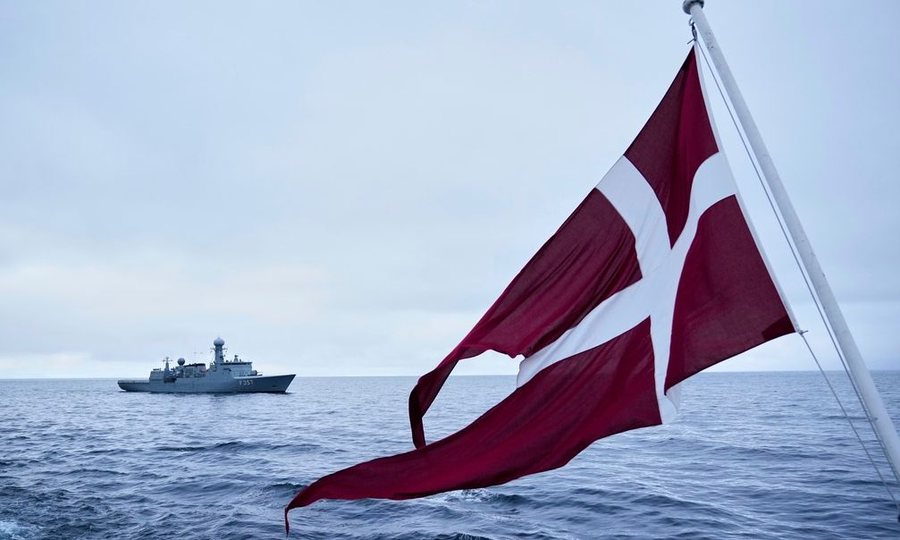
NATO should increase its involvement in the Arctic, the five Nordic countries agree, as a shield against Russia and China's ambitions in the region...
Norway's Defense Minister looks at one of his favorite maps, which shows the world from an Arctic perspective. Tore Sandvik points to Russia's Kola Peninsula, home to one of the world's largest nuclear arsenals, which sits inside the Arctic Circle, just across the border from northern Norway.
The shortest flight path for a rocket launched from Kola to major US cities on both coasts is over the Arctic, near the North Pole and Greenland, he adds.
"An intercontinental ballistic missile is coming down at a speed of 7 kilometers per second, it takes 18 minutes from launch to reach a major US city," he said, adding "this is homeland defense, that's why we put it on the table for President Trump and when we meet with allies."
"This is homeland defense [for the US], for London, for Paris, for Berlin, for the entire alliance," he added.
US President Donald Trump has been aggressive about Greenland over the past year, with his strong desire to acquire the Danish territory by force. But by reaching a “framework” agreement on the world’s largest island with NATO Secretary-General Mark Rutte last week, Trump has shifted the alliance’s focus to Arctic security, an issue that the Nordic countries have been pushing for for decades. “NATO must increase its engagement in the Arctic,” said Mette Frederiksen, the Danish prime minister, who added that “defense and security in the Arctic is an issue for the whole alliance.”
For the 5 Nordic countries, all Arctic countries, this represents an opportunity to turn the geopolitical conversation back to where they want it: the threat emanating from Russia.
Almost all Arctic states, including Russia, reduced their military presence after the end of the Cold War, closing bases. The United States closed some in Greenland and Iceland. But Russia began its military and economic revitalization of the Arctic much earlier than Western powers, led by President Vladimir Putin in the 2000s.
Russia's footprint in the Arctic
Rusia kontrollon rreth gjysmën e masës tokësore dhe ujërave të Arktikut, duke zënë vendin e parë nga tetë vendet me prani në rajon, të cilat përfshijnë SHBA-në dhe Kanadanë, si dhe pesë vendet nordike. Sot, Moska ka më shumë se 40 instalime ushtarake përgjatë bregdetit të Arktikut, duke përfshirë baza ushtarake, fusha ajrore, stacione radari dhe porte.
Arktiku luan një rol vendimtar në doktrinën bërthamore të Moskës. Atje ndodhet Flota Veriore e Rusisë, me bazë në Severomorsk në Gadishullin Kola, e cila operon 6 nga 12 nëndetëset bërthamore të vendit, sipas Institutit Ndërkombëtar për Studime Strategjike. “Flota Veriore, dhe nëndetëset e saj në veçanti, janë një shtyllë e parandalimit strategjik të Rusisë. Duke pasur parasysh rëndësinë e saj, flota vazhdon të modernizohet”, tha Audrey Dietrich, analiste e lartë e Rusisë në Institutin e BE-së për Studime të Sigurisë.
Rusia gjithashtu mban një nivel të lartë gatishmërie në vendin e saj të testimit bërthamor në Novaya Zemlya, një arkipelag Arktik, ku tetorin e kaluar testoi raketën lundruese me energji bërthamore Burevestnik. Ajo gjithashtu po promovon përdorimin e Rrugës Detare Veriore, e cila kalon nëpër Rusi dhe ofron perspektivën e kohërave shumë më të shkurtra të tranzitit midis Kinës dhe Evropës, megjithëse numrat e trafikut janë nën objektiv.
Fqinjët nordikë të Rusisë po e ndjekin këtë zhvillim me shqetësim në rritje, duke i kërkuar NATO-s të përfshihet më shumë, me relativisht pak sukses pjesërisht për shkak të kundërshtimit nga vende si SHBA-ja. "Ne e dimë që rusët janë më aktivë në veri. Situata e sigurisë është gjithashtu e tillë që kur shkrihet akulli polar, Kina del si një hegjemon rajonal, por me interesa globale. Ata e kanë shpallur veten si një komb pothuajse në Arktik", tha Sandvik.
Ushtrimi i NATO-s për përgjigjen e ftohtë në Norvegji
Një zyrtar i lartë nga një vend tjetër nordik shtoi se “përqendrimi i burimeve ushtarake në fqinjësinë tonë është mjaft i madh”.
Oficeri më i lartë ushtarak i NATO-s, Admirali Giuseppe Cavo Dragone, i tha Financial Times në tetor se Arktiku ishte me “interes të madh” për aleancën ushtarake, e cila është e angazhuar ta mbajë atë të hapur për lundrim të lirë dhe mundësi biznesi në zhvillim, të tilla si nxjerrja dhe eksplorimi i naftës dhe gazit.
Disa anëtarë të NATO-s kanë rritur stërvitjen e tyre në Arktik në Norvegji, Finlandë dhe Groenlandë, përfshirë SHBA-në, Mbretërinë e Bashkuar dhe Francën. Në mars, rreth 25,000 ushtarë nga e gjithë aleanca, përfshirë 4,000 nga SHBA-ja, do të marrin pjesë në stërvitjen "Reagimi i Ftohtë" në Norvegjinë veriore, që synon të praktikojë luftën ajrore, detare dhe tokësore në kushte të vështira dimërore.
In addition to trying to redirect US attention to the threat from Russia, the Scandinavians also hope that a renewed focus on Arctic security will allow them to demonstrate their usefulness to Washington. There are two critical stretches of sea passage where NATO and Russia would compete for control in any Arctic conflict: the well-known GIUK gap between Greenland, Iceland and the United Kingdom, and the so-called Arctic gap between the Norwegian archipelago of Svalbard and the mainland, which ends near the Kola Peninsula.
Sandvik said Norway is using P8 reconnaissance aircraft, as well as satellites, long-range drones, submarines and frigates to monitor Bear Gap and elsewhere. “That’s how NATO thinks about protecting this region in a time of great crisis. But, above all, we are doing this to avoid escalation and to deter Russia,” he added. /Adapted from Financial Times /





Lini një Përgjigje