


 Shkruar nga Pamfleti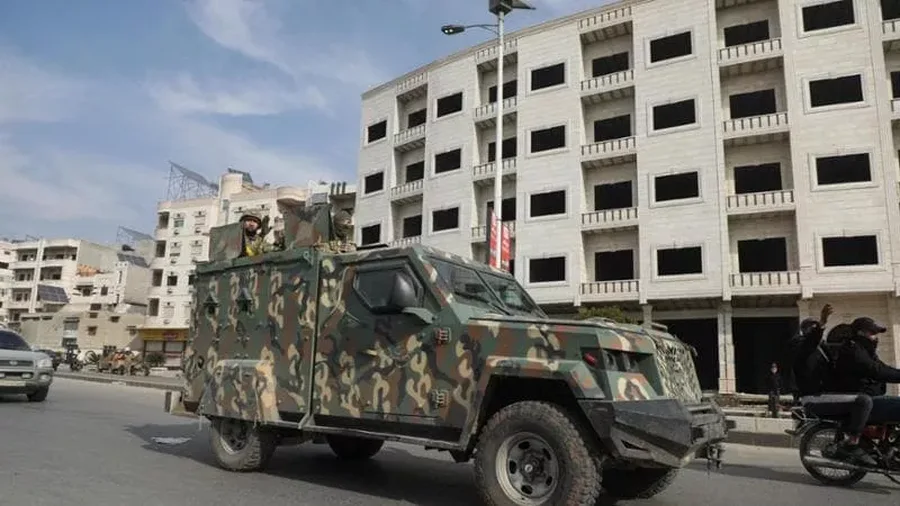
The march of the rebels is continuing steadily towards the Syrian capital, Damascus. They have reached the gates of Homs, the last city of importance before the capital. The Assad regime is increasingly shaken, so late last night he was rumored to have fled Syria with his family. Meanwhile, pro-regime propaganda tried to quell this speculation by spreading rumors that it was a simple trip to Iran for consultations. In the southern city of Suwayda, several officials have already left: the police chief, the prison director and local Baath party leaders have abandoned their offices.
"Our goal is the overthrow of the regime. We intend to form a new government based on a council elected by the people. It is our right to use any means to achieve this goal ," declared rebel leader al-Jolani in an interview with CNN.
After Aleppo and Hama, the capture of Homs would be another important success, also from a symbolic point of view: a commercial hub and the location of the country's largest oil refinery, Homs was the first city to rebel against Assad in 2011 The government army retook control just two years later, through a brutal siege that left the population of the old city starving. At the time, the vast ethnic and religious mix – a Sunni Muslim majority, an Alawite minority (the Shiite sect to which President Bashar al-Assad also belongs) and Christians – fueled fierce sectarian violence. During the government bombing of Homs, two Western journalists who had managed to enter the city were also killed: the American Marie Colvin and the French photographer Rémi Ochlik.
According to the Syrian Observatory for Human Rights, a UK-based organization known for reliable sources, the rebels are facing little resistance. Late last night, the Russian air force bombed the marching militias. However, Russia has lost control of Hama airport, forcing planes to take off from the base at Hmeimim, near the southern coast. Moscow has already appealed to its citizens: " Leave the country ".
Government forces appear to have withdrawn from Homs. The army called the news "fake", but has so far always denied withdrawals from cities that have since fallen. What is certain is that thousands of people – mostly those with Alawite connections – are on the run, heading for the west coast. New pockets of anti-Assad resistance have also flared up in Daraa and Suwayda, in the southernmost part of Syria. These places, although far from the main battles, are just as important. In this area, armed groups have taken control of the border point between Syria and Jordan, causing Amman to close its own part of the border. This situation has alarmed Israel, which has strengthened its border with Syria by sending air and ground forces to the Golan Heights. "We are prepared for any scenario ," Israel declared.
Fighting has also continued in the northeastern province of Deir Ezzor, where Syrian troops and pro-Iranian militias have withdrawn, making way for Kurdish forces, who already control the area east of the Euphrates. In the evening, Mazloum Abdi, the commander of the Syrian Democratic Forces (SDF) - as the Kurds are called - declared that he was open to dialogue with the rebels to discuss the "new reality" of Syria. Contact with HTS seems to have started. Meanwhile, yesterday in Baghdad, Iraq, the situation was discussed in a meeting between the Iraqi Foreign Minister and his counterparts from Iran and Syria. Today in Doha, a crucial meeting will be held between the foreign ministers of Turkey, Russia and Iran to try to revive the "Astana Process", since 2016 it aims to find a peaceful political solution to the Syrian conflict./ La Repubblica






Lini një Përgjigje