


 Shkruar nga Owen Matthews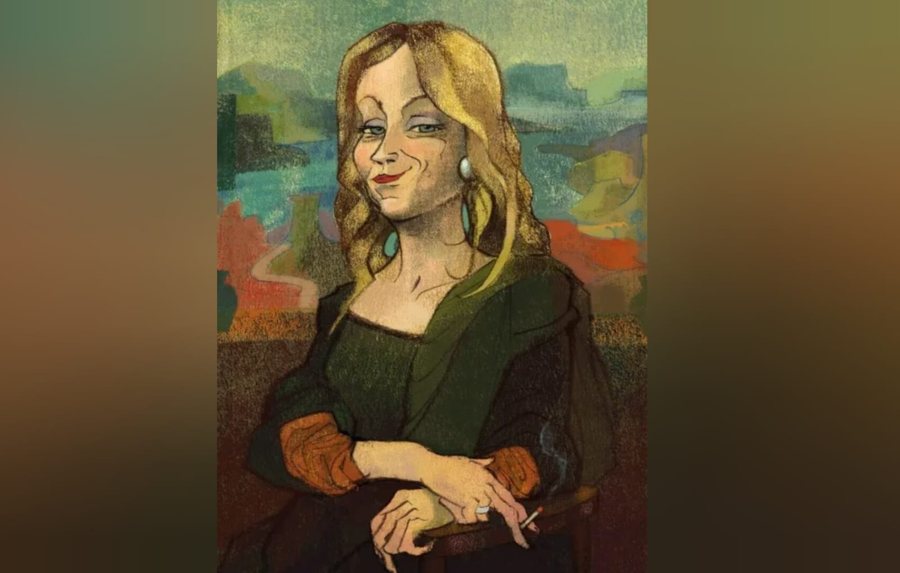
Italians like to complain: Italy ranks 14th in the European happiness rankings, just below the continental average.
Last weekend, Rome welcomed nearly a million young pilgrims to celebrate the Papal Jubilee of Youth. Part Woodstock festival, part giant outdoor mass and all-night vigil, crowds of students from across Italy and beyond gathered to listen to Christian rock music, sing hymns, and receive the blessing of the new pope. Leo XIV, who arrived in a white papal helicopter, was greeted like a rock star. The event was orderly, joyful, and a sign of a society at peace with itself and proud of its heritage.
From the way Italians carry on, you would think the country was thriving. The regions of Lombardy and Veneto are preparing to host the 2026 Winter Olympics. Central Rome has been transformed for the fourth centenary year of the papal jubilee, with five city squares renovated and more than 500 churches and palaces restored. Naples has unveiled an award-winning new metro line, and a trans-Apennine high-speed rail link between Naples and Bari is nearing completion. The notorious garbage collection problems in Rome and Naples have been miraculously solved. And perhaps most remarkable of all, Italy’s brilliant prime minister, Giorgia Meloni, enjoys approval ratings of more than 40 percent two years into her term.
Another big difference is that the media catastrophism over immigration, the decline of social cohesion, youth violence, the rise of militant Islam, and the plague of shoplifting and street robberies that has swept Britain and France is largely absent in Italy. Nor has mainstream Italian political discourse ever been much troubled by debates over identity-awakening clauses, such as the legacy of slavery, transgender rights, or decolonization.
Italians love to complain: Italy ranks 14th in the European happiness rankings, just below the continental average. But what makes the country stand out is that its ruling class is much more closely aligned with the broadly socially conservative, anti-woke views held by the majority of its voters. Sir Keir Starmer, as he was infamously called, could not say what a woman is. By contrast, the impassioned speech that brought Meloni to prominence in 2019 was an unabashed statement of Conservative values.
" We will defend our identity," she shouted. " I am Giorgia, I am a woman, I am a mother, I am Italian and I am Christian! You will never take this away from me !" Meloni added.
Meloni campaigned on immigration controls, family values, and national sovereignty, and pledged to bring in tax reforms to support small businesses and families. She opposed abortion, the promotion of gay rights in schools, gay adoption and surrogacy, and the dominance of the European Union.
"We defend God, the fatherland and the family" was the slogan of her Brothers of Italy party, which has its roots in post-war fascism. But although the motto was used by Mussolini, it was actually invented by Italian founder Giuseppe Mazzini in the 1860s, a classic example of the doppiezza, literally doubling, of Meloni's political identity that some say criticizes fascism but in practice tends towards pragmatic conservatism.
When Meloni was elected in 2022, many saw him as an Italian Viktor Orban, or even a European Donald Trump. The British media described him as “far-right,” and even Joe Biden called his rise something that democracies should be worried about. But rather than following the footsteps of recent Italian protest parties, such as Beppe Grillo’s nihilistic Five Star Movement, Meloni has shown himself to be a serious political operator.
"Melon looks increasingly like the face of Europe's future ," was the verdict of CNN's Fareed Zakaria.
Since coming to power, Meloni has swung left on economic policy, while pursuing a pro-Ukraine stance at odds with the more pro-Putin elements of her coalition partners, Salvini’s Lega. Her declining Euroscepticism was tempered by cooperation with Brussels, which in turn has brought a golden shower of EU money that has financed much of Italy’s major infrastructure investment, from Rome’s Jubilee renovation to new metros and rail lines.
She has worked hard to find ways to stop illegal immigration, making deals with Tunisia, Egypt and Libya to stem the flow of migrants across the Mediterranean. She also set up processing centers in Albania, deploying 500 police officers to staff the centers where newly arrived male migrants would be immediately deported, only to be thwarted by Italian and European courts, which have called the scheme a violation of human rights.
Increasingly, Meloni's views on immigration, once denounced as extreme, are becoming more mainstream. A few years ago, at a rally held by the Spanish right-wing party Vox, she denounced the threat from "left-wing secularism and Islamic radicalization " and called for the defense of " our civilization " against " those who want to destroy it ."
More controversially, she also dared to say that Italy does not want immigrants from Africa, or those who are Muslim.
"Every nation has the right to choose the immigration that is most compatible with its culture. In Venezuela, there are millions of people dying of hunger, they are Christians, often of Italian origin. So if we need immigrants, let's get them from Venezuela ," Meloni said in 2018.
Last year Starmer came to Meloni for advice on how to control illegal boat crossings, although he apparently failed to highlight the fact that instead of housing migrants in luxury hotels, Italian authorities lock them up in repatriation reception centres, which have been compared to prison camps.
Of course, Italy has some serious social and political problems. Reported crime in Milan is close to 75 percent of London's rate (albeit with much less violence). Unemployment for young people under 24 is 20.1 percent and wages are low compared to Northern Europe, which has led at least 450,000 Italians to move to the UK.
But there is also a steady exodus of wealthy Britons going in the opposite direction, many of whom are taking advantage of Meloni’s tax breaks that allow non-resident foreigners to pay a flat rate on worldwide income. Italy has also introduced new visa categories and tax rates for highly skilled international digital nomads and entrepreneurs. Unlike the British government, the Meloni administration believes that attracting wealthy residents to your country makes good economic sense.
It's easy to idealize Italy. But everything I've observed in five decades of visiting the country and four years as a resident confirms that it's an extraordinarily healthy, self-confident, and contented society.
In recent years, Italy has cleaned up its once endemic corruption and made its state health and security services work as well as any in Europe. Now Meloni may be ready to solve Italy’s deepest political problem of all, which is a fundamentally unstable constitutional system that has given Italy 69 governments since 1945. In short, Meloni is showing Europe how a country should be run: for the people and according to their values. / Adapted from “Pamphlet” by “The Spectator”



Lini një Përgjigje