


 Shkruar nga Pamfleti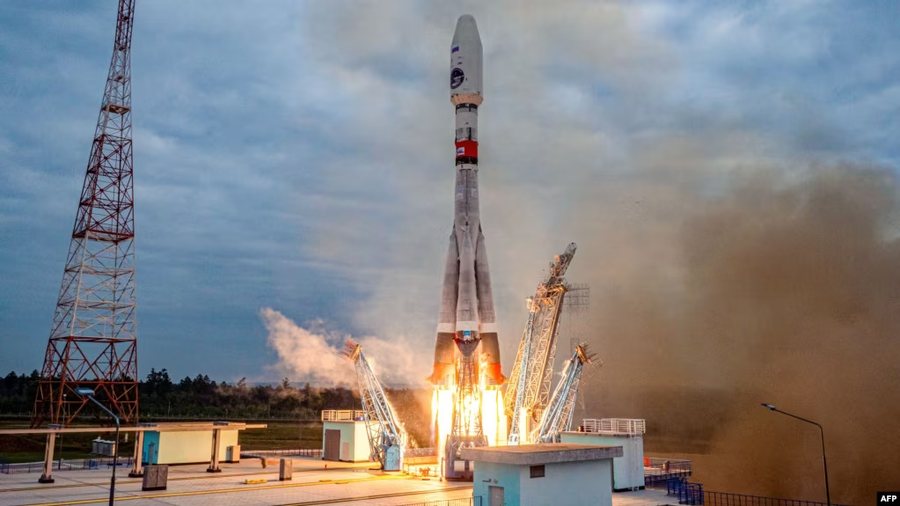
Russia's Luna-25 spacecraft crashed on the surface of the moon on August 20 after losing control, the Russian space agency Roskosmos said. It was expected to land on the Moon's south pole, but failed after running into trouble while moving into the pre-launch orbit. This was Russia's first mission to the Moon in 47 years.
The spacecraft was scheduled to land on Monday to explore a part of the moon that scientists believe may contain frozen water and precious elements.
Roscosmos said on Sunday that it had lost all contact with the spacecraft on Saturday afternoon.
"The vehicle moved into an unpredictable orbit and crashed as a result of the impact on the surface of the Moon," Roskosmos said in a press release on August 20.
On Saturday, the spacecraft experienced an "unusual situation" as it prepared to enter the pre-landing orbit ahead of the planned landing on the lunar surface on August 21.
According to Russian media, space officials held an emergency meeting during the night of August 19-20 in an attempt to save the mission.
Luna-25 entered lunar orbit on August 16, becoming the first Russian spacecraft to do so since Soviet leader Leonid Brezhnev's Luna-24 in 1976.
Russia aims to build a base on the moon by 2040.
Luna-25 was launched from Russia's Vostochy cosmodrome on August 11 and entered orbit five days later on August 16.
It was planned to operate for a year around the south pole of the Moon.
Its mission was intended to explore parts of the moon that scientists believe may contain frozen water and other resources that could be used during longer human stays on the lunar surface.
Russia is competing against India, which aims to land its Chandrayaan-3 spacecraft on the moon's south pole on August 23.
The United States and China have also made progress in their programs for lunar exploration, as well as plans to build lunar bases.
Only three countries have managed to land on the moon successfully: the Soviet Union, the United States and China, but not on its south pole. Therefore, India and Russia are racing to become the first country to achieve this.
An earlier attempt by India to land on the moon's south pole in 2019 failed, after its spacecraft crashed on the lunar surface.
Roscosmos said it wanted to show that Russia "is a state capable of sending a payload to the Moon and ensuring Russia's guaranteed access to the Moon's surface."
Russia is now finding it very difficult to access Western technology, which is affecting its space program, since it is facing sanctions due to the invasion of Ukraine./REL







Lini një Përgjigje