


 Shkruar nga Pamfleti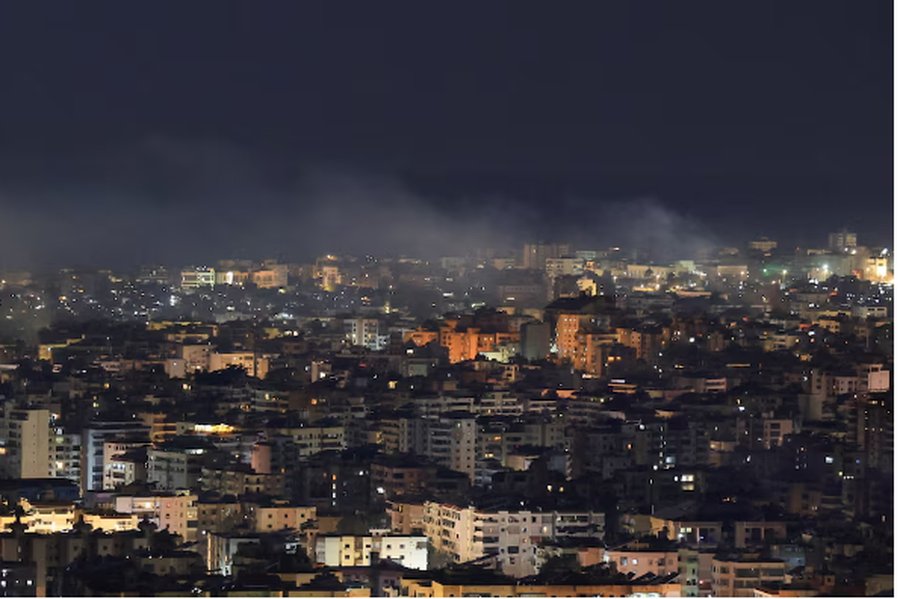
To how many countries in the Middle East will military operations be expanded and what will be the consequences of the conflict...
Everyone is wondering how long the fighting between the military forces of the United States and Israel and Iran will last, to how many countries in the Middle East will military operations expand, and what the consequences of the conflict will be on oil prices, maritime transport, and even whether the mullahs' regime will survive after Khamenei's death.
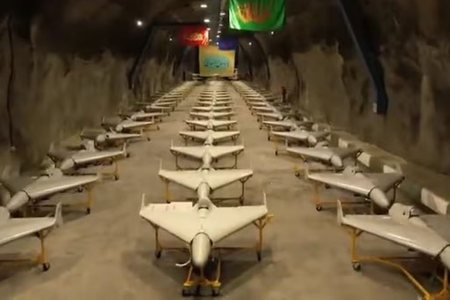
The crucial question is how many missiles, that is, how many ballistic missiles, Iran still has in its arsenal. Depending on the pace of missile launches by Tehran's forces, Iran's Revolutionary Guard could continue its attacks on Israel and Arab countries for another one to two, at most three weeks. This is if Tehran still has about 1,000 ballistic missiles at its disposal, with which it will try to create problems for Israel and for American military bases in the Persian Gulf countries.
Are the Israelis and Americans capable of repelling Iranian ballistic attacks? The answer is yes, to a large extent, since even the most advanced anti-ballistic missile systems cannot simultaneously deal with dozens of ballistic missiles. The choice is always to shoot down the missiles that leave the largest thermal footprint and, therefore, are considered the most powerful and potentially the most deadly.
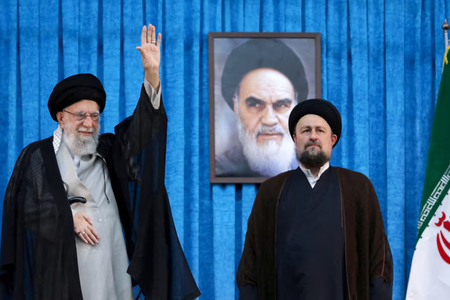
In the next 7–10–15 days, the military forces of the United States and Israel will focus primarily on repelling Iranian missiles, while carrying out strikes to eliminate Tehran's top leaders and critical Iranian military installations. After the elimination of Iran's supreme religious leader, Khamenei, with the launch of combat operations, the intelligence services of Israel and the US, namely Mossad and the CIA, with their spy networks in Iran, aim to locate and target senior figures of the regime, Newsbomb writes in an analysis.
In this developing situation, one must also take into account the apparent distrust of everyone within the Tehran apparatus, as within the structures no one, not even from the ranks of the most hardened Revolutionary Guard, is able to know who is loyal to the regime and who may be collaborating with Israel and the Americans.
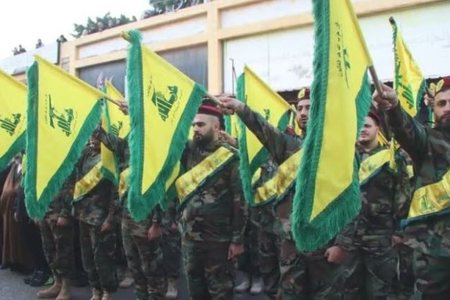
The opening of fire on American and Israeli targets by Hezbollah and the Houthis clearly serves Benjamin Netanyahu's goal of ending the threat from Lebanon and Yemen as quickly as possible. Therefore, both the strikes by Hezbollah and the launch of ballistic missiles by Iran serve Netanyahu's strategy of destroying Tehran's missile program. One way or another, whether through the launch and capture of missiles, or through destruction in ammunition depots, with the ongoing war, Israel and the United States will manage to put an end to Iran's missile/ballistic program.
Iran's mistake is that, by striking American military bases in the Persian Gulf countries, it loses the support it could have for the swift conclusion of operations against it.
Will the regime change in Iran happen? Despite Khamenei's assassination, the fall of the theocratic regime is very difficult unless the Iranian people continue their uprising to overthrow the ruling clerics and the Revolutionary Guard. Even weakened, Khamenei's followers will do everything they can to hold on to power.
The expected destruction or depletion of Iran's missile/ballistic arsenal, combined with the elimination of Khamenei, will give Benjamin Netanyahu and Donald Trump the argument that they have achieved the objectives of their operation against Tehran.
As for Iran's nuclear program, there is no question of it, as this endeavor seems very distant, if not utopian.
In the long term, even assuming that Iran redesigns the creation and provision of ballistic capabilities, Israel and the United States will have the ability and opportunity to once again destroy Tehran's missile program.
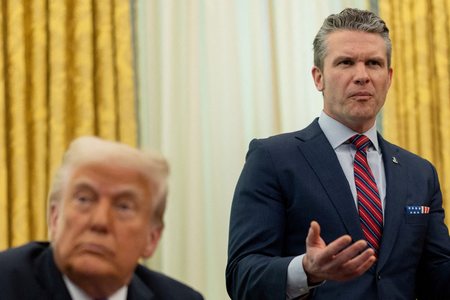
Meanwhile, it is clear that the game at the military, political and diplomatic levels is being played by Donald Trump and Benjamin Netanyahu. NATO is outside and on the periphery, the UN uninvolved, passive and without influence, while the European Union, along with the powerful actors of Europe, remains off the map and almost absent. This says a lot about the reflection of power. /Adapted from Pamphlet /


Lini një Përgjigje