


 Shkruar nga Corriere della Sera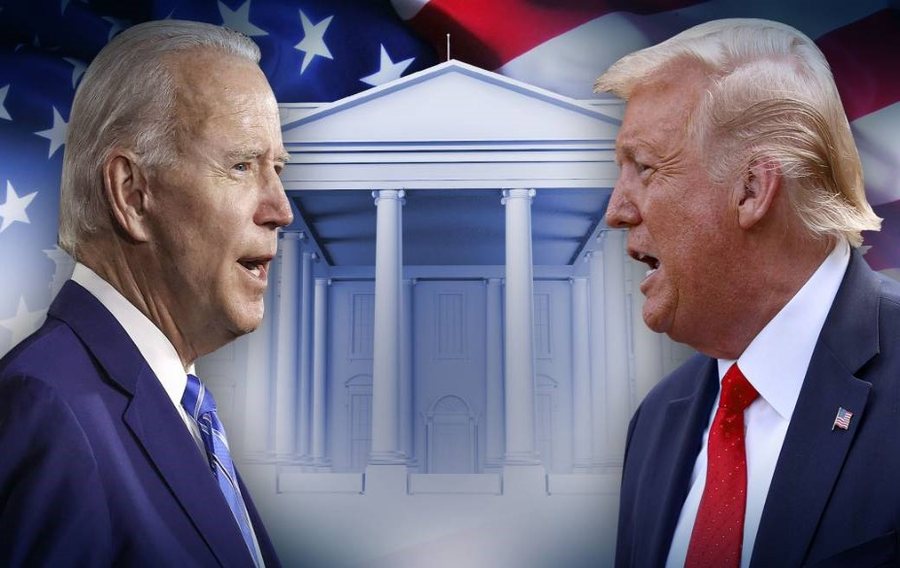
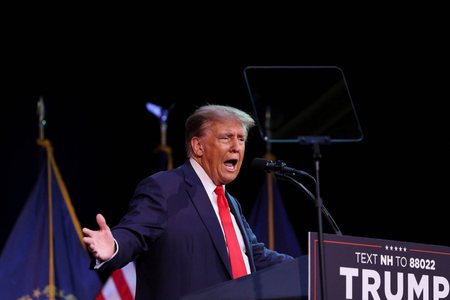
In New Hampshire, Trump fell well short of independent voters: the very ones who could decide the final election in November.
This isn't a prediction, it's a statistical analysis of probability (and the two are very different things): New Hampshire, instead of increasing Trump's chances of re-election, has made it slightly less likely, if you read the numbers careful.
Joe Biden has one thing in common with Donald Trump besides advanced age. The current president is also an egomaniac, convinced that he is the Man of Providence who will save American democracy from returning a dangerous leader to the White House. This assumption explains his stubbornness to run for office, his refusal to give up despite his old age, and his unpopularity, which make him indigestible even to much of the Democratic base. Biden's behavior does nothing to "save American democracy," if not, it highlights some of its pathologies.
However, the result of the Republican primary in New Hampshire proves it at least in part. Biden's re-election strategy is based on two pillars. First: do everything possible to ensure that Trump wins the Republican nomination. Second: sinking Trump's candidacy in the final challenge, removing a thin but crucial part of the electorate. What happened in New Hampshire reassures Biden. Everything goes according to plan. The gap between Trump and Nikki Haley remains high, and therefore the former president continues to sail smoothly towards the confirmation of his candidacy. But in New Hampshire, Trump fell far short of independent voters: the very ones who could decide the final election in November.
On the other hand, the first and second pillars are based on investigations and court trials. Some of which are moderately grounded, others are clearly odd and inconsistent. The latter – show trials organized by biased and discredited judges – are as useful as the former. Messier investigations (such as those by New York magistrates into porn star payments and budget irregularities) are effective for the Democratic Party's cynical strategy: they serve to convince Trump's most loyal Republican base that he is the victim of a judicial prosecution. In those cases, it really is.
More serious investigations, such as the one for inciting the uprising against the Republic on January 6, 2021, will probably not result in his conviction. The 14th Amendment to the Constitution excludes anyone who has attempted a coup. Regardless of the severity of the attack on the Capitol, it will be very difficult to prove that Trump was orchestrating a coup (even more so if the Supreme Court will have the last word). However, this type of accusation and court proceedings is clearly affecting the most moderate and independent voters, those centrists who may be undecided between a Republican candidate and a Democrat.
Trump's victory in New Hampshire is apparently comfortable. With a 12-point margin over rival Nikki Haley (54% for her and 43% for her). Other data are less reassuring. Nineteen percent of Republicans who voted for Haley in the New Hampshire primary said in polls: If Trump prevails and is their party's nominee in November, they will not vote for him. In the Iowa caucus a few days ago, that range was slightly lower, but still significant: 15% "never Trump."
It may be that the goal stated in January changes between now and November. It may be that party discipline and/or distaste for Biden will eventually prevail and disgruntled Republicans will return to the fold. However, it is clear that a small vote hemorrhaging is enough to make Trump lose, just as he lost in 2020 and won by a very narrow margin (only in the electoral college, not in absolute votes) in 2016 against Hillary Clinton. In elections that are played on a razor's edge, small changes are crucial.
Even more troubling for Trump is the behavior of independents. This category must be interpreted in light of a feature of the US electoral system. When I became an American citizen and registered to vote for the first time, like all Americans, I had to classify myself in one of three categories: Democrat, Republican, or Independent. (For the record, I chose Democrat.) It is a classification for statistical purposes only, it does not dictate my behavior. In the secrecy of the vote I may very well change my mind. However, those who choose to declare themselves independent from the beginning show a special predisposition to alternate voting between the two parties, to adapt from time to time. "Current independents," those who actually decide at the last moment, are a small percentage that has been declining for years. However, what was mentioned above applies: the last elections were decided by small percentages.
Well, in New Hampshire Trump only got 33% of the vote among independents who chose to participate in the Republican primary. In 2020 Trump had received 37% of the vote from independents and that was not enough for him to win. Additionally, in exit polls in New Hampshire, 66% of independents said they would not vote for Trump if he were the Grand Old Party's nominee in November.
We are still nine months away from voting, anything can happen and above all American voters at this stage do not feel the "heat of the clash", that incandescent atmosphere that is created when the challenge between the two final candidates is in the final stages. Televised duels between candidates are always unpredictable in their impact on voters. From the economy to wars, from immigration to abortion, many things can still contribute to moving some votes in one box or another.
We also need to assess the impact of independent candidacies. Moreover, these independent candidacies will be able to capture the fringes of the left-wing electorate where resentment of Biden is at least as strong as some moderate Republicans' intolerance of Trump. I just note that New Hampshire's message is less favorable to Trump than it appears at first glance. / Pamphlet






Lini një Përgjigje