


 Shkruar nga Pamfleti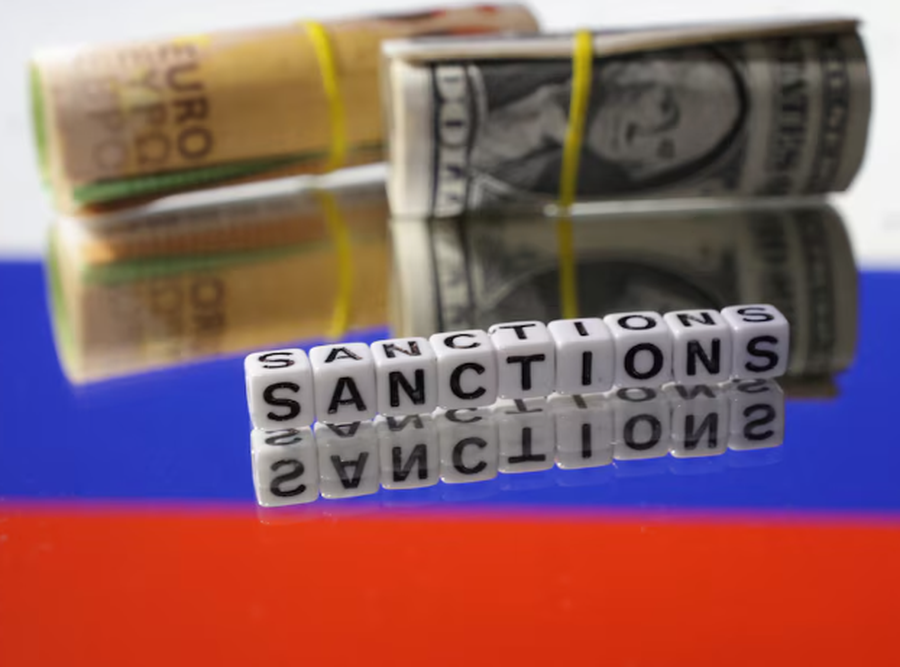
Since the US and EU stopped exporting their banknotes to Russia in March 2022 because of its invasion of Ukraine, about $2.3 billion in dollar and euro notes have arrived in that country, according to customs data seen by Reuters .
Data released for the first time showed that Russia managed to circumvent sanctions that block money transfers and suggested that the dollar and euro remained useful tools for trade and travel, even as Moscow seeks to reduce its exposure to these major world currencies.
Customs records show the cash was transferred to Russia from countries including the United Arab Emirates and Turkey, which have no restrictions on doing business with Russia. For more than half of the total number of banknotes, the country of origin is not specified in those records.
In December last year, the US government threatened to punish financial institutions that help Russia circumvent sanctions and imposed sanctions on companies from third countries during 2023 and 2024.
The Chinese yuan has overtaken the dollar in popularity to become the most traded foreign currency in Moscow, although major payment problems remain. Dmitry Polevoy of Astra Asset Management in Russia believes that many Russians still want foreign currency to travel abroad, as well as for imports and smaller savings. "For individuals, the dollar is still a reliable currency," he told Reuters.
In 2022, Russia labeled the dollar and euro as "toxic" currencies after sweeping sanctions cut off its access to the global financial system, halting payments and trade. About 300 billion dollars of foreign reserves of the Bank of Russia are frozen in Europe.
A spokesman for the European Commission said it could not comment on individual cases of the application of sanctions. He also emphasized that the European Union cooperates with third countries when it suspects that sanctions are being circumvented.
The customs data only covers the period from March 2022 to December 2023. Reuters could not access more recent data.
Russia's central bank quickly limited foreign currency withdrawals after the invasion of Ukraine in a bid to prop up the weakened ruble. According to the data, only $98 million in dollar and euro banknotes left Russia between February 2022 and the end of 2023.
In contrast, foreign exchange inflows were much higher. The largest foreign exchange flow was reported by the little-known company Aero-Trade, which offers tax-free shopping services at the airport and on flights. During that period, it reported about $1.5 billion in accounts. Aero-Trade recorded 73 shipments of $20 million or euros each, all of which arrived through Moscow's Domodedovo Airport, an international hub near the company's headquarters. Shipments are described in customs declarations as exchange or proceeds from trade on board.
In most cases, Aero-Trade is listed only as the entity that prepares and submits the customs documentation. Reuters was unable to identify Aero-Trade's customers, nor was it able to determine the source or destination of the cash. Aero-Trade owner Artem Martinyuk told Reuters he doubts the authenticity of the customs data. He declined to comment further. The company stated in a statement that "Aero-Trade is not engaged in supplying Russia with hard currency".
According to customs records, a shipment of 20 million euros, which was processed by Aero-Trade, was imported in February last year by Yves Rocher Vostok, a subsidiary of French cosmetics group Yves Rocher that manages dozens of stores in Russia. The data does not indicate the country of origin or the name of the supplier.
The parent company in France, the Rocher group, made it known that neither the group nor Yves Rocher Vostok had ever dealt with Aero-Trade nor had they requested the transfer in question. "Yves Rocher Vostok, like all entities of the Rocher group, respects the law," said a spokesperson for the group. "The group has never tried and will never try to circumvent sanctions on the import of dollar and euro banknotes into Russia," he added.
More than a quarter of the $2.27 billion in notes was imported by banks, mostly as payment for precious metals, according to customs records and a person familiar with the transactions.
Several Russian banks received $580 million in cash from abroad between February 2022 and December 2023 and exported roughly equal amounts of precious metals. According to the data, in many cases, the shipments of gold or silver went to the companies that supplied the banknotes.
For example, Russian lender Vitabank imported $64.8 million in banknotes from Turkish gold trading company Demas Kuyumculuk in 2022 and 2023. During the same period, Vitabank exported $59.5 million in gold and silver to the Turkish company.
An unnamed source familiar with Demas' operations confirmed that the firm was involved in a series of cash-for-gold transactions involving Vitabank and two other Russian lenders between March 2022 and September 2023.
He stated that sending banknotes from the UAE to Russia was the only solution Demas found to complete long-term contracts signed before Western sanctions came into effect with Russian gold suppliers, while still complying with Turkish regulations and international regarding cross-border payments.
In the third quarter of last year, after all pre-war contracts with Russian companies were completed, Demas ended two-way trade, the person said. / Taken from " Reuters"



Lini një Përgjigje