


 Shkruar nga Corriere della Sera
Who will govern Gaza after the war? This is the most important issue facing America...
There is not just a divergence between the United States and Israel over the humanitarian pauses sought by Washington - and rejected by Benjamin Netanyahu - but there is a deeper crisis between the two allies.
The "end game" requires: the long-term strategic objective to be achieved after military operations. In other words, who will govern Gaza? This is the most important issue facing America in its diplomatic action towards Israel and the Arab world.
The White House's request to Benjamin Netanyahu to ensure that Israeli military action is contained, efforts to limit civilian casualties and to provide for a pause in fighting to ensure that food, medicine and gasoline reach the population of the Strip is well known. . But that's not all.
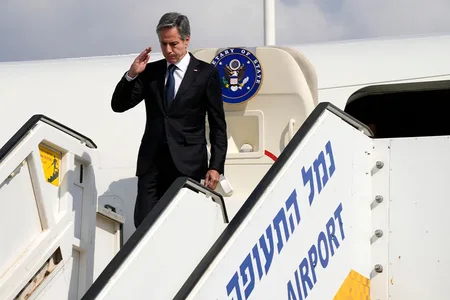
A parallel dialogue - with Israel and the Arab world - concerns the post-war period. Secretary of State Antony Blinken, on his multiple trips to Tel Aviv, went to discuss this with the Israeli prime minister and other members of his government: beheading Hamas after the horrors of October 7 is a legitimate objective, but we should already have a plan today for the post-Hamas era. The idea of entrusting Gaza to an international force managed by Arab countries is tempting, but inconsistent, because all the candidates back down.
Hezbollah's movements
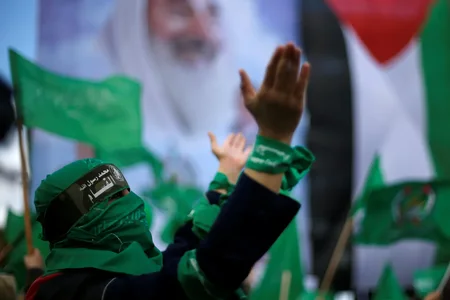
For now, America can boast some modest successes and some failures. In positive news: Lebanon's Hezbollah leader Hassan Nasrallah's chilling speech yesterday was less combative than expected. That is, the rhetoric was filled with threats and declarations of war, but between the lines it was perceived that Hezbollah does not want to open a real additional front in the conflict. The danger was there and will always remain as an extraordinary opportunity: because between Hezbollah and Hamas there is a perverse competition of terror, a race to see who will be more ferocious and effective in pursuing the destruction of Israel and the extermination of Jews. For now, however, Hezbollah is limited to "low-intensity" rocket and drone attacks.
An explanation that leads back to the United States, which sent warships near Lebanon. The message issued by the reinforced military apparatus of the United States was to Hezbollah and their patron, Iran: in the event of an expansion of the conflict, America will not leave Israel alone to defend itself against three enemies on three different fronts.
For now, Washington's move appears to have worked, but it's best to avoid binding judgments in a conflict that could have other terrible surprises in store for us. Iran's method so far remains the traditional one: to inflict maximum damage "by proxy" on its enemies, using terrorist militias, denying its direct involvement and thus avoiding paying a very high price. Iran has already achieved several important successes since October 7.
An Arab League "protectorate" over the Belt
Assuming the Israeli military succeeds in destroying the Hamas military apparatus, America is wondering what happens next. There has been talk of assigning Gaza to a multilateral force - civilian and military - monitored by the Arab League. The most mentioned countries for an operation of this type are Egypt and Jordan because of their proximity, Saudi Arabia with the Emirates and Qatar because of the wealth that could come to the service of reconstruction, rebirth and stabilization. Someone mentioned the precedent of Kosovo.
But the differences are huge, starting with the first, which is crucial: the Arab states are not there. It is easy to mock the ambiguity of Arab leaders, who in words are full of solidarity for the Palestinians, but in reality are very distrustful of that people.
But many of these countries have been burned by their past experiences when dealing with the Palestinian issue. The oldest and most dramatic case was Jordan, which, having half the population of Palestinian origin, risked the overthrow of its regime. Others such as Arabia poured in rivers of money which the Palestinians squandered on weapons or corruption. Egypt fears the introduction of Hamas infiltrators who would rebuild the presence of the Muslim Brotherhood. All have ancient reasons for wanting to sympathize with the Palestinians only from afar, keeping them at a safe distance.
Sending a multinational Arab force to govern Gaza after Israel carried out massive bombings with many collateral casualties, including civilians, may appear in the eyes of Arab public opinion as nefarious collaboration with a country accused of "genocide of the Palestinians".
Of all its neighbors, Egypt is the most hostile to the Palestinians in Gaza because it fears jihadist infiltration into its soil. General al-Sisi refuses to accept Palestinian refugees in Sinai; he went so far as to declare that if Israel moved part of the population of the Strip to Egypt, it would be "an act of war" and cause the peace accords between Cairo and Tel Aviv to break down. Even in this case there are official arguments and indescribable motivations. General al-Sisi says he does not want to welcome the Palestinians in order not to remove Israel's responsibility for resolving the situation in Gaza. Understandable. What he does not say is that he regards the Palestinians as potential enemies ready to attack his regime, which was born by suppressing the Muslim Brotherhood.
The "peace party" (and the 2-state solution) is weaker
What options remain for Biden and Blinken? The indefinite occupation of Gaza by the Israeli army is a real, concrete option, but fraught with risks. Even without Hamas and in a post-Hamas scenario, this occupation risks fueling new hatreds, preparing a new generation of terrorists, and isolating Israel from its last friends among moderate Arab leaders. The Americans are against it and they are telling Netanyahu this in every way.
According to Washington, the preferred solution is for the Strip to be entrusted to the Palestinian Authority, which governs (more or less) the West Bank with its capital in Ramallah. But it cannot be this Palestinian Authority, headed by 87-year-old Mahmoud Abbas, whose credibility and legitimacy are minimal. Corrupt, incompetent and sold out to the Israelis are some of the charges most often leveled against him by his own citizens. Therefore, the Palestinian Authority must produce a new leader. And its credibility and legitimacy must be based on an Israeli political shift in favor of a "two-state" solution to the conflict.
The problem is that the atrocities committed by Hamas on October 7 have further reduced the consensus among Israelis in favor of a Palestinian state. Although we give a lot of space in our media to the Israeli left and that country's pacifists, recent polls say that only a third of Israelis today are in favor of two states.
This speaks volumes about the loneliness of America and the impossible mission of Biden-Blinken. / Pamphlet





Lini një Përgjigje