


 Shkruar nga Pamfleti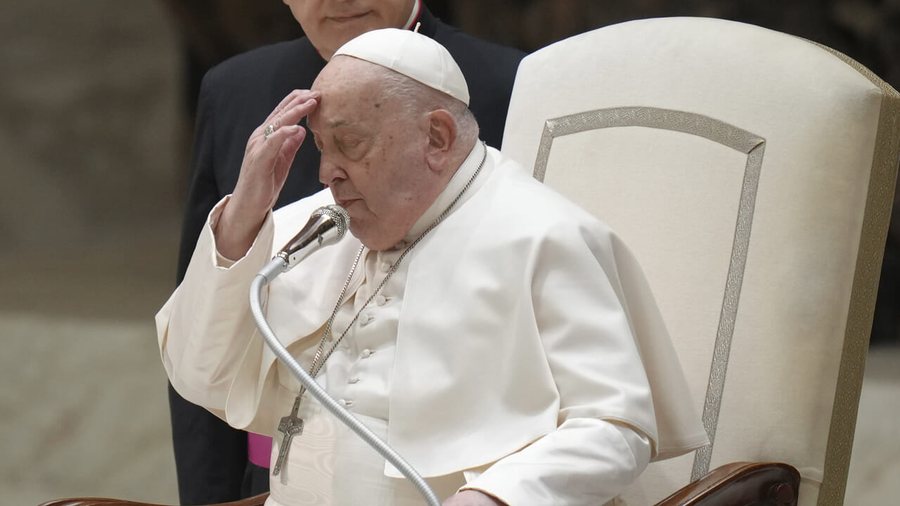
Unfortunately, what was predictable happened. The respiratory deterioration was complex and serious. The Pope was unable to speak, but he thought it was right to continue with his work and his mission.
Pope Francis passed away this morning, a day after celebrating Easter. But what was the cause of Pope Francis' death, while the day before he appeared before the faithful?
Pope Francis may have died of a cerebral hemorrhage rather than a respiratory problem, although bilateral pneumonia, which forced him to be hospitalized for a long time, probably played a role in determining the illness.
This is reported by Adnkronos, citing confidential sources. As explained by the Humanitas hospital, a cerebral hemorrhage occurs when blood leaks from an artery or vein in the brain, while an ischemic stroke is caused by the occlusion of a blood vessel.
"In recent days we have seen the Pope lose oxygen," pulmonologist Claudio Micheletto told Adnkronos. Bergoglio, he added, was "among patients with respiratory deterioration, which is a serious condition. Then the health of the heart makes the difference, but with low oxygenation values, the heart can suffer and the person can die from cardiac arrest, which is a consequence of an acute respiratory crisis."
According to Massimo Andreoni, scientific director of Simi (Italian Society of Infectious and Tropical Diseases), "unfortunately, what was predictable happened. The respiratory deterioration was complex and serious. The Pope was unable to speak, but he thought it was right to continue with his work and his mission."
Bassetti: "The infection has prevailed"
"I had expressed many doubts about the fact that Pope Francis could return to normal," says infectious disease specialist Matteo Bassetti. He explains that "the polymicrobial respiratory infections that the Pope has had, unfortunately they can have ups and downs. In these situations, the serious comorbidities that affected the Pope - immunosuppression from cortisone, obesity and age, meant that the infection prevailed."
Hospitalization in Gemelli and bilateral pneumonia
Pope Francis' final months were marked by serious health problems. The Pope's condition, already afflicted by various ailments due to his age, suddenly worsened in mid-February, when the Pope was admitted to the Gemelli hospital in Rome for a respiratory infection.
A few days after his admission, doctors announced that a chest CT scan revealed "the onset of pneumonia on both sides requiring further drug therapy."
In the first days at Gemelli, the Pope's condition was described as stable, but on February 22, the first respiratory crisis "of prolonged severity" necessitated blood transfusions and the application of high-flow oxygen. A few days later, on February 28, the Pope was struck by another crisis, but little by little - day by day - his condition improved. Only later did doctors discover that Francesco had twice risked death during his hospitalization. After being discharged from the hospital, the Pope continues his recovery in the Santa Marta house, in the Vatican. Since then, in his rare public appearances, he has always appeared weak.
Despite his precarious condition, Pope Francis managed to break another taboo by appearing in St. Peter's Basilica, accompanied by his personal nurse. Yesterday, Easter Sunday, the Pope appeared in St. Peter's and blessed the faithful, his voice breaking from fatigue.
The last years of Pope Francis
Bergoglio's life was already marked at a young age by a serious health problem: when he was 21, pneumonia forced doctors to remove part of his right lung. In 2021, the Pope was hospitalized for colon surgery, while in June 2023 he underwent, as always at Gemelli, an abdominal operation, specifically a laparotomy and a plastic surgery of the abdominal wall with a prosthesis. For some time, Francesco had suffered from knee pain that prevented him from walking and forced him to use a wheelchair. /Adapted from Pamphlet/






Lini një Përgjigje