


 Shkruar nga Pamfleti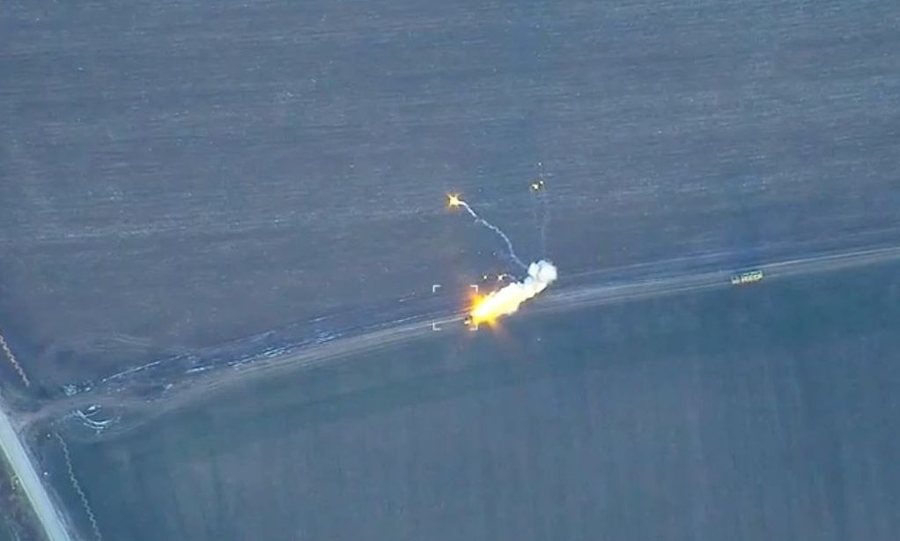
A precision drone strike in Belgorod, Russia, reveals that the S-400 system, while sophisticated, is not immune to strikes from cheap and simple technology like small combat drones.
A drone attack by Ukrainian forces on Russian territory has exposed a deep weakness in Russia's advanced S-400 air defense system, which was until now considered one of the main pillars of the Russian Federation's air defense.
Drone footage clearly shows that one 5P85SM2-01 mobile launcher was completely destroyed, while a second one suffered significant damage, in the attack that took place on December 14, 2025 in the Belgorod region, near the border with Ukraine. The attack was led by the 15th Special Reconnaissance Artillery Brigade of Ukraine, known by the nickname “Black Forest”, according to militarywatchmagazine.com’s sources.
???????? Artillery reconnaissance brigade "Chorniy lís" using 6 attack UAVs attacked the S-400 air defense system in the Belgorod region.
— Aleksandr Kukalov / Александр Кукалов
• 5P85SM2-01 launcher destroyed
• 5P85SM2-01 launcher damaged
• four 48N6DM anti-aircraft guided missiles were destroyed pic.twitter.com/GzIEnIh4YL
Despite being considered a fourth-generation air defense system, the S-400 has shown structural weaknesses against small, low-power drones, a problem that is not unique to Russia. The American counterpart, the Patriot MIM-104, deployed in the Middle East and Eastern Europe, has also faced the same risk, underscoring the universal limitations of current anti-drone technology.
The S-400 systems, in fact, are not designed to be used alone. They require support from short- and medium-range systems, such as the Pantsir-S1, which use lower-cost missiles and machine guns to deal with threats such as drones. In Syria, for example, the Turkish-backed attacks on the Russian Khmeimim air base were largely repelled thanks to the use of these more flexible systems.








Lini një Përgjigje