


 Shkruar nga Pamfleti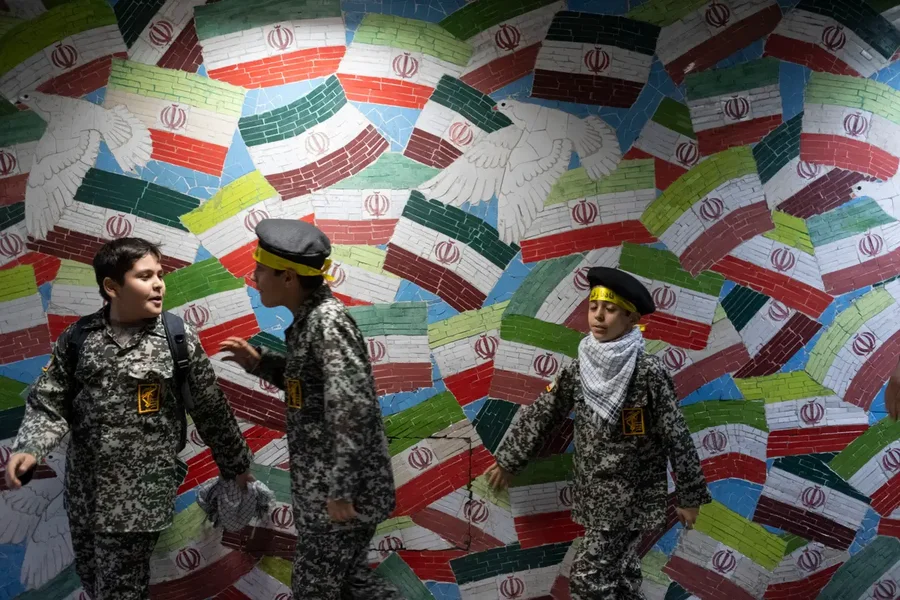
Drones and missiles for Imam Mahdi: A radical doomsday cult is increasingly defining Iranian politics
Even the youngest are being indoctrinated: Iranian schoolchildren dressed in Revolutionary Guard uniforms. With a pair of pliers in hand, Mahmoud adjusts the glowing coals on his hookah and says that “Iran is stronger than many people expected.” Mahmoud, a devout Shiite, is in a smoky bar in Berlin’s Neukölln district. A few days ago, the New York Times reported that Iran, despite Israeli-American airstrikes, still possesses about 70 percent of its missile arsenal. That doesn’t surprise him.
"I know how they think. For 47 years they have been preparing for war against the US and Israel. Why? Because they believe that this war is necessary for Imam Mahdi to return," he said. Mahmoud is also convinced that this war is part of ancient prophecies.
Rockets as a form of worship
Like Mahmoud, many Shiite Muslims believe. According to their belief, the Mahdi is the last legitimate Muslim ruler. The Imam disappeared in the 9th century, only to return in a time of global turmoil as the final savior and defeat evil in an apocalyptic battle. The Mahdi will then lead a world Islamic government from Jerusalem until the Day of Judgment. This is how traditional Shiite eschatology describes the end of the world.
But since the start of the war between Iran and the US, a radical current has been gaining influence: Mahdism. "Its supporters are not content to just wait for the return of the Mahdi. They want to actively hasten it," says Reza Hajatpour, a professor of Islamic philosophy and theology.
According to this ideology, several prophecies must be fulfilled for the Mahdi to return. They include great destruction through civil wars to the “liberation of Jerusalem,” which from the Iranian perspective means the destruction of Israel. In this sense, Iran’s missile arsenal is not just a matter of technology or military strategy, but “an act of worship,” as Iranian cleric Alireza Panahian, a close confidant of Supreme Leader Mojtaba Khamenei and a central figure in Mahdism, recently put it.
In Mahdism, escalation becomes an obligation
For many Western observers of Iran, the Mahdi cult remains a blind spot. Scholars at the Middle East Institute warned as early as 2022 that its influence on Iranian politics was being consistently underestimated. More recently, Mahdist supporters have even sabotaged negotiations with the United States.
Sipas një hetimi të televizionit amerikan CNN, një grupim me ndikim i quajtur “Jebhe-ye Paydari”, ose “Fronti i Qëndresës”, pengoi arritjen e një marrëveshjeje të re me SHBA-në. Grupi e konsideron veten mbrojtës të vlerave të Revolucionit Islamik. Mes anëtarëve të tij janë ish-shefi i sigurisë Saeed Jalili, deputetë dhe anëtarë të lartë të Gardës Revolucionare. Udhëheqësi shpirtëror i grupit, ajatollah Mohammad Mehdi Mirbagheri, kishte kërkuar që në vitin 2019 një “luftë gjithëpërfshirëse për të përshpejtuar rikthimin e Mahdiut”.
Njohësit e Iranit, si Reza Hajatpour, thonë se politika iraniane është thellësisht e përçarë. Por ndarja nuk kalon më mes reformatorëve dhe konservatorëve të ashpër, por mes një kampi radikal që mendon në mënyrë pragmatike dhe vendos mbijetesën e sistemit në plan të parë, dhe forcave edhe më radikale, të cilat nuk shmangin asnjë rrezik për të realizuar objektivat e tyre ideologjike.
Ndërsa kampit të parë i përkasin figura si negociatori iranian dhe kryetari i parlamentit Mohammad Ghalibaf, kampi më i pamëshirshëm përbëhet nga një brez i ri, jashtëzakonisht ideologjik, mbështetësish të regjimit, veçanërisht brenda Gardës Revolucionare. Në mendësinë e tyre, kaosi dhe shkatërrimi nuk janë diçka e padëshirueshme, por një hap i domosdoshëm drejt shpëtimit.
Kjo mund të përmbysë rregullat bazë të gjeopolitikës. Sepse kur logjika e vetëmbrojtjes zëvendësohet nga gatishmëria absolute për sakrificë, atëherë frenimi reciprok humbet efektin. Në atë rast, përshkallëzimi bëhet i pashmangshëm.
Ngritja e kultit apokaliptik
Radikalizmi i brezit të ri të mbështetësve të regjimit iranian nuk është rastësi. Sipas Reza Hajatpourit, besimi shiit për fundin e botës ka ndikuar ideologjinë e Republikës Islamike që nga themelimi i saj në vitin 1979. Ai vetë studioi teologji në qytetin Qom në fillim të viteve 1980.
“Dobësia e Islamit, luftërat e shumta dhe ndryshimet globale, rezistenca kundër imperializmit, të gjitha këto besimtarët i shihnin si shenja të rikthimit të afërt të Mahdiut”, thotë ai.
Megjithatë, shumica e klerikëve në pushtet refuzonin idenë e përshpejtimit aktiv të rikthimit të tij. Kjo ndryshoi në vitin 2005 me presidencën e parë të Mahmoud Ahmadinejadit, një mbështetës i bindur i mahdizmit. Në atë kohë, Republika Islamike po përballej me krizë ekzistenciale. Shoqëria po bëhej gjithnjë e më sekulare dhe sondazhet e brendshme kishin treguar se në zgjedhjet presidenciale të vitit 1997, edhe 73 për qind e Gardës Revolucionare kishin votuar për reformatorët.
Për pasojë, regjimi nisi të krijonte një brez edhe më fanatik të Gardës Revolucionare, të gatshëm të vriste dhe të vdiste për ruajtjen e sistemit. “Për të qenë më efektive, propaganda nuk përdorte më argumente teologjike, por simbole emocionale”, thotë Hajatpour. Kulti i Mahdiut ishte ideal për këtë qëllim.
The central figures of the new propaganda machine became preachers without turbans and without theological training, who even mocked traditional clergymen by calling them "passive scholars" or "bees without honey."
The most well-known of them is Ali Akbar Raefipour, head of the propaganda institute “Masaf,” which means “War.” According to investigations by the exiled Iranian media outlet “Iran Wire,” since its founding in 2011, this institute has used religious ceremonies, state media, international conferences, and social media to make Mahdism the dominant doctrine among the new generation of regime supporters, not only in Iran but also abroad.
The "Masaf" organization itself describes itself as "the largest cyber movement of the children of the internet revolution."
Influence beyond Iran's borders
In Iran, the consequences of this propaganda machine are felt even by ordinary citizens.
"When I talk to regime supporters, they tell me that we Iranians are Allah's chosen people, who must reclaim the Islamic holy sites and thus pave the way for Imam Mahdi. I feel like I've ended up on a medieval crusade," says an Iranian who wishes to remain anonymous.
But the influence of the Mahdi cult now extends beyond Iran. It is late in Berlin-Neukölln and Mahmoud is getting into his Volkswagen. On the rear window is written in Arabic: “O Allah, make Imam Mahdi return soon.”
Mahmoud is still not sure whether the Islamic Republic is really the force that will help the Mahdi. Reports of human rights violations and repression make him doubt it. However, he believes that he will soon have to choose a side, because in the coming war between good and evil, according to him, there will be no place for neutrality. /Adapted from Pamphlet by NZZ/







Lini një Përgjigje