


 Shkruar nga Pamfleti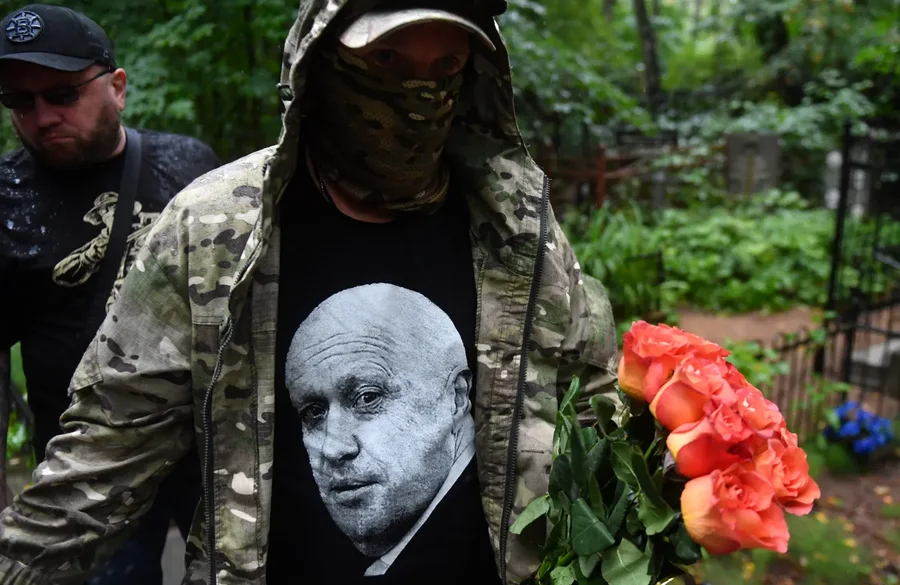
From private army to secret Kremlin instrument, the structure created by Prigozhin is adapting to new forms of operation in Europe
When Yevgeny Prigozhin died in a plane crash in August 2023, two months after the failed rebellion against Russian military leaders, many thought that the Wagner Group would end with him.
The mercenary force he led had become one of the most powerful instruments of Russian influence. It fought in Ukraine and expanded its presence in several African countries. His downfall was interpreted as the end of Wagner as an independent structure.
According to a Financial Times investigation, citing Western intelligence officials, this did not happen. Wagner did not disappear, but was reorganized. The fighters may no longer be on the front lines, but the networks that supported them remain active and, according to the sources cited, are serving Russian interests even within NATO countries.
From private army to state-controlled vehicle
Under Prigozhin, Wagner operated in a gray area between state structure and private military. The Kremlin denied direct control, but the group protected regimes friendly to Moscow, secured mining contracts and participated in the fighting in Ukraine.
According to the Financial Times analysis, the Wagner model allowed Russia to expand its influence without formally committing state troops. This offered Moscow the opportunity to deny direct involvement while benefiting from actions on the ground.
Rebellion and reorganization
Prigozhin's brief rebellion in June 2023 changed this balance.
Russian authorities officially confirmed that he died in the plane crash on August 23, 2023, following genetic tests. Among the victims was Dmitry Utkin, a key Wagner figure. According to the US intelligence assessment, cited by international media, the crash was likely the result of a deliberate explosion, widely seen as retaliation for the rebellion.
After his death, the Russian state stepped in to take control. Wagner's command structure was dismantled and fighters were required to sign contracts with the Ministry of Defense or disband.
In September 2023, President Vladimir Putin ordered Colonel Andrei Troshev, described by the Associated Press as one of Wagner’s top commanders, to take charge of forming volunteer units for combat duty in Ukraine. Kremlin spokesman Dmitry Peskov confirmed that Troshev works for the Defense Ministry, signaling that Wagner personnel would be placed under state command.
Meanwhile, operations in Africa were integrated into new state-controlled structures, such as the so-called “African Corps,” which maintains a Russian paramilitary presence in parts of the Sahel previously dominated by Wagner. The name changed, but the personnel and networks remained.
New focus on Europe
According to the Financial Times, Western intelligence agencies believe that parts of the network created by Wagner are geared towards covert operations in Europe.
Instead of recruiting for frontal warfare, intermediaries are said to identify economically vulnerable individuals within NATO countries and incite them to acts of sabotage. Contacts are largely made through encrypted platforms, such as Telegram, creating distance between the perpetrators and Russian services such as the GRU, which allows Moscow to deny involvement.
The Financial Times cites cases where online radicalized individuals have carried out arson attacks on Ukraine-related facilities. According to the report, these were not large-scale operations, but show that digital recruitment can quickly translate into concrete actions.
Consequences for NATO
After the invasion of Ukraine, European countries expelled hundreds of suspected Russian intelligence officers and tightened surveillance. This, according to analyses cited by the Financial Times and the Associated Press, has weakened traditional Russian espionage networks in Europe.
In this context, Moscow appears to be relying more on looser, more difficult-to-trace structures. The goal, according to Western officials interviewed by the AP, is not necessarily mass destruction, but rather the creation of uncertainty and internal tensions.
The Associated Press, based on interviews with more than 40 European and NATO officials, has documented 145 cases of disruptions or sabotage that Western officials attribute to Russia, its proxies or Belarus since 2022. According to this database, cases of arson and explosive devices increased from one in 2023 to 26 in 2024, with additional cases documented in 2025.
In the United Kingdom, a judge sentencing Dylan Earl, who organized an arson attack on a London business linked to Ukraine, declared that “the hidden hand of the internet brought results,” adding that anonymous intermediaries found young people willing to betray the country for financial gain.
A continuing pattern
Wagner no longer operates as a semi-independent army. However, its model – flexible, decentralized and difficult to attribute – continues to exist.
According to analyses by the Financial Times and the Associated Press, what began as a mercenary force on distant battlefields has become part of a broader strategy to test Western cohesion from within. Prigozhin is no longer alive, but the network he built remains active in new forms. /Adapted from Newsweek /





Lini një Përgjigje