


 Shkruar nga Pamfleti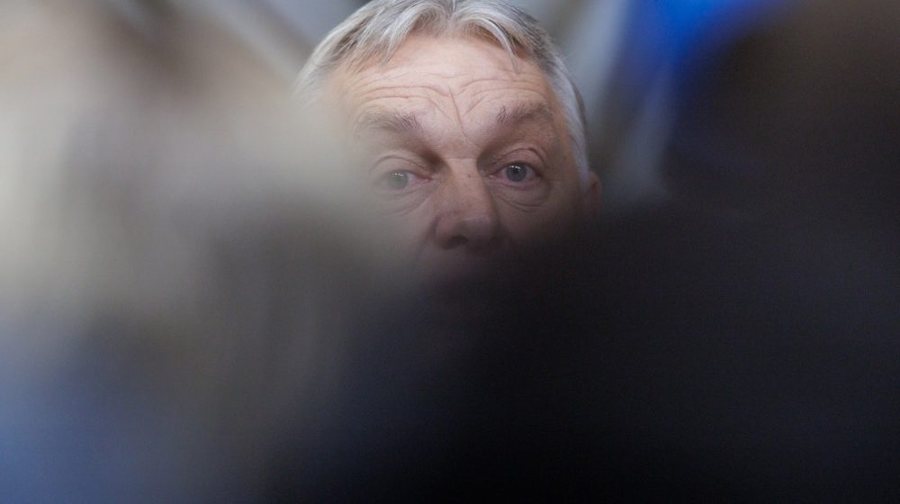
Hungary's parliamentary elections, scheduled for April 12, are taking place in a tense political climate, accompanied by a series of scandals and strong clashes. As Deutsche Welle (DW) writes, the current campaign is considered more negative than in any previous election cycle.
Hungary has a tradition of fierce election campaigns. Prime Minister Viktor Orban, both in power and in opposition, has pursued a similar strategy for years: warning that the Hungarian nation faces existential threats and presenting himself as the sole guarantor of the country's stability and security.
Campaign with harsh tones and accusations of disinformation
According to DW, the government and the Fidesz party have financed extensive anti-Ukrainian poster campaigns with public funds, organized a "national petition" against the European Union and Ukraine, and distributed videos manipulated with artificial intelligence on social networks targeting the opposition.
These materials claim that, if Orban loses the election, Hungary will be drawn into war, face military mobilization on the Ukrainian front, and face economic consequences such as tax increases imposed by Brussels. Political analyst Gabor Torok has called this situation a sign of the “deterioration of political culture.”
The risk of losing power
According to the latest polls cited by DW, the opposition Tisa party led by Peter Magyar has been leading by a significant margin for months. This has increased speculation that Orban could lose power for the first time since 2010.
A portion of the electorate perceives the current system as corrupt and authoritarian. At the same time, the government faces political fallout from several internal scandals.
The child abuse scandal
One of the most sensitive cases concerns violence and sexual abuse in a juvenile institution in Budapest. The institution has been closed, while images showing violence against them have circulated in the media.
Authorities were reportedly aware of the conditions at the facility but failed to take action. The issue has taken on particular significance as Orban's government has placed "child protection" and the family at the center of its political rhetoric, often with anti-LGBTQ+ overtones.
Several statements by government representatives, which suggested that victims were held responsible due to their past as lawbreakers, have prompted critical reactions in society.
The case of the battery factory in Göd
Another development concerns Samsung's battery factory in Göd, north of Budapest. According to investigations by the Hungarian portal Telex.hu, workers have been exposed for years to toxic particles of heavy metals, which have polluted the air, soil and groundwater.
The documents show that in some cases the pollution levels were up to 500 times above the permitted limits. Reports claim that Hungarian authorities, including intelligence services, were aware of the situation. According to these sources, Foreign Minister Peter Szijjarto prevented the plant from being closed. Also, the investigative portal Atlatszo.hu reported that the government was considering options to limit the publication of information on the matter.
Orban's government has strongly supported the development of the battery industry as a pillar of economic policy and has attracted Chinese and South Korean investors, despite local protests and warnings from experts.
Controversy over a private video
The campaign has also been strained by claims of a sexually explicit video involving opposition leader Peter Magyar. A photograph posted on an anonymous website has fueled speculation about the existence of such a recording.
On February 12, Magyar stated on Facebook that on August 3, 2024, he had had consensual sexual intercourse with his ex-partner in the aforementioned environment. He admitted that there were narcotic substances in the apartment, but stressed that he had not consumed them. Initially, he accused his ex-partner of acting in the interests of the government and described the case as a “Russian-style campaign.” Later, his ex-partner stated to Hungarian media that she was unaware of the publication and suggested filing a joint lawsuit if the material were made public.
So far, Orban and Fidesz representatives have not commented directly on the issue.
Growing pressure on the government
Political analyst Daniel Mikecz told DW that the pace of scandals is increasing pressure on the government. "Before one scandal fades, another one appears," he said. According to him, Fidesz, which previously aimed for continued dominance on the political scene, is now in a reactive position.
Recent developments point to a more open race than in past election cycles. The result on April 12 will determine whether Viktor Orban will continue to lead Hungary or whether the country will enter a new political phase. /Adapted from Pamphlet /







Lini një Përgjigje