


 Shkruar nga Mark Galeotti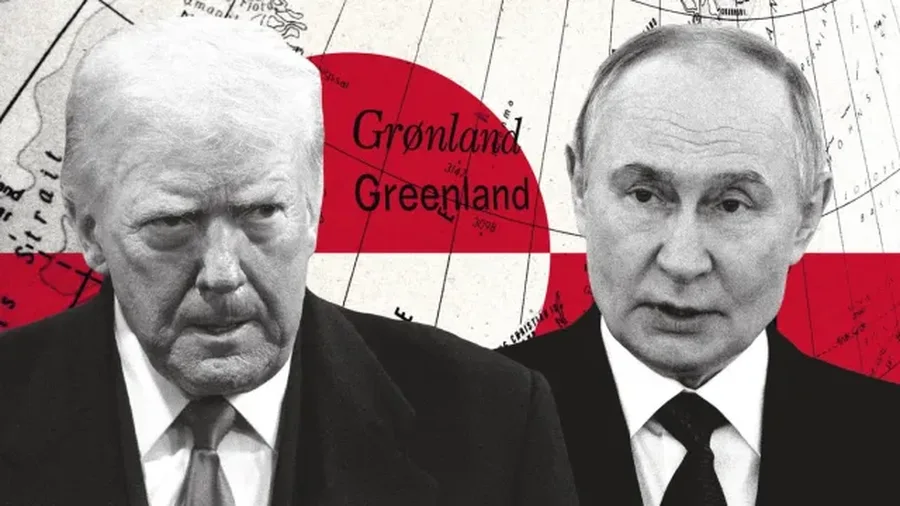
Russia is standing on the sidelines enjoying the spectacle of a NATO in agony, while using Trump's ambitions for Greenland as the perfect tool to divide Western allies, discredit the international order, and ultimately isolate Ukraine at its most critical moment...
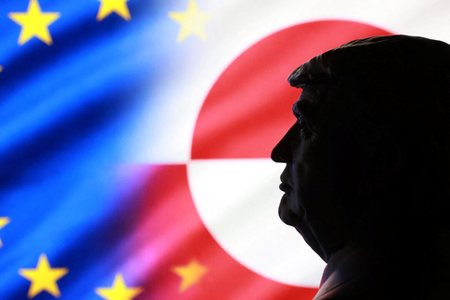
While Donald Trump is causing global alarm with his plans to buy, annex or occupy Greenland, the Kremlin sees this crisis as an unexpected gift.
Of course, Greenland is of strategic importance to the Russians to some extent. The “GIUK Gap” (Greenland-Iceland-United Kingdom Gap) is a key maritime crossing point between the Norwegian Sea and the North Sea with the Atlantic Ocean.
However, there is no evidence that they view a potential US takeover with concern. NATO assets are already present there and even under existing treaties, if the Americans or Europeans wanted to deploy more troops, planes or ships, they could do so.
On Tuesday, Russian Foreign Minister Sergey Lavrov became the latest official to mock Trump's project, with a wry statement that Moscow "has no plans to sign a mutual defense treaty with Greenland."
So the Russians are clearly enjoying the spectacle of a crisis within NATO, which seems to prove many of their propaganda points.
1. The West as "imperialist"
First, Moscow argues that despite all the talk of a “rules-based international order,” the West can be as imperialistic as anyone else when it wants to be. Lavrov referred to Denmark’s control of Greenland as the result of a “colonial occupation.”
He said: “The fact that the residents are used to living there and feel comfortable is another matter. But the problem of the former colonies is becoming an increasingly serious issue…”. In these conditions, in relation to the Global South, Moscow is positioning itself as a defender of local interests against a new type of Western imperialism.
The idea that Greenland is an example of two Western countries squabbling over the resources of a colonized territory may be inaccurate, but it is already being widely used in Russian propaganda.
2. Alliance in crisis
Second, the Kremlin claims that the Western alliance was already in crisis, held together only by a common opposition to Russia. “NATO is a product of a specific era, and it is over!” Fyodor Lukyanov, one of Russia’s leading experts on geopolitics, recently declared.
Some Russian commentators have ironically suggested that Europe might ask Moscow for “security guarantees” against the US. Given that the Europeans are now Ukraine’s main financiers, but also the most vocal critics of Trump’s efforts to force Ukraine to accept an unfair peace, Moscow does not hide its pleasure that they seem in crisis.
3. Bad news for Ukraine
Ultimately, all of this is bad news for Ukraine. Russian media is now talking about a shaken Volodymyr Zelensky, who is trying to please both sides while praying that the world will not forget the plight of his country, where rocket attacks have left half of Kiev without power and heating in temperatures of -10°C.
Although Trump’s decision on Greenland appears to have caught the Kremlin by surprise, Putin last year encouraged the idea, creating a historical justification for the American annexation similar to his justification for invading Ukraine. Kremlin spokesman Dmitry Peskov has urged the White House, saying that “resolving the Greenland issue would put Trump in history.”
Long-term “poison”
The Russians believe that Trump will not go so far as to use military force to take Greenland. But in a way, that is even better for them. As one Russian analyst put it: “If the Marines came in and took Greenland by force, the Europeans would be terrified for a week, but then they would get used to it and adapt as Trump’s vassals.”
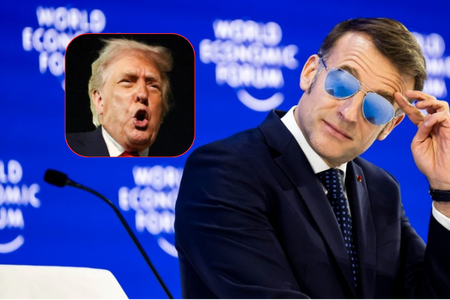
Much more useful for Moscow, it is “a long-standing dispute that poisons transatlantic relations” and leaves everyone feeling betrayed. European leaders had hoped that the Davos Forum would be an opportunity to unite against Russia. But to Moscow’s delight, everything now revolves around Greenland./ Adapted from “Pamphlet” From “The Intelligent Paper”
Note: Mark Galeotti, historian and professor specializing in Russia and security issues.


Lini një Përgjigje