


 Shkruar nga Pamfleti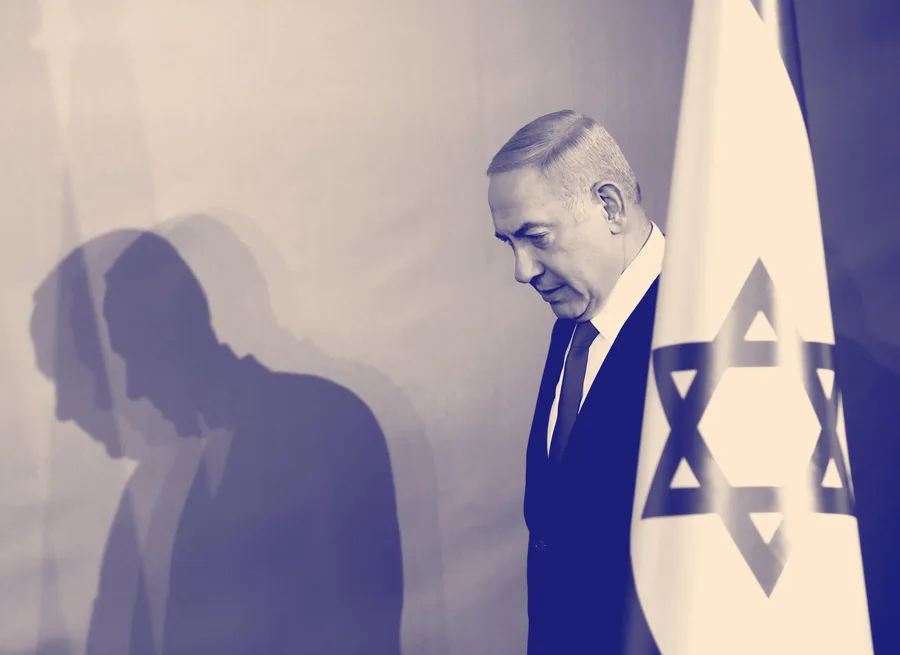
Exactly what Netanyahu has in mind remains unclear.
The last time Israeli troops had a permanent security role inside Gaza, Israel's prime minister was Ariel Sharon. Twenty-one Israeli settlements are scattered throughout the Gaza Strip, connected to Israel by a bypass road used by Israeli surfers on weekends to reach the coast.
Soldiers manned checkpoints and metal-clad towers. At night, Palestinian children would approach the towers under cover of darkness to throw crude pipe bombs that could be bought for pocket money.
For their part, armed factions in Gaza, including Hamas, would attempt a heavy attack, including shootings and suicide bombings.
Now Israel's prime minister, Benjamin Netanyahu, has suggested what many Israelis thought was unthinkable: returning security in Gaza to Israeli administration, an already half-ruined country with a population of 2.3 million.
"Israel will indefinitely have responsible overall security, because we've seen what happens when we don't have it," Netanyahu told ABC news on Monday.
Exactly what Netanyahu has in mind remains unclear. Indeed, his comments appear to be at odds with assessments in the US that if Israel planned to reoccupy Gaza in any way and in any case it would be opposed by Washington.
However, Netanyahu's comments follow statements by several other Israeli officials who have suggested that Israel will need to maintain a military presence inside Gaza as a buffer to protect its civilians.
While Netanyahu has been vague about what that might mean, reporting in the Jewish media has suggested some rough shape.
The Israel Defense Forces and internal security agency Shin Bet are said to oversee the security arrangements in the hope that other countries, not least in the Arab world, would help fund a humanitarian response. The agreement would remain in place until it was felt that Israeli communities neighboring Gaza were safe. These are all suggestions loaded with extraordinary ifs.
A significant problem is precisely how Israel would manage to separate any security agreement on the ground from the broader legal obligations that agreement would entail. When Israel withdrew troops from Gaza in 2005, it said it had ended its military rule and occupation — while others, including a 2022 report by the United Nations' independent international commission of inquiry into the occupied territory Palestinian Authority, said Gaza remained occupied through other means, including Israeli control of airspace, land crossings and government functions such as managing the Palestinian population registry.
Under international humanitarian law, the prolonged presence of Israeli troops in Gaza would make the occupation of the coastal strip significantly more concrete and place clear responsibilities on Israel as an occupying force, determined by the one in effective control of the territories it is occupying. present
The Fourth Geneva Convention, for example, states: "The occupying power has the duty to ensure the adequate provision of food and medical supplies, as well as clothing, bedding, means of shelter, other supplies essential for the survival of the civilian population of the territory of occupied".
And not everyone in Netanyahu's cabinet has conveyed the same message. For his part, Israel's defense minister, Yoav Gallant, seems to be suggesting just the opposite regarding the next Gaza administration: that after the fighting in Gaza ends, Israel should end its involvement in the for life in the territory.
And the story of Sharon's unilateral disengagement from Gaza in 2005 is a lesson for today's Israeli leaders. Like Netanyahu, Sharon was a right-wing prime minister, an ally of the settlers and extremely skeptical of the peace process.
He saw the secession first and foremost as a security measure and not a move in pursuit of the stalled Middle East peace process.
At its heart was the idea that reducing Israel's civilian and military footprint in Gaza and elsewhere would reduce the tensions that had recently been startlingly evident during the second intifada. By also leaving Gaza, the calculation went, Israel would find it easier to pursue its settlement policies in the West Bank.
With the disengagement, IDF installations and troops were removed and more than 9,000 Israeli citizens living in 21 settlements were evicted amid protests following a pre-2005 occupation of Gaza that was costly in terms of maintaining an Israeli military presence. as well as in terms of loss. the lives of soldiers.
Perhaps ironically, Netanyahu was among those who first supported disengagement as a cabinet minister and then resigned over the issue when it became more politically expedient, saying he refused "to be a partner of a movement that ignores reality and continues blindly towards turning the Gaza Strip into a base for Islamic terrorism that will threaten the state".
In the interim period, the idea that Israel should fully occupy Gaza has not disappeared, through war and blockade, as Hamas emerged as the ruler of the strip.
Right-wing politician Avigdor Lieberman, during his time as foreign minister, was among those pushing for "a full occupation of the Gaza Strip" to end the threat of Hamas and its rockets.
And whatever Netanyahu's vision is, he may find it easier to win the war against Hamas than to absolve Israel of responsibility for the daily lives of Palestinians in Gaza. A formula, not for security, but another chapter of violence./ TheGuardian




Lini një Përgjigje