


 Shkruar nga Pierre Haski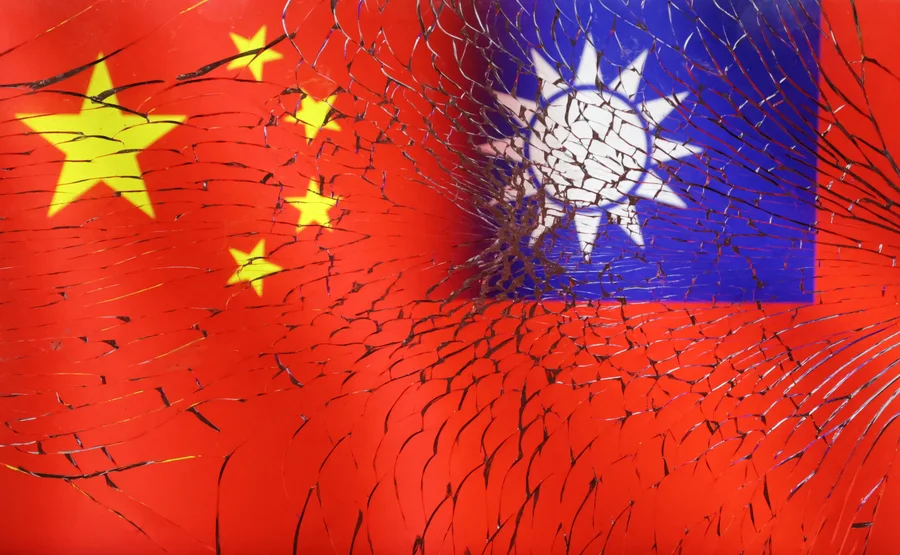
Because of her comments that a Chinese attack on Taiwan would pose an "existential threat" to Japan, the Japanese prime minister has faced the wrath of Beijing for three weeks.
Taiwanese President Lai Ching-te was filmed eating a plate of Japanese sushi with a big smile on his face. The irony of this little scene only makes sense if you've been following the geopolitical tensions in this part of East Asia closely.
Tensions have been high between Japan and China for the past three weeks, following a statement by Japan's new Prime Minister, Sanae Takaichi, that a Chinese attack on Taiwan would pose an "existential threat" to Japan and would justify military action. In Beijing's eyes, Takaichi "crossed a red line" that he should never have approached.
Since then, China has taken retaliatory measures against Japan, canceling visits by Chinese tourists and Japanese seafood imports, hence the Taiwanese president’s video, and flatly refusing to meet with the Japanese prime minister at the G20 summit this weekend. Takaichi refused to back down from her statement and deployed missiles to a Japanese island less than 100 kilometers from Taiwan.
On Monday, Chinese leader Xi Jinping called Donald Trump to discuss Japan and Taiwan. Trump then called Takaichi. The flurry of activity appears to be aimed at preventing an escalation of the crisis, but it raises questions.
Taiwan is undoubtedly the issue that concerns Beijing. China constantly tries to avoid internationalizing the Taiwan issue and is inclined to keep it an internal Chinese matter.
In his account of the call, Trump mentioned only the announcement of his state visit to Beijing next April, while the Chinese statement highlighted Taiwan as a topic. This reinforces Taipei’s lingering fear that Trump’s United States could withdraw its support for the island and its 23 million people if Beijing offers a grand global “deal.” The risk is low because the US-China rivalry is deep and bipartisan, but Trump’s ambiguity is worrisome.
What if?
If the US were to withdraw, Japan would find itself in a position similar to Europe's with Ukraine: expected to take over Washington's role in supporting the island against the rising power of China.
Is Japan capable of playing this role? That is the question. Ms. Takaichi's success and the current crisis highlight this question. The new prime minister is an admirer of Margaret Thatcher, supports revising Japan's pacifist constitution and supports doubling the defense budget.
In the event of an American defection, Japan would face China alone.
It welcomed Trump during his recent tour of Asia and presents itself as a strong ally of the United States in its efforts to contain China. But in the event of an American defection, Japan would face China alone, a China that has historical grievances from World War II and sees Japan as an obstacle to its ambitions.
Once again, Taiwan will be the deciding factor, a Taiwan that just announced a record $40 billion in additional military spending. A Chinese TV series currently attracting huge audiences tells the story of the most famous communist spy in Taiwan after Chiang Kai-shek's retreat in 1949. Even though the spy is captured, he writes in his own blood: "Taiwan must return." This reflects the current atmosphere: there is no room for compromise. / Adapted from 'Pamphlet' by 'WorldCrunch'




Lini një Përgjigje