


 Shkruar nga Andrew Chakhoyan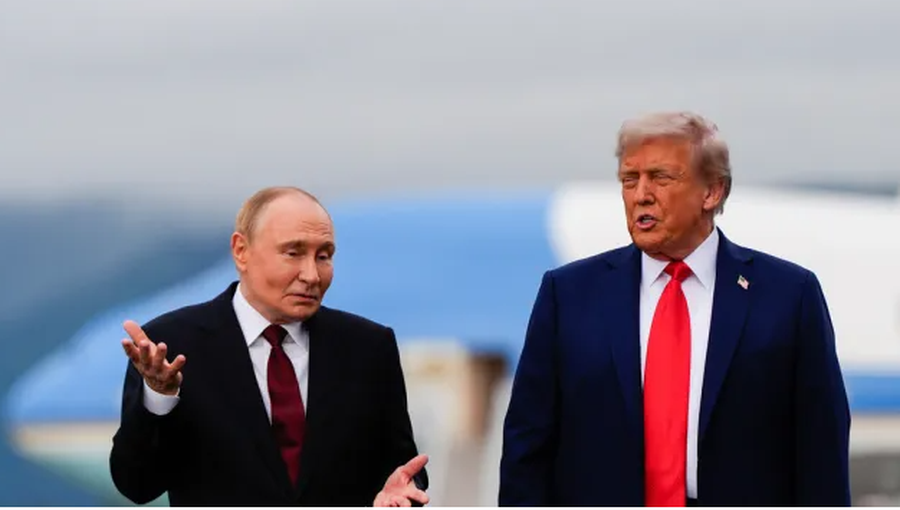
The history of relations between Putin and Trump shows that lies are not an accident, but a tool of the trade. Through reflexive control, the Kremlin narrows the space for American decision-making and turns peace into a farce. The “fork” strategy is how Russia aims for psychological dominance over its opponents...
In chess, there is a move called a “fork.” You attack two pieces at once, forcing your opponent to make a forced move. Russian President Vladimir Putin relishes opportunities to trap his enemies in such a strategic “fork.”
Most recently, he told US President Trump that his Valdai residence had been attacked by Ukrainian drones. The story was a fat lie, which was quickly exposed. But that didn't matter.
By pointing it out, a KGB veteran presented the American president with two dire options: confront the lie and react forcefully to such a blatant lack of respect from Kiev, or ignore it and appear naive or, worse yet, willing to accept someone who had just insulted his office.
For Putin, trained by decades in the Soviet and Russian intelligence services, deception is as organic as the bread he eats. He does not negotiate, but manipulates. It is not that he does not like to make deals. But the very concept of a deal seems foreign to him. Lying comes naturally and instinctively to him, and the person in front of him is never a partner, but only an object to be used and exploited. In 2001, George W. Bush described his dialogue with the Kremlin ruler, who at the time was seen as a budding democrat, in very positive tones: “I saw in him a very direct and reliable leader... a man very committed to his country and its best interests . ”
Russia is a resource-rich country, yet 2/3 of the rural population lacks running water and sanitation. More than 1 million men have been killed or wounded in a war he himself started.
In short, Putin’s history shows less concern for his nation than a thirst for power and the continuation of a bloody imperial order at all costs. President Barack Obama once tried to engage Putin rationally and later called him “not that smart.”
But it was the late Senator John McCain who described it most accurately: "I looked Mr. Putin in the eye and noticed 3 letters: K, G, and B!"
To understand the essence of the Valdai lie, one must understand "reflective control," a concept developed by the Soviet secret service to dictate an opponent's decision-making.
This scheme narrows the choices greatly, and every option has a cost. Putin lied about the troops in Crimea. He lied about Russia’s intentions in Ukraine. And he will continue to lie because, as the Institute for the Study of War (ISW) explains: “The Russian way of war is centered on the idea that wars can be won or lost in the mind of the adversary.”
Putin also exploited Trump's desire to be seen as a peacemaker. In early 2025, Ukraine accepted a ceasefire proposal from the White House within 24 hours. Publicly, the Kremlin claimed it was pressing for peace.
In reality, he escalated his criminal war. Attacks on civilians increased, North Korea confirmed that its troops were fighting for Russia, and the negotiations turned into a farce. The Nobel Peace Prize never came, and Putin wasted no time in boasting about it.
The Alaska summit highlighted the same pattern. The Russian dictator had the opportunity to appear on a new stage to repeat his lies, while Ukraine was excluded from talks about its future. Putin gave nothing. He promised no ceasefire, no withdrawal, no accountability.
As former Ukrainian commander Valeri Zaluzhny wrote: “Russia’s negotiators, like its generals, fight to tire, confuse, and divide their opponents. Their goal is not peace, but delay; not compromise for agreement, but conquest through deception...”
This approach is well-documented. Casey Michel has shown in his analysis that Moscow’s objective is not credibility, but psychological dominance. The Kremlin’s strategy relies on flooding the public space with contradictions and outright lies, forcing opponents to react rather than act.
The Putin who is showing his affinity for Trump is the same Putin who has turned anti-Americanism into state doctrine. Under Gorbachev and Yeltsin, about 70 percent of Russians viewed America as a friend. Today, about three-quarters view it as an enemy.
Then comes nuclear blackmail. Russia did not use its “end of the world” weapons when its army was crushed on the outskirts of Kiev, when Ukraine liberated Kherson, when Crimea was attacked, or when Ukrainian troops entered the Russian region of Kursk.
The biggest factor here is that Chinese President Xi Jinping, on whom Putin's survival depends, has ruled out the use of nuclear weapons. Perhaps Putin's boldest lie is that Russia could distance itself from China if the West hands over Ukraine.
This “marriage of convenience” turned into a “borderless” partnership from the very beginning of the invasion. China supplies 92 percent of the foreign components for Russian drones. The surrender of Ukraine would not sever this connection; it would simply reward Moscow for the choice it made over Beijing.
So why has Putin lied and continues to lie to Trump? Because lying is his tool of the trade, but also because he believes that this method works. The first step to defeating Russian cognitive warfare is simple: stop playing by their rules, stop accepting Putin's machinations.
The second step is harder: give Ukraine what it needs to expel the occupiers. Tell Putin that the US president's deception and nuclear threats will no longer be tolerated. Putin lies out of habit, but also out of fear.
He lies because his military is failing and the Russian economy is reeling. Putin lies because the only path to victory lies through Washington and Europe's indecisiveness. The biggest lie of all is the claim that we have no choice but to accept it. / Adapted from "Pamphlet", "The Hill"
Note: Andrew Chakhoyan is a professor at the University of Amsterdam. He previously served in the US government at the Millennium Challenge Corporation and studied at Harvard University's Kennedy School of Government.


Ky shkruan me qellim per te mbrojtur vendin e vet te punes, dhe jo per te na thene te verteten!!! qe vet Zelenski e pranon, dhe do ta pranojne... edhe neser ne Emiratet...
Nuk genjehet Trump,por kjo menyre sjellje i pershtatet si grabitçar qe eshte. Nga njera and presion europes putin dhe nga ana tjeter presion edhe ky per te perfituar ndonje cope akull. Pale do te beje edhe moral kur thote po vriten shum ne Ukraine .
Z. Trump funksionon me një llogjikë disi ndryshe. Për atë vetëm rezultati përfundimtar ka vlerë. Ulje ngritjet, manovrat, e çdo gjë tjetër që ndodh nga fillimi te mbarimi i një marrëveshjeje janë pjesë e pazarit. Prandaj është ndryshe, nuk është i diplomacisë, nuk është i traditës. Është thjesh një tregëtar që kërkon të blejë me çmimin që dëshiron. Andaj, rezultati i fundit, vetm ay ka vlerë. Tjerat janë fjalë në erë.