


 Shkruar nga Pamfleti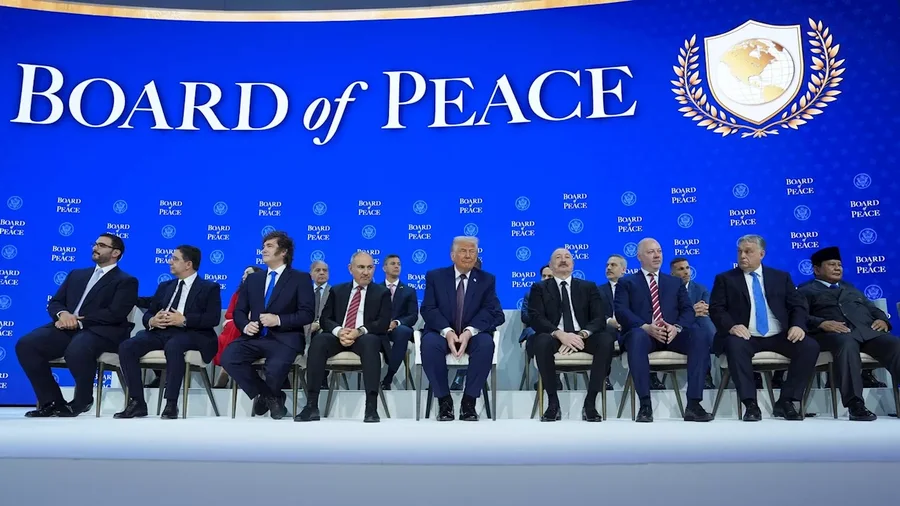
A previous directive had instructed consular officials to temporarily suspend immigrant visa processing for citizens from 75 countries, pending a comprehensive review of screening and verification protocols...
From Davos, US President Donald Trump launched the "Peace Board", which aims to promote global stability.
But this initiative faces a problem on closer inspection, due to travel restrictions affecting many of the board's member countries. This contradiction raises questions about the board's effectiveness and its geopolitical implications, especially in the context of the Israeli-Palestinian conflict and the role of the UN.
President Donald Trump, accompanied by international leaders, presided over the signing of the 'Peace Board' charter at the World Economic Forum in Davos, Switzerland on January 22, 2026. The ceremony, intended to mark an important step towards global peace, was met with some irony as nearly half of the nations represented on the newly formed board currently face travel restrictions to the United States.
Trump called the board "one of the most important bodies ever created," emphasizing its key role in promoting stability and resolving conflicts around the world. The event was attended by leaders from 19 countries, mainly from the Middle East, Asia and South America.
Officials from Kazakhstan, Kosovo, Pakistan, Paraguay, Qatar, Bahrain, Egypt, Turkey, the United Arab Emirates, Saudi Arabia, Uzbekistan, Mongolia, Jordan, Argentina, Armenia, Morocco, Azerbaijan, Bulgaria and Hungary joined the US President in Davos.
While Israel, Albania, Vietnam, Indonesia and Belarus had agreed to participate, they were absent from the official signing ceremony, perhaps indicating logistical challenges or last-minute changes.
However, the presence of these countries took on added significance when compared to existing visa restrictions on travel to the United States. An earlier directive had instructed consular officials to temporarily suspend immigrant visa processing for citizens of 75 countries, pending a comprehensive review of screening and vetting protocols. Notably, several countries represented on the ‘Peace Board’, including Kazakhstan, Kosovo, Pakistan, Egypt, Uzbekistan, Mongolia, Jordan, Armenia, Morocco, Azerbaijan, Albania, and Belarus, were directly affected by these restrictions.
This contradiction raises questions about the effectiveness of the board and the underlying political message: on the one hand, they appear as members of a Board that is considered a very important initiative, and on the other, their citizens face "sanctions" in terms of visas.
The stated objective of the 'Peace Board' is ambitious: to ensure that Hamas does not play a governing role in Gaza.
Under the Board's plan, the Gaza Strip would be governed by the board itself, along with a "technocratic and apolitical Palestinian committee." This strategy, supported by the United Nations Security Council in a previous resolution, has now been expanded. The revised mandate emphasizes the board's commitment to promoting stability, peace and good governance, particularly in regions affected by conflict or where conflict is on the verge.
This expansion of responsibilities has raised concerns about potential overlaps with existing functions of the United Nations, an organization that President Trump has repeatedly criticized.
Potential discrepancies in the board's scope and membership criteria demonstrate the complexities inherent in international relations and the implications resulting from political actions.
But also, the interaction between global political initiatives and the domestic development agendas of each of the countries and the co-location of these two narratives, shows the multifaceted nature of international relations and the complexity of achieving sustainable peace in a world marked by diverse interests and perspectives. / Pamphlet /




Lini një Përgjigje