


 Shkruar nga Lorenzo Cremonesi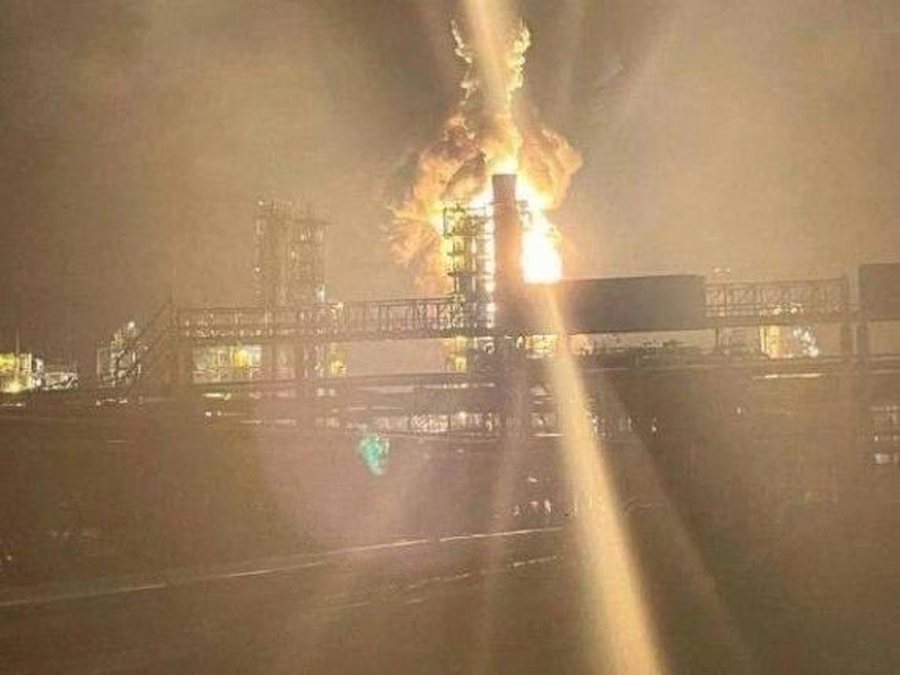
Striking the Russian energy system to ensure peace is a clear long-term strategic choice of the Ukrainian command, pursued with increasing systematicity, especially over the past two years. This translates into bombing refineries, storage facilities, gas and oil pipelines, as well as railways transporting fuel destined for export.
The logic guiding the increasingly efficient Ukrainian drone attacks is obvious: damaging Russian energy means bringing the economy to its knees, depriving it of vital funds for building and purchasing new weapons and ammunition, paralyzing its military effort, and ultimately forcing Putin to halt the invasion in order to negotiate a ceasefire or even a peace treaty.
Putin’s economic balance sheet is simple. In 2020, two years before the invasion of Ukraine, the Russian energy sector represented nearly 68 percent of national exports, worth about $255 billion a year. Crude oil alone was worth $72 billion, while refined oil and derivatives were worth $45 billion. By September 2025, more than three and a half years after the start of the war, the picture had changed: Western embargoes had limited revenues and Ukrainian military attacks were straining Russian production capacity.
Today, Moscow depends mainly on exports to China, India and Turkey. A significant decrease in revenues is expected for this year. According to data released by the Moscow Ministry of Economy itself and cited by Reuters, in April a 15 percent drop in the value of energy exports was predicted for this year, a trend that is projected until 2027. For 2025, about 200.3 billion dollars of oil and gas are expected to be sold, compared to 235 billion realized in 2024.
The intensification of Ukrainian attacks is changing the situation on the ground. According to Maxim Bilyavsky, an analyst at the Razumkov Center in Kiev, since the beginning of the year, Ukrainian drones have struck Russian energy centers at least 70 times in major operations. More than 45 percent of the attacks have been against refineries, 25 percent against storage facilities, and 10 percent against infrastructure, including gas and oil pipelines. The result is that in just eight months, Russian refining and transportation capacity has been reduced by at least 437 million tons of crude oil: a damage that far exceeds that of previous years. The attacks have also occurred against plants located up to 1,800 kilometers from Ukrainian territory.
The main damage is economic: Russia is currently facing a 10 percent drop in oil exports compared to a year ago. The monthly value of oil product exports has fallen from $15 billion to $12 billion, which is estimated to represent 4.1 percent of GDP. The price of gasoline in Russia has increased by 17 percent, and fuel shortages are frequent in border regions. Bilyavsky emphasizes: "If the Ukrainian attacks continue with the same intensity as in recent months, Russia risks systemic fuel shortages, serious limitations on its military capabilities, and internal problems with the population."
Putin's biggest fear comes from within Russia
Ukrainian military spokesmen reported 17 major successes in August, thanks to new drones produced by the country's military industries, starting from the Ryazan refinery on August 2 to the Kuibyshev refinery on August 28. Ivan Tymochko, a military commentator and reservist infantry officer, explained to local media that today Russian troops in the occupied Lugansk region, in northern Donbas, are without gasoline. According to him, Russian commandos are confiscating fuel from hospitals, bakeries and public utilities. International observers also note that Russia's crude oil refining capacity has fallen by percentages ranging from 17 to 25 percent./ Corriere della sera








Lini një Përgjigje