


 Shkruar nga Pamfleti
In 2023, the police began investigating several government officials for ties to the Albanian mafia.
Ecuador was gripped by a situation of terror two days ago, after gunmen entered the studio of the news broadcast and took hostages.
For several hours, they terrorized the staff by threatening them with guns, while all this was broadcast 'live' on television.
In a long analysis, "The Economist" writes that this violence has spread throughout Ecuador, describing it as the most dramatic episode in the loss of control of drug gangs in the last four years.
Ecuador, in 2019 was one of the safest countries in Latin America, with a homicide rate of 6.7 per 100,000 inhabitants.
Some Ecuadorian sources estimate that in 2023 the homicide rate increased more than sixfold, to 45 per 100,000 inhabitants, making their country the deadliest in continental Latin America.
Events were set in motion on January 7, when guards at La Regional prison in Guayaquil, Ecuador's largest city, discovered that Adolfo Macías, the boss of the Los Choneros drug gang, was not in his cell. He was serving a 34-year sentence for murder and drug trafficking.
Gang members in prisons across the country began rioting as news of his escape spread. Videos circulated on social networks, where gangsters were seen taking prison guards hostage and shooting them. Some were hanged.
The next day Daniel Noboa, Ecuador's president, declared a state of emergency and imposed a nighttime curfew.
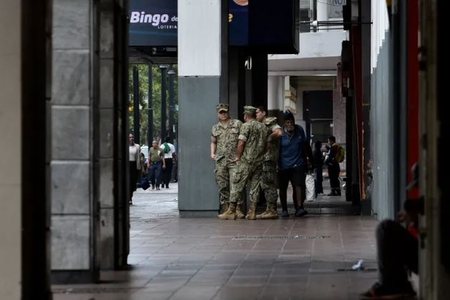
He sent the army to take control of the prisons. Gangs fought back in the streets of cities across the country, setting off bombs, burning cars and kidnapping police.
On January 9, another armed group raided Guayaquil University, taking students hostage and exchanging fire with police. Noboa then declared an "internal armed conflict" and ordered the military to "neutralize" some 22 organized crime groups, including Los Choneros.
This violence first started in Colombia. Ecuador, particularly its port of Guayaquil, became a more important hub for the shipment of cocaine from Peru and Colombia after Colombian ports tightened their security in 2009.
The trade was previously monopolized by the FARC, a powerful Colombian guerrilla group that kept violence to a minimum.
But after the FARC signed a peace deal in 2016, most of its members demobilized.
Local, regional and international bands poured in to fill the vacuum. The Mexican cartels have financed the Ecuadorian ones.
The Albanian mafia has expanded its presence in Ecuador as well. Such a rapid influx of international organized crime was facilitated by Ecuador's dollarized economy and lax visa requirements for foreigners, according to The Economist.
Ecuadorian gang members like the Macias have become kingpins. Los Choneros and other local gangs are believed to have armed themselves with weapons carried by their Mexican patrons for the cocaine shipments.
They now possess machine guns, rifles and grenades that enable them to face Ecuador's poorly trained armed forces.
Ecuadorian gangs have generated cash flow by creating a profitable base in Europe, where cocaine consumption is on the rise. The busiest cocaine-trafficking route in the world today runs from Guayaquil to the port of Antwerp in Belgium, according to Chris Dalby of World of Crime, a Netherlands-based investigative group.
Much of this cocaine is packed into containers containing bananas, one of Ecuador's biggest exports. Europe's demand "has turned Ecuadorian ports into one of the most valuable pieces of infrastructure you can control if you're a drug-trafficking group in Latin America," says Will Freeman of the Council on Foreign Relations in New York.
This money allows gangs to buy off prison guards. Macias and other gang leaders have turned perhaps a quarter of Ecuador's 36 prisons into their headquarters, from where they stage attacks and recruit new members. Macias escaped shortly before being transferred to a more secure unit in the prison complex. He must have been tipped off by corrupt officials.
Corruption of this kind is widespread. In 2023, the police began investigating several government officials for ties to the Albanian mafia. Months later the prime suspect was found dead. In 2022, 25 air force officials were convicted of sabotaging radar equipment that monitored the activity of drug gangs in Ecuadorian airspace./ The Economist




Lini një Përgjigje