


 Shkruar nga Pamfleti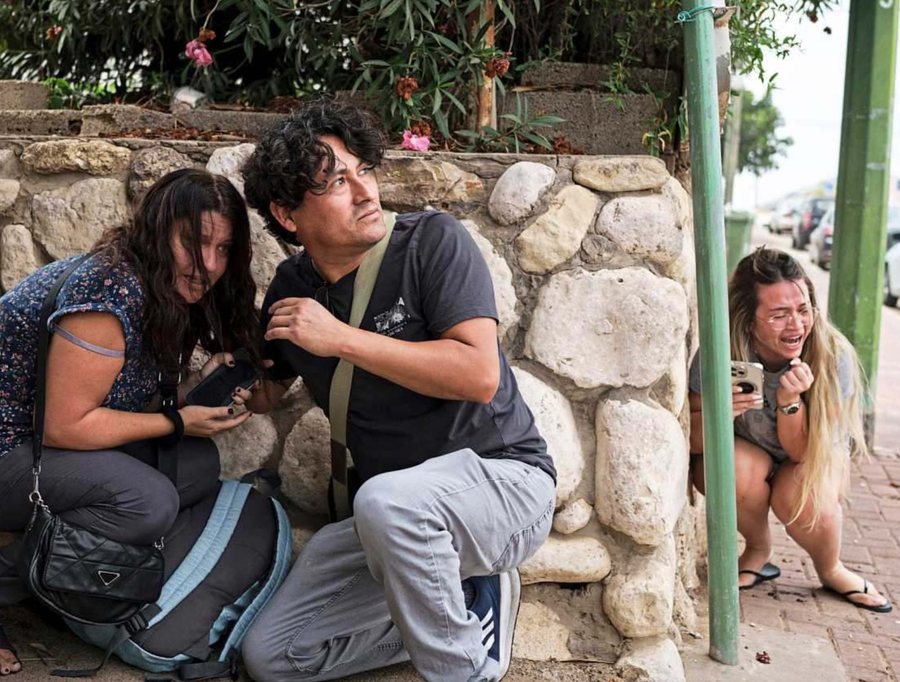
The blond boy in a green T-shirt stands in awe among his peers. They push and hit him with long sticks, timidly, as if they have just ordered them.
How old can these children be? Seven? Maybe eight, nine at the most.
The video shows an Israeli boy being held hostage and molested by Palestinian boys of the same age. It circulated online on Sunday after Hamas attacked Israel.
It was the first day of the new war.
The cruelty of the images is difficult to understand, also because it is so concise: children are already suffering, children are torturing each other, seeing each other only as mortal enemies.
This short video shows the tragedy of this conflict between two peoples, between the Israelis and the Palestinians. A conflict that has lasted decades, perhaps a century. And in which, the order to hate, torture and kill is transmitted from one generation to another.
This conflict is like a wound that never heals. The crust is always fresh and occasionally cracks. And then there is war.
But what Israel suffered on October 7, 2023 has never happened before in its history: a terrorist attack from Gaza that could hardly have been imagined until then. More than 1,500 Hamas terrorists breached barriers around the Gaza Strip, overran military bases, cities, a music festival and caused bloodshed on Israeli soil.
They massacred women, children, babies and the elderly in surrounding kibbutzim and villages, acting in the style of Islamic State terrorists, executing people in the streets and in their homes - and taking at least 150 hostages. Additionally, thousands of rockets flew from positions in slums into Israeli cities, so many that at times they overwhelmed the Iron Dome defense system.
Terrorists used commercial drones to drop explosive charges on security towers and radio stations around Gaza; so they jammed with the signals. No alert reached the soldiers in the control rooms across the border.
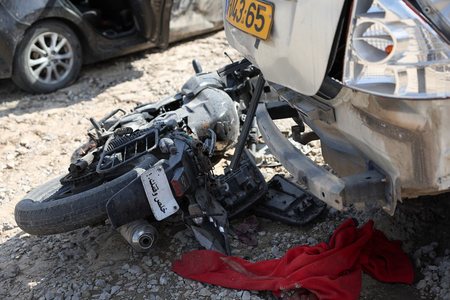
Hundreds of armed men entered Israel through cracks in the border fence, on foot and on motorcycles. Bulldozers paved the way for larger vehicles such as jeeps.
An invasion like a horror movie, even for Israel, which is known for military operations and bloodshed. The killers come on motorbikes and scooters, fly with parachutes and wear combat gear. Nothing can stop them, it's hate that drives them.
For a long time no one understood the full extent of the attack and for the time being there was no coordinated response. Army units then had to individually liberate all the sites attacked by Hamas.
1,300 dead on the Israeli side in the first days of this war, most of them civilians, more than 3,000 wounded, and the figure may rise. Israeli President Isaac Herzog says that never since the Holocaust have so many Jews been killed in one day.
So cruel, so brutal was this attack that you have to go back half a century, to the so-called Yom Kippur War in 1973, to find a comparable event. At that time, Israel was attacked by Syria and Egypt, and on October 7, 2023 by hundreds of violent militants from the besieged Gaza Strip.
The wound is bleeding again. Fresh. And pain is felt everywhere.
US President Joe Biden condemned Hamas' atrocity as "pure evil" and a "violation of every code of human morality". There were spontaneous expressions of solidarity for the Israeli victims and minutes of silence. The Eiffel Tower and Brandenburg Gate were dressed in blue and white, the colors of the Israeli flag.
But there is something else: joyous celebrations on the streets in Cairo, and in Berlin-Neukölln. Demonstration of solidarity for the people of Gaza in Yemen. In Doha, the capital of the Emirate of Qatar, the National Museum is lit up in the Palestinian national colors.
The conflict in the Middle East divides the world into camps, as it always has.
On that Saturday, which is now compared to historical turning points such as Israel's Pearl Harbor or Israel's 9/11, the Israeli-Palestinian conflict exploded like a cluster bomb before the eyes of the rest of the world. Again. Now the war is moving to Gaza – and it could set the entire Middle East on fire.
On Monday evening, Defense Minister Yoav Gallant announced a total blockade of the Gaza Strip: "No food, no water, no fuel."
The nature of the attack on the Jewish state is new, but the logic and the conflict are old. Two peoples claim the same land. And since then: war, pain, destruction.
On the fifth day after the disaster, Noah looks over the Dead Sea and the Judean Desert. Her voice sounds strained: "Why are we here in this wonderful place and so many others have died?" Kan and her fiance Yoav survived the massacre at the Beeri Kibbutz. It is said that 110 people were killed there alone, by Hamas thugs. Terrorists carried out massacres in at least seven kibbutzim around the Gaza Strip; they killed parents, grandmothers and babies.
The couple hid in the shelter of their home for twelve hours before emerging. As they waited, the fear of others, neighbors and friends, penetrated the thick walls of the bunker. Beer residents' chat group is a horror story: "Terrorists are coming in." - "They are shooting at us." - "They are burning us in our house." - "They took our daughter. "
Noa Kahn is 30 years old. On the eve of the massacre, there was a huge celebration to mark the kibbutz's 77th anniversary: "People were very happy," she says. Now many of their friends and neighbors are dead.
Ajo sapo ka marrë lajmin se ka vdekur edhe babai i të fejuarit. Ajo nuk e di nëse terroristët e qëlluan menjëherë apo e torturuan paraprakisht.
Të mbijetuarit janë akomoduar në Kibbutzin Ein Gedi, në Detin e Vdekur, ku ka një hotel elegant me një kopsht botanik, pishinë dhe trajtime spa, ku për ta po kujdesen psikologë dhe punonjës socialë.
Kan e konsideronte veten politikisht më të majtë. Deri tani. Që kur pa fotot nga Gaza, ku njerëzit në rrugë po festonin sulmin terrorist dhe izraelitët e vdekur, kjo ka ndryshuar. “Uroj që Gaza të mos ekzistojë më.”
“Shpresoj që vendi ynë të bashkohet sërish, të kemi një qeveri të re që përfaqëson unitetin tonë”, thotë Kan. Ajo thotë se kryeministri Benjamin Netanyahu dhe njerëzit e tij e çuan Izraelin në këtë fatkeqësi.
Tre ditë pas sulmit, zona përgjatë barrierës midis Izraelit dhe Gazës i ngjante një hapësire ndërmjetëse të çuditshme. Në një rrethrrotullim në qytetin e Sderotit, mizat gumëzhinin mbi gjakun e tharë pranë një minibusi, ndërsa, siç ndodh shpesh, binte alarmi. Zeva Adom. Zeva Adom. Alarmi i kuq.
Sderoti është i njohur në të gjithë vendin për shkak të granatimeve të shpeshta nga Rripi fqinj i Gazës.
Disa sekonda më vonë, raketat fërshëllejnë në ajër. Sistemi i mbrojtjes Iron Dome i godet dhe shpërthen që në qiell.
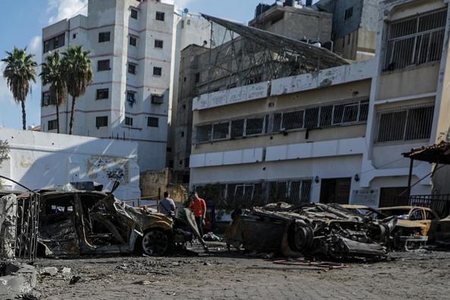
Në një rrugë hyrëse më në jug ka dhjetëra makina të djegura, shoferët dhe pasagjerët e të cilave ndoshta janë vrarë nga terroristët. Pak kilometra më tutje, makinat e shkatërruara po tërhiqen nga burra me jelekë vezullues; pronarët, nëse janë ende gjallë, njoftohen menjëherë me telefon se ku ndodhen makinat e tyre. Të paktën pak rregull në shkatërrim.
Më tutje, drejt bregut, ka tym të zi në qiell: Gaza. Lufta e Izraelit kundër Hamasit ka filluar. Por ky është vetëm fillimi.
Avionët luftarakë F-16 gjëmojnë në ajër, mund të dëgjosh edhe zhurmën e helikopterëve Apache, shpërthimet, kërcitjen shurdhuese të artilerisë. Tani ka më shumë bombardime sesa në luftërat e mëparshme të Gazës, strategjia dhe qëllimi i Izraelit nuk dihen ende.
Kryeministri Netanyahu ka shpallur “hakmarrje të jashtëzakonshme”. Izraeli ndërmerr një kundërsulm ushtarak dhe mbrohet. Pyetja e vetme është se sa e madhe do të jetë lufta: A do të ketë një ofensivë tokësore të shoqëruar me sulme ajrore? Mbyllja dhe granatimi i bregut nga marina si në 2014?
Apo duhet të shkatërrohet plotësisht Hamasi dhe brezi bregdetar të pushtohet sërish nga ushtria izraelite, siç ishte deri në tërheqjen në vitin 2005? Dhe a është e mundur kjo?
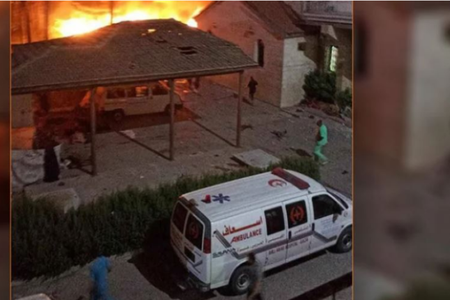
Deri të enjten, ditën e gjashtë të luftës, më shumë se 1,400 palestinezë kishin vdekur dhe më shumë se 6,000 ishin plagosur në sulmet ajrore. Hamasi vepron mes civilëve në qytetet e ndërtuara dendur. Si mund ta dallojë ushtria izraelite popullsinë civile nga Hamasi dhe pasuesit e tij? Ekstremistët shpesh përdorin civilët si mburoja. Një çerek milion njerëz janë në arrati brenda Rripit të Gazës. Por ata nuk kanë ku të shkojnë.
Even in more peaceful times, the people of Gaza cannot escape misery. Even in more peaceful times, Israel and Egypt blockade border crossings. The narrow belt of more than two million inhabitants is surrounded.
A few kilometers from the Gaza Strip, in Netivot, an Israeli Merkava tank moves into position. The crew stops the vehicle in a cloud of dust. They don't know what's going to happen, says one of the three soldiers after climbing into the roof of the tank. They come from Tel Aviv and were mobilized three days ago. They don't want to reveal anything more.
No soldier you meet here in the disaster zone talks about what will happen next.
At a gas station not far from Re'im, where Hamas commandos killed hundreds of Saturday's festival participants, there is the smell of roast beef. Volunteers prepare kosher hamburgers and provide cold water and refreshments. A perhaps 20-year-old soldier with dusty eyebrows mutters about the "difficult battles" he has participated in. He belongs to the Golan Brigade, an army infantry unit. "Many of my friends are dead," he says and leaves.
There is another parallel with Yom Kippur 1973: After a triumphantly won Six-Day War in 1967, with land invasions, Israel felt invincible.
The same was true, in a way, until that Black Saturday. People in Jerusalem thought they were very safe, that they had everything under control, including the Palestinian issue. In recent years, there has been a lot of talk about a new Middle East: Israel signed diplomatic agreements with several Arab states, with the United Arab Emirates, with Bahrain, with Morocco and Sudan. An agreement with Saudi Arabia was even expected. The geopolitical idea was: Israel and the Arab nations unite against the common enemy, Iran. The Palestinians and the claim to their state played almost no role: closed behind fences, walls, barriers, in the Gaza Strip, but also in the West Bank.
This so-called normalization is probably over for now. In contrast to the rulers, solidarity with the Palestinians remains strong among the Arab population.
Instead of peaceful cooperation, there is now fear of conflict. A war between Gaza and Israel has always had the potential to spill over into the region. Also because it is still unclear who else can stand behind her. Can Hamas alone succeed in an attack of this magnitude? Or is one of their sponsors, namely Iran, responsible for this? If Israel now attacks Hamas in Gaza, Hezbollah in Lebanon and Iranian militias in Syria could retaliate – and it could become a major war in the Middle East. As a precaution, the US has sent a group of aircraft carriers to the region. In reality, none of the regional powers are interested in an all-out escalation. / With abbreviations from Der Spiegel - Bota.al




Lini një Përgjigje