


 Shkruar nga Pamfleti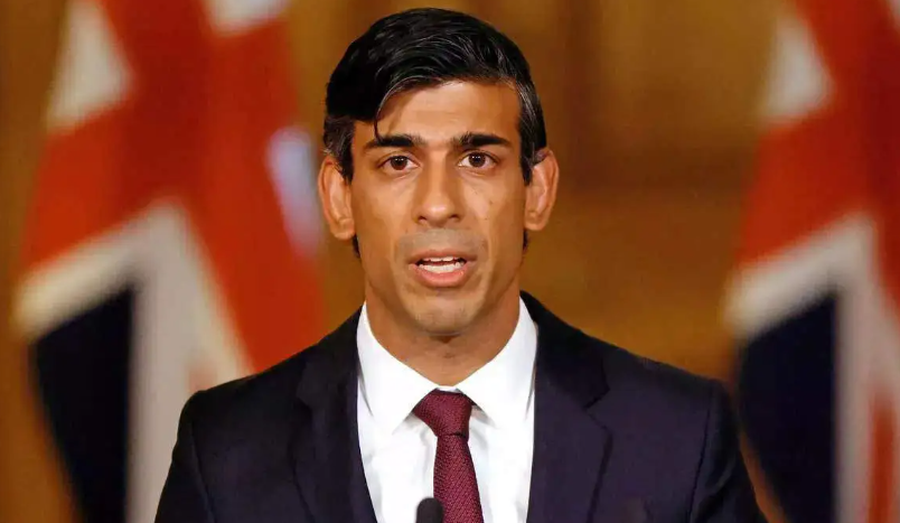
The British Prime Minister Rishi Sunak, speaking this Sunday for the BBC, declared that London is closely monitoring the situation of the last few hours in Russia. According to him, we are dealing with an ongoing situation, but Britain remains informed about the situation and is coordinating with allies regarding the potentially destabilizing effects of Russia's illegal war in Ukraine.
The biggest dilemma for British foreign policy is: what comes after Putin?
What might come if he eventually leaves the Kremlin – it's far too early to tell about a nuclear-armed country heading for anarchy.
Britain historically remains a country with a clear intelligence advantage in Russia, and not only that, it seems that London is cautious in its pronouncements about what is happening and could happen in the coming days and weeks in Putin's Russia .
Although Putin has not been challenged in this way in his authority by the military base of his power, he seems to have been trailed by history since in 1917 the Russian army went on strike and abandoned the First World War.
In fact, it has been Putin who has allowed the recurrence of internal wars between adversaries in the ranks of the military that date back 400 years since their inception. In the case of Prigozhin, his protégé creating his own mercenary army within the official Russian army, proves how much Putin has eroded the authority of the Russian state itself.
But for the British, it is important not to rush into this game with many unknowns in Russia, since Putin, even in the case of the start of the war in Ukraine, showed that the West could not predict his movements. In many British political and analytical circles, the prevailing view is that the fate of Russia's vast nuclear arsenal is at stake, and an internal power struggle for control of the Kremlin puts the world on the brink of a nuclear catastrophe as never before in human history. has not experienced a civil war within a state with nuclear capabilities like Russia.
Although Putin deserves a punitive reckoning, the chaos of recent days toward nuclear anarchy carries with it the risk of even more difficult times for all. In conditions where the followers are unpredictable and not self-controlled, the old saying of Middle Eastern origin that "the enemy of my enemy is my friend" does not seem to apply in the case of Russia, but "better the devil we know."






Lini një Përgjigje