


 Shkruar nga Giulia Belardelli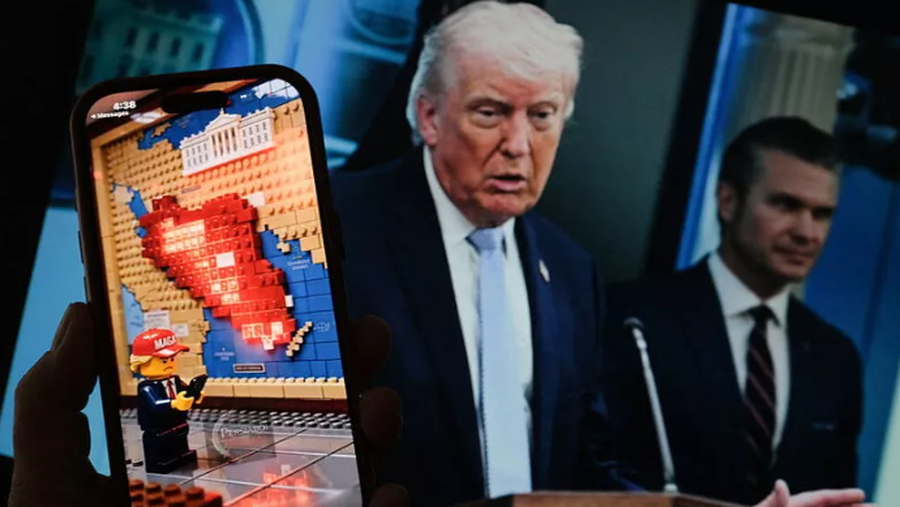
An analysis by former Italian diplomat Ettore Sequi on the clash of three strategic cultures that govern the US, Iran and China. From poker to chess to Weiqi, each side follows a different logic in a fragile negotiation process. Against this backdrop, China's soft power stands out, while that of the US seems to be declining.
In the war between the United States and Iran and in the journey that led to the start of negotiations in Pakistan, "three strategic cultures, corresponding to three different games, have confronted each other."
Donald Trump tried to impose the logic of poker; Iran tried to survive with the logic of chess, while China worked to change the environment and geometry of the crisis with Weiki (Go).
Ettore Sequi, former secretary general of the Italian Foreign Ministry and former ambassador to China, uses this metaphor to describe the behavior of the US, Iran and China in the great crisis on which the balances of the world will depend.
Let's start the analysis with Trump. Why is his game poker?
Because it was Trump himself who, when he started saying that Ukrainian President Volodymyr Zelensky did not have the "cards" to negotiate, promoted the idea of poker. Poker is
a game where information darkness reigns: each player knows his own cards, but not those of his opponents. It is a calculated gamble based on elements such as bluffing, psychological pressure, increasing the bet amount, etc., and all of these are very evident in Trump's tactics.
The United States has acted largely with poker logic, with extensive use of "ultimatums," verbal escalation, and threats of crushing blows, in search of a quick, visible result that can be used as a trophy even within the United States.
This is a logic we also see in the ceasefire format, according to the Americans: two weeks of negotiations behind closed doors, a quick hand and with limited information, just like in poker.
Meanwhile, what is Iran's game?
Iran's game is that of chess, which not without reason originated in Persia (the word derives from the Persian shāh, meaning "king"). In chess, the goal is to protect the king, that is, the Supreme Leader (not the person himself, but the institution). For the Iranian regime, this is an existential struggle, where its survival is at stake.
Chess is a game of position, not illusion, where everything is visible on the board, unlike poker. Each move is linked to the previous and subsequent ones, and it is expected that pieces will be sacrificed to protect the king.
Ultimately, it is a game of resistance: attacks are absorbed, non-vital assets are lost, the aim is to manage time and prolong the game to avoid defeat. If the king is not knocked out, the game continues.
Do these different logics also apply to negotiations?
Yes. Tehran approaches the ceasefire in the same spirit. It wants to save the essence of its position (the negotiating aspects that we know) and force its opponent into a long game, knowing that Trump is under pressure from the markets and public opinion.
What about the Chinese, what game are they playing?
China's logic, through Pakistan, mirrors the game of Weiki (also known as Go). The game is about surrounding the opponent, enveloping him without being noticed. In weiqi, there are spaces and influence; there is no decisive center and no aim to destroy a key piece, but many small black and white stones are placed (even on the periphery) to surround the opponent.
Pakistan has been what is called in Weiki a "sidestone", which seems secondary. But, in reality, by connecting with others, it transforms the entire balance.
And what does Beijing aim to achieve with this weiki "hand"?
At first, China did not show up. Beijing, which had already built up some oil reserves, imports about 40 percent of its needs from the Gulf. Pakistan is even more dependent: about 80 percent of its oil imports come from there.
Beijing did not seek theatrical confrontation, but instead engaged in building connections, using peripheral players like Pakistan. For the first time, we had an “Asianization” of Middle East negotiations. China maintained communications with everyone, lining up the players in such a way that others found themselves entangled in this network.
What are its advantages?
From the Chinese perspective, the problem is not just access to Gulf oil, but also achieving several objectives: to gain geopolitical weight and to appear as a predictable, peaceful, and responsible power. In terms of soft power, the more impulsive the US appears, the more China benefits.
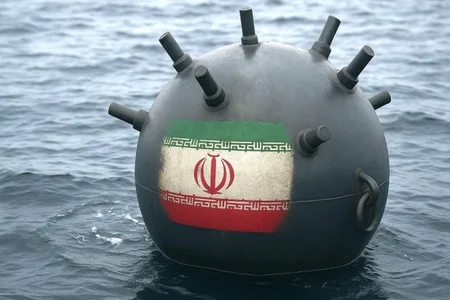
Does it make sense to say who wins and who loses, given that we are talking about three different games? We can say it with some approximation. What is certainly not winning is the USA. It entered the war in a situation where Hormuz was passed without problems, while today we are at a point where the strait is not only blocked, but Iran has offered itself as an entity capable of managing it. So, this war, launched under the shadow of enriched uranium, has turned into a systemic war under the shadow of oil.
What about the Iranians?
The Iranians are not winning either, but in a less severe way than the US. Iran has been hit hard and weakened; its ruling class has been hit, but it has essentially gained recognition of its role through control of Hormuz and the associated revenues.
If the regime survives, it will position itself in a more central place in the region than before. If it moves towards managing the strait between Iran and Oman (where the Americans might also gain something), its weight in the Gulf countries will increase.
Who should we include among the winners? I would place Pakistan as a tactical winner, for three reasons: if Hormuz reopens, it solves its energy problem; it has increased its geopolitical role; and it has strengthened relations with the Americans.
And then there's China... China is a strategic winner. Without exposing itself and with the weiqi mechanism, it has helped avoid a global shock; it has protected its energy interests; and it has reinforced, in geopolitical and perceptual terms, its image as a responsible country.
Chinese GDP grows through external demand, that is, international trade. It is clear that when flows stop and we have systemic shocks like those in the Gulf, this sector suffers.
What about Israel?
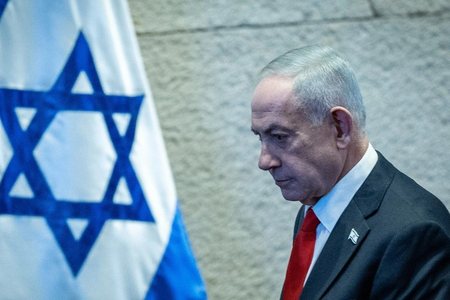
It is not winning right now, as its objective, at best, was to change the Iranian regime or at least to weaken it decisively. As for Lebanon, Israel's objective seems to be direct control of the space between the border and the Litani River. Israel is not a party to the ceasefire, but is potentially able to influence its survival.
What can we say about the Gulf countries?
They are catching up. In addition to the huge damage to infrastructure, these countries have also received a “wake-up call”: security cannot be bought with either energy revenues or the American presence. The Gulf “brand”, based on stability, has been damaged. Property values in Dubai have fallen by an average of 30 percent.
How deep is the damage that Trump has caused to the United States?
American soft power emerges from this crisis much weakened, unlike China's. Once America had both hard and soft power; now it is left mainly with the former. But the problem is that it alone is not enough, as was seen in this case. Despite having an undisputed military superiority, Trump was in a hurry to get out of the war.
What do you expect from the negotiations that started today in Islamabad?
These negotiations are starting on very weak foundations. The 10-point Iranian plan is a synthesis of everything the Americans have always rejected. There is no agreement even on what was agreed.
There are major asymmetries: Washington, unlike Tehran, does not want a grand deal, but a sectoral agreement. On these grounds, it is clear that everything could fail.
Even though Iran is emerging from five weeks of war with a shattered economy, which could lead to unrest and protests in the medium term, Trump also needs the ceasefire to hold. The Iranians have understood one thing very well: for Trump, markets, energy prices, inflation and public opinion are extremely sensitive issues. / Adapted from "Pamphlet", from "Huffington Post Italia"


nje analiz qe do tishkonte pershtat Italis. duhet te jesh ne eliten ameirkane te kuptosh ate qe thot ky pokerin amerikan, irani ka bere 2 here tentativ vrasje , ka nderhyr ne zgjedhjet amerikane , normal qe ky qe fitoi do ti shkonte deir ne fund , po te shikosh si te pa shkeputur retoriken amerikane ndja europianve do te kuptosh q ene kete poker apo shah apo go , eshte ne te miren e europes te qendroj ne krah te amerikes dhe jo ne krah te kines, kina shfaqet si fuqi e bute por ka berpdor fuqi te forta si irani dhe rusia, europa krizen e ka me rusin dhe jo me ameirken, retorika amerikane eshte thjesht te ket dore te lire ne lojen e pokerit ne azi, po me shtete si uk franc itali spanje gjermamni qe deri para 2 vjetesh as qe donin te degjonin por dhe rogoz tallnin trapin me shpenzimet amerikane , shume vone arriten te kuptojne pask a ahsumne cdo te thot poker , por ka poker frances dhe popker ameirkan , deri tani amerikanet kane lujatur dhe treguuar pokerin amerikan , tani me trmpin jan kthyer ne pokerin frances ....