


 Shkruar nga Pamfleti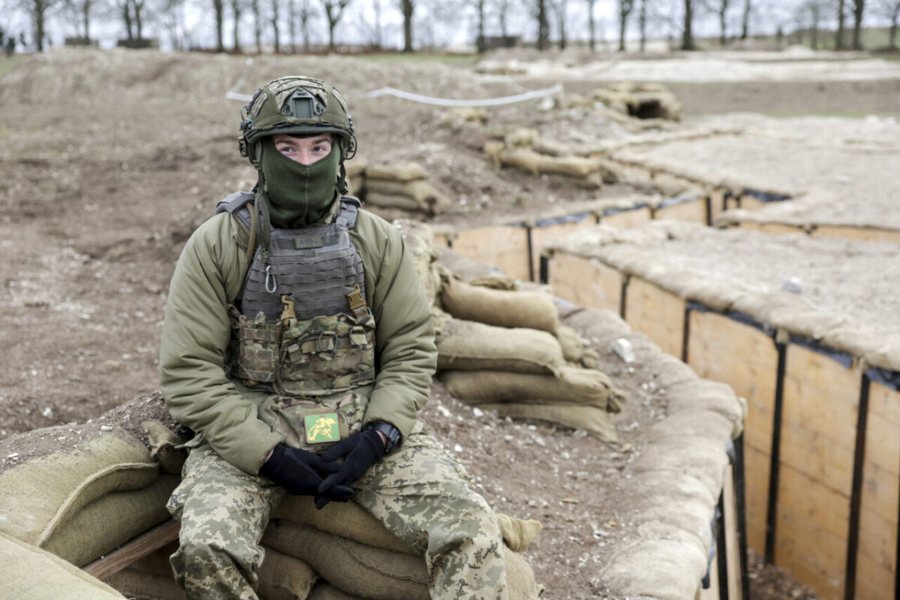
The fate of the continent will be decided on the battlefield...
It has been almost four years since Russia launched its aggressive war against Ukraine. The historical contrast remains stark: in less than four years, Soviet troops marched on Berlin, raised the flag over the Reichstag, and, together with the Allies, defeated Nazi Germany. Today’s Russia, while inheriting Soviet arsenals, devotes nearly forty percent of its budget to defense and has transformed its economy into a war machine, expanding military and industrial production, but has not yet achieved its primary objective: the subjugation of Ukraine.
It has failed to subdue a country that entered the war with minimal armaments, in part because of US President Barack Obama’s eight-year veto on arms sales to Kiev, and that was forced to beg the West for every artillery shell. From the diplomatic missions of Volodymyr Zelensky to the tireless efforts of civil society, Ukraine has tried to convince Europe that this war is not just about its survival, but about the security architecture of the entire continent. However, this message has not yet found the right resonance in many European capitals, where war fatigue continues to prevail.
Western support has materialized, but within the narrow confines of the escalation management strategy introduced by US President Joe Biden and largely maintained by Donald Trump. The latter not only reduced US military aid, but also imposed a new rule: any US weapons destined for Ukraine must be purchased either by Kiev or by European governments.
Over the years, Russia has occupied and destroyed nearly twenty percent of Ukrainian territory. But for Vladimir Putin, the war has never been simply a question of territory. The strategic goal, as yet unattained, is to strip Ukraine of its sovereignty and turn it into a second Belarus or Georgia: territories where Russian influence is maintained without the use of tanks, simply by installing a compliant government. Being pro-Russian in the former Soviet Union is not just a geopolitical stance, but a political model: entrenched corruption, the suppression or elimination of civil society, systematic human rights violations, the closure of independent media, and a propaganda machine that erodes any form of dissent and even the ability to think critically.
In this context, Ukraine has not only resisted militarily, but has defended universal freedoms that the citizens of Belarus have already lost and that Georgians are, at the moment, trying to preserve. These have been extremely difficult years: heroic military resistance, extraordinary civilian sacrifice, soldiers killed at the front, families living under the constant threat of drones and ballistic missiles, nights spent in bomb shelters, and others, exhausted, staying at home despite the danger. However, civil society has continued to defend democratic life, mobilizing whenever government decisions threatened the reforms required for integration into the European Union. Even in wartime, Ukraine’s anti-corruption agencies remain active and effective, uncovering cases involving high-ranking officials.
Russia, unable to achieve its objectives in Ukraine, has meanwhile signaled a growing willingness to escalate beyond the battlefield. Throughout 2025, Russian drone incursions into European airspace have become increasingly frequent and brazen, being observed in the skies over Poland, Denmark, Belgium, Romania, Slovakia and Moldova. Some have been shot down in NATO territory, others have been intercepted just before impact. These are not accidents, but deliberate tests to assess Europe’s air defense readiness and political resolve, as well as to gauge NATO’s response and to heighten anxiety among European citizens. Far from containing the conflict, Moscow has made it clear that it is ready to expand it, using drones as political tools to undermine European unity and signal that the boundaries of the war are not fixed.
The war is thus approaching a new and dangerous phase. After nearly four years, neither side has found a path to victory, yet both are preparing to continue the fight in 2026. Ukraine enters the new year weary but not broken. It has repelled three major Russian offensives, including a costly and ineffective battle in the summer of 2025, in which Russian attacks by small units were crushed by drones, artillery, and Ukrainian-prepared defensive lines. Ukrainian forces, though weakened by a lack of trained soldiers and difficult rotations at the front, remain capable of preventing large-scale Russian advances.
The Ukrainian campaign of long-range strikes has already disabled a significant portion of Russian refining capacity and has repeatedly struck airfields and logistics centers deep inside Russian territory, forcing Moscow to divert resources to national defense and gradually weakening the financial basis of its war.
Megjithatë, dobësitë e Ukrainës mbeten të konsiderueshme: mobilizimi është politikisht i vështirë, trajnimet vonohen dhe shumë brigada vuajnë nga mungesa e pajisjeve dhe koha e pamjaftueshme për të integruar rekrutët e rinj. Një pyetje thelbësore për vitin 2026 është nëse Evropa do të angazhohet më në fund për të trajnuar trupat ukrainase brenda vetë Ukrainës, një hap i kërkuar prej kohësh nga Kievi, por që qeveritë e Bashkimit Evropian ende e shmangin nga frika e përshkallëzimit. Nëse Evropa ecën përpara, Ukraina do të jetë në gjendje të rindërtojë rotacione koherente dhe të vendosë brigada më të përgatitura; në të kundërt, cilësia e njësive të saj në vijën e parë të frontit do të vazhdojë të përkeqësohet.
Rusia, nga ana e saj, hyn në vitin 2026 me një ushtri njëkohësisht të madhe dhe të varfëruar. Humbjet e mëdha, mbi një milion viktima, nuk kanë sjellë përfitime territoriale në përputhje me koston. Taktika e Kremlinit për të dërguar grupe të vogla sulmi në zonat e zjarrit ukrainase ka prodhuar vetëm përparime minimale dhe, gjatë gjithë këtyre viteve, Rusia nuk ka pushtuar asnjë qytet të madh. Të ardhurat nga nafta po bien, sanksionet po shtrëngohen dhe sulmet ukrainase me rreze të gjatë veprimi po shkaktojnë ndërprerje gjithnjë e më të mëdha në prodhimin e karburantit. Megjithatë, pa një zbatim më të rreptë të sanksioneve nga Evropa dhe Shtetet e Bashkuara, Rusia ka gjasa të ruajë fluks të mjaftueshëm financiar, falë flotës së saj në hije dhe partnerëve jo-perëndimorë, për të vazhduar luftën me intensitet të lartë.
Putini mbetet i ngurruar të shpallë një mobilizim të përgjithshëm, i vetëdijshëm për rrezikun shoqëror. Në vend të kësaj, ai duket i kënaqur me strategjinë e “luftës së përjetshme”: operacione me intensitet më të ulët në vijën e frontit, të paraqitura si një luftë ekzistenciale për të ardhmen e Rusisë, me synim parandalimin e çdo përballjeje të brendshme politike.
Dështimi i Rusisë për të fituar në Ukrainë nuk e bën atë më pak të rrezikshme. Përkundrazi, viti 2026 ka gjasa të shënojë një përshkallëzim të “zonës gri” të Moskës, luftës së saj hibride kundër Evropës. Sulmet me dronë në fund të vitit 2025 ishin paralajmërime të hershme. Ajo që pritet të pasojë mund të përfshijë shkelje të mëtejshme të hapësirës ajrore, sulme kibernetike ndaj infrastrukturës kritike, sabotime në shtetet baltike dhe Evropën Veriore, falsifikim të GPS-it, fushata të ripërtërira dezinformimi dhe shfrytëzim të flukseve migratore. Qëllimi është i qartë: rritja e perceptimit të kërcënimit në territorin evropian, detyrimi i qeverive të ulin ndihmën për Ukrainën dhe thellimi i përçarjeve brenda Bashkimit Evropian.
In this scenario, 2026 could turn into a year of intense militarized stalemate. Ukraine could hold its ground with European support, Russia could continue the war under economic and humanitarian pressure, and Europe would face increasing tensions. The line between the Ukrainian frontline and European security would continue to blur, setting the stage for an uncertain year.
Even if 2026 were to miraculously bring a ceasefire, it would likely be fragile and temporary. Any pause would give Russia time to regroup, rebuild its military capabilities, and strengthen its economy in anticipation of a new offensive. Ukraine, and indeed all of Europe, faces the risk of becoming a major conflict zone in the years to come, with an aggressive Russia on its borders.
This is the scenario that Europe is reluctant to address openly. To accept it is to face an uncomfortable truth: the only real solution, both to the war in Ukraine and to the broader conflict between Russia and Europe, is the fall of the Putin regime, which depends on the collapse of the Russian economy. The West has always had the means to achieve this, but has consistently hesitated to use them. Nineteen rounds of sanctions, gradual and cautious, show that the fear of destabilizing Russia and the unpredictable consequences remains the guiding principle.
Thus, 2026 could become a year of reckoning, a year in which this reality can no longer be ignored. Or it could be another year in which Europe chooses to turn a blind eye while facing the high cost of supporting Ukraine in a brutal and exhausting war. In that case, the ultimate price will not be measured in dollars or euros, but in human lives, lives that Ukrainians continue to sacrifice for the defense of their country, their freedom, and the stability of Europe itself./ Adapted from "Pamphlet" by "Linkiesta"


Lini një Përgjigje