


 Shkruar nga Pamfleti
Donald Trump's return to the White House will cause turbulence during von der Leyen's term...
In the best-case scenario, Ursula von der Leyen could go down in the history books as the president of the European Commission who freed Europe from its military dependence on the United States and restarted the continent's economic engine.
In the worst case scenario, it is the beginning of the end.
Either way, Donald Trump's return to the White House will cause turbulence during von der Leyen's tenure as she tries to shore up Ukraine, uphold international climate targets and get the continent growing again in the face of potential war. global trade.
Over the past five years, the head of the EU's executive branch has emerged as a key political player, coordinating the bloc's response to the coronavirus and Russia's all-out assault on Ukraine.
In particular, when it comes to the war in Ukraine, it owes much of its success to close cooperation with US President Joe Biden and his team.
The partnership began months before Russian tanks rolled into Ukraine, when Biden warned von der Leyen about a possible invasion during her visit to the White House in November 2021, and the two began coordinating a complex package of sanctions and export controls that they would be ready to go when the invasion began.
After the outbreak of war, cooperation continued. When Biden's Inflation Reduction Act had European governments worried that their companies could be put at a disadvantage, it was von der Leyen who worked with the White House to minimize the impact on the European economy.
However, with Trump in the White House, von der Leyen risks being seen as too close to the outgoing US president, according to two EU diplomats.
It's not just that Trump is seen as divisive or vindictive. It's the fact that he spent much of his first term dealing blows to the EU: imposing tariffs on steel and aluminium, withdrawing from international treaties such as the Paris climate change agreement and the Iran nuclear deal, threatening countries that failed to meet their NATO spending targets, praising the UK's decision to leave the bloc and even declaring the EU the "enemy" of Washington.
"Trump has never been so keen to recognize the EU as an interlocutor," said a third EU diplomat. (EU diplomats spoke on condition of anonymity to freely discuss delicate relations with Washington).
Although Trump will not take office until January, the stage is already being set for a showdown with the EU. The incoming president has vowed to end the war in Ukraine immediately after taking office, apparently cutting support for Kiev unless it agrees to cede territory to Russia. Trump has also said he would encourage the Kremlin to do "whatever the hell they want" to countries that have not met their NATO spending targets.
An even more immediate concern will be the economy. Trump has vowed to impose blanket tariffs of 10 to 20 percent on Europe. He has also threatened to impose a 60 percent tax on all goods coming from China, which could prompt Beijing to dump its products on the EU market.
EU diplomats also worry privately that Trump will threaten tariffs on countries that do not increase defense spending, with Germany - the engine of the European economy - as one of his main targets.
Von der Leyen will hope that all this will force the EU to close ranks and cooperate more closely, as it did during the coronavirus crisis and the early days of the war in Ukraine. Pressure from Washington will leave the bloc with no choice but to boost its defense spending, boost its technology sector and clarify its stance on China, tough decisions some EU countries have called for. for years.
On paper, von der Leyen is supposed to be one of Washington's chief European negotiators, overseeing a wide swath of EU policy, including trade, climate, technology and competition.
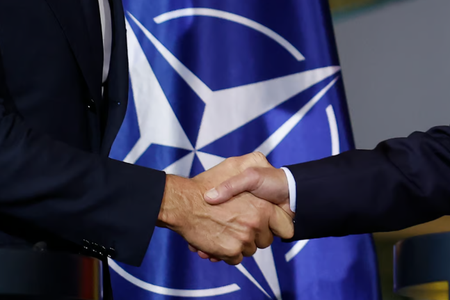
But given her potentially strained relationship with Trump, diplomats believe she may have to rely on others with a better chance of getting the incoming president's ear, such as Italy's right-wing prime minister Giorgia Meloni or NATO Secretary General Mark Rutte, whose previous treatment of Trump helped him in the workplace.
Meanwhile, the president of the Commission is preparing sticks for the real estate tycoon. After all, "Trump is a dealer," said the third EU diplomat. "Above all, he wants to negotiate."
Von der Leyen has already tried to sweeten relations by suggesting that Brussels could buy more liquefied natural gas (LNG) from America in order to avoid US tariffs on European goods. Her predecessor Jean-Claude Juncker used LNG to broker a truce with Trump in 2018.
"These kinds of tactics may not be as successful this time," said Mark Leonard of the European Council on Foreign Relations.
"I don't think they necessarily worked that well the last time. A lot of people tried to hug Trump close and indulge his vanity and hope that would somehow give them an edge," Leonard said.
If the past is any guide, Trump will also seek to divide and conquer, striking bilateral deals with like-minded governments such as that of Hungarian Prime Minister Viktor Orbán.
"This is a man who thought Brexit was a great idea and there should be more Brexit," said Anthony Gardner, a former US ambassador to the EU. He would like to see the EU disbanded.
"He will pull Viktor Orban's card, he will use the other cards he has. The EU is now in a very fragile state where these techniques can unfortunately be successful," Gardner concluded. /Adapted Pamphlet, from Politico





Lini një Përgjigje