


 Shkruar nga Pamfleti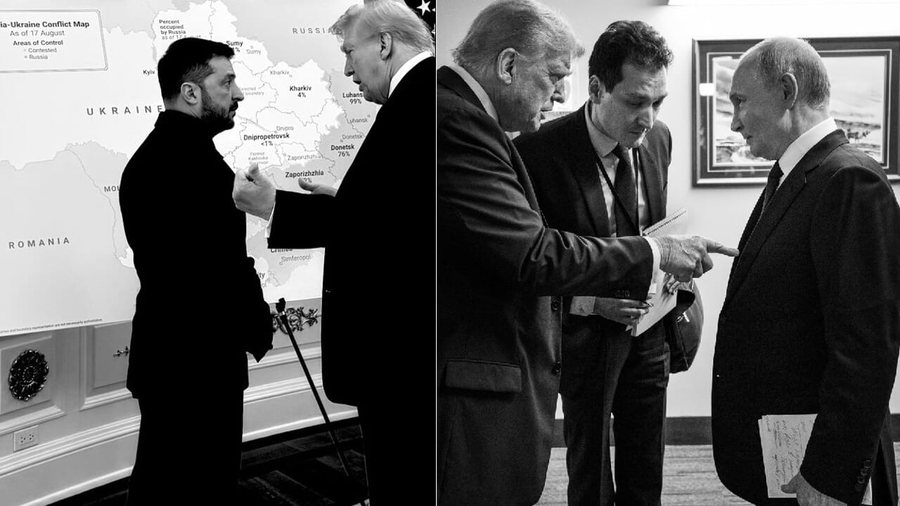
While none of the European leaders have yet pledged to participate in a peacekeeping mission to protect Ukraine, according to analysts there are at least three alternatives…
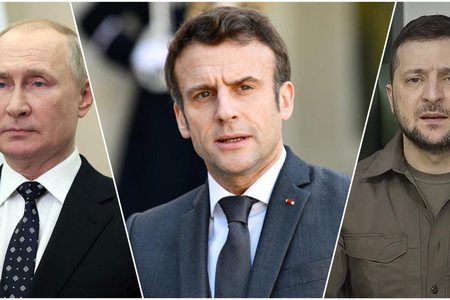
The next step for peace in Ukraine will be a bilateral meeting between Putin and Zelensky (and this is Kiev's first and only step), a meeting that will then extend to the US president and then (possibly) to a negotiating table with European countries that will act as security guarantors. The week of negotiations that marked the first real turning point since Russia's invasion of Ukraine ended with a "see you again" after about ten days, the time that diplomacy has given itself to organize the next steps.
Current situation
To assess the situation after the meetings in Alaska and Washington: there is no longer any discussion of a ceasefire, while the (de facto) transfer to Russia of Ukrainian territories currently controlled by Moscow's military would be a non-negotiable condition.
Putin's acceptance of international security guarantees for Ukraine would go hand in hand with Kiev's renunciation of NATO membership, while Putin would apparently have accepted Ukraine's transition towards Europe.
The most difficult question after the now certain redrawing of Ukraine's borders is certainly only one: who will be able to counter Moscow's appetites for Kiev?
Security guarantees
Italian Foreign Minister Antonio Tajani moves the deadline for ending the war to the end of the year, speaking about accepting Italy's proposal: to guarantee Ukraine's security with a kind of copy of NATO's Article 5, a mutual assistance agreement that, as Meloni explained at the White House, Ukraine's friendly countries would implement in the event of military aggression by third parties, including Russia.
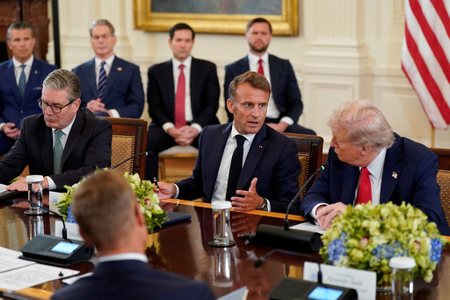
As Zelensky explained at the end of his meeting with Trump, Western powers will formalize security guarantees for Ukraine within 10 days.
French President Emmanuel Macron and British Prime Minister Keir Starmer have been working for months to build a military coalition that can offer Kiev the security guarantees needed to counter what the French president has called Putin's "monster appetites."
NATO Secretary General Mark Rutte has explained that the United States could also join the coalition, but this project has not yet been discussed with Trump.
Instead, it is said that around 30 countries have submitted their candidacy, including Japan and Australia.
European soldiers in Ukraine? Alternatives
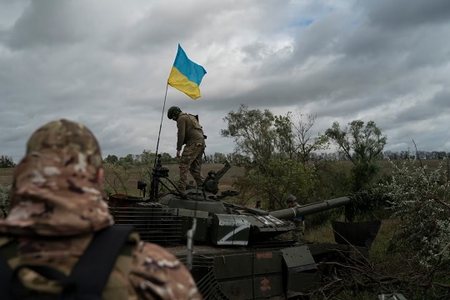
While none of the European leaders have yet made any commitments, analysts suggest at least three alternatives.
The first is a peacekeeping force ostensibly armed to supplement the Ukrainian army. This could be purely defensive, but it presents a problem: to be a credible deterrent, it would require tens of thousands of soldiers.
A second option is a "lead" force, much smaller and incapable of organizing a full defense. However, this theory is based on the fact that Russia would be reluctant to kill non-Ukrainian Europeans in a potential invasion.
The third alternative is to create an observation force of several hundred soldiers, tasked with reporting on possible future military actions.
What is certain now, however, is a new shipment of US weapons and military aid to Kiev “worth $90 billion,” as Zelensky confirmed after the meeting in Washington. According to the Financial Times, Ukraine has pledged to buy $100 billion in US weapons, financed by Europe, as part of a deal to receive security guarantees from the United States in the event of a peace deal with Russia. Ukraine and the United States have also reportedly reached a $50 billion deal to produce drones with Ukrainian companies. /Adapted from Today/


Lini një Përgjigje