


 Shkruar nga Pamfleti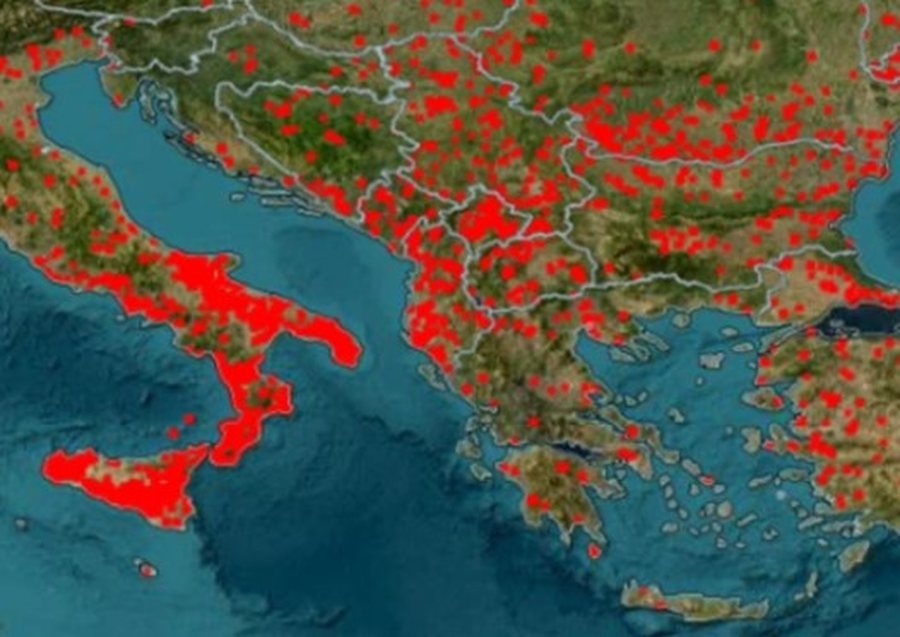
The high temperatures sweeping across Europe, especially in countries bordering the Mediterranean Sea, have exacerbated the forest fire situation, challenging authorities and local communities. According to the latest data, the fires have destroyed hundreds of thousands of hectares of land, with serious consequences for the environment and the population. In Portugal, around 2,000 firefighters are engaged in intensive efforts to fight the fires across the country.
In Ponte da Barca, the fire remains out of control, forcing the evacuation of dozens of residents. Mayor Augusto Marinho told state broadcaster RTP that at least 19 people had been injured in the flames, and the situation remained "very dangerous." The Portuguese Institute of the Sea and the Atmosphere (IPMA) is predicting a severe heat wave until August 6, with temperatures expected to reach between 36 and 44 degrees Celsius, increasing the risk of the fires spreading further.
In Spain, the fire in the Las Hurdes region has been brought under control after intensive overnight efforts, but authorities remain vigilant to prevent the flames from reigniting in other parts of the country, where dry conditions and high temperatures continue to pose a risk. In Bulgaria, fire crews have tackled 60 small fires in the past 24 hours, demonstrating continued efforts to contain the situation despite challenges posed by hot, dry weather.
According to the European Forest Fire Information System (EFFIS) and the Copernicus Climate Change Service, 1,339 fires have been recorded in Europe since the beginning of 2025, a significant increase compared to 900 fires in the same period in 2024. So far, around 292,000 hectares of land have been burned, compared to 139,940 hectares in 2024, marking a 13% increase since last week alone. This figure is higher than the average of the last 19 years (2006-2024), which records 162,994 hectares burned for this period of the year.
The Fire Risk Map, based on the Fire Weather Index (FWI) for the period 28 July-4 August, shows that several European countries, including Portugal, Spain and southern France, are at “very extreme” or “extreme” risk levels. While the risk is expected to decrease in southern Italy, the Balkans, Greece, Bulgaria, Romania and Turkey, some areas in these regions will still remain under the threat of major fires. At the same time, the risk is expected to increase in eastern Finland and in some other areas of western and southern Europe.








Lini një Përgjigje